












[EN] Article published on challenges.fr on January 19, 2026
By blending AI, cultural understanding, and entrepreneurial daring, CBA combines technological prowess with empathy to redefine branding. Cécile Ayed, President of the CBA network, unpacks the new drivers of brand performance and differentiation.
Brands face a complex challenge: how to maintain their uniqueness and adapt their awareness strategies in a world saturated with messages? How can they forge lasting connections with increasingly fragmented audiences without being lost in the ambient noise? For CBA, an international branding agency within the WPP network, the answer lies in one principle: listen before creating. By placing cultural understanding and impact at the heart of brand initiatives, CBA, through its “Unordinary Ideas,” is revolutionizing the courage to innovate.
Today, 80% of brands have lost their distinctiveness, according to an internal WPP study. The reason: an overabundance of messages, content, and stimuli that erodes their uniqueness. For CBA, reclaiming this distinctiveness means embracing Cultural Fluency – the ability to understand and navigate the cultural and social nuances of the communities one addresses.
A brand can no longer simply target a static persona.
We need to understand mindsets – those fluid states of mind that dictate daily behaviors.
Listening thus becomes a strategic lever, translated into actionable plans through a hybrid methodology called AI Ethnography, which stands at the intersection of artificial intelligence and human sciences.
“Our strategists are trained in anthropology and ethnology. AI is an amplifier, not a substitute. It helps us see faster and further by analyzing massive volumes of cultural and social data, but it’s always the human element that provides meaning.”
This approach enables the agency to design “synthetic personas” – evolving behavioral avatars capable of representing the diversity of attitudes and motivations. This is a key tool for international brands facing heterogeneous cultural markets yet aiming to preserve the coherence of their global DNA.
While listening is the first step, daring is the second. In an economic environment where caution prevails, CBA advocates for a culture of calculated risk.
“Our clients often have innovation projects validated by consumers… but they never see the light of day,” notes Cécile Ayed. “Sometimes, it’s not about budget, but a lack of internal commitment.”
Entrepreneurial energy is a deeply ingrained value at CBA. Its “big capabilities, small feel” positioning encapsulates the agency’s strategic yet human modus operandi. This hands-on support, combining vision and empathy, helps brands rediscover meaningful creative courage, benefiting their internal culture. The challenge is no longer just about “talking” to consumers, but about empathetically engaging employees around a unifying brand project.
This philosophy is exemplified through iconic collaborations, such as the rebranding of Nescafé. So well-known that it was almost seen as a ‘default’ coffee, the brand needed to regain desirability. CBA then developed a global innovation platform centered on experience: how to transform an everyday product into a vehicle for emotion?
The key: cultural adaptation. In Asia, for example, this involved repositioning the product as an energy booster, aligning with local expectations, or launching a condensed coffee – a syrup to mix at home to recreate coffee shop-inspired recipes – both achieving immense popular success. A tailor-made triumph across Nescafé’s 180 markets.
This case exemplifies a global trend, one that CBA is at the forefront of: the integration of branding into everyday spaces and its transformation within retail environments. Packaging and logos are no longer enough; the brand experience now extends to physical locations, customer interactions, and lived moments – experiences where identity, architecture, and hospitality converge.
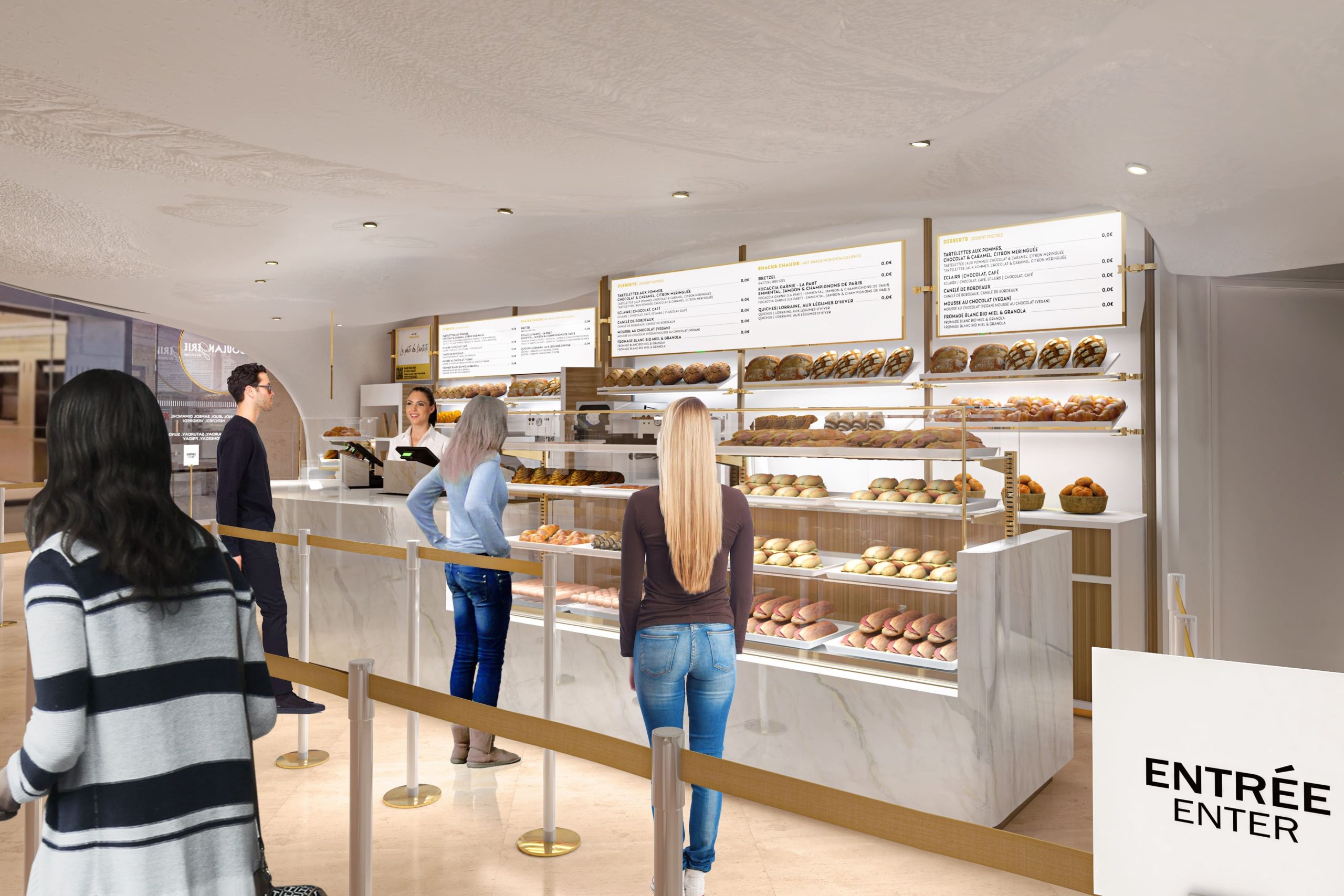
CBA is also supporting Musiam Paris, the Louvre Museum’s catering operator (in partnership with Alain Ducasse), in a complete overhaul of its F&B ecosystem. This includes nine dining outlets, from cafés to gourmet restaurants, each tailored to the diverse profiles of museum visitors.
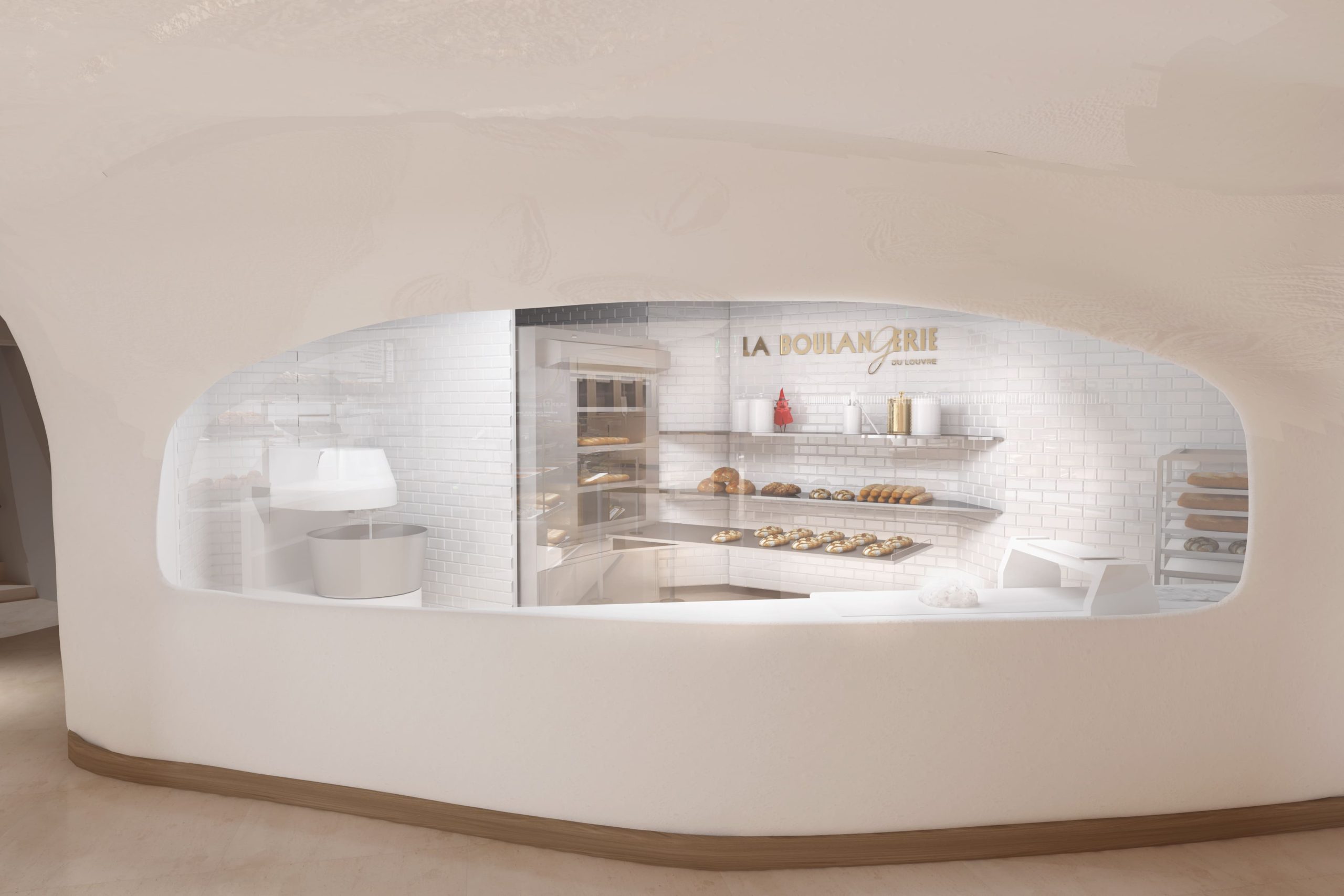
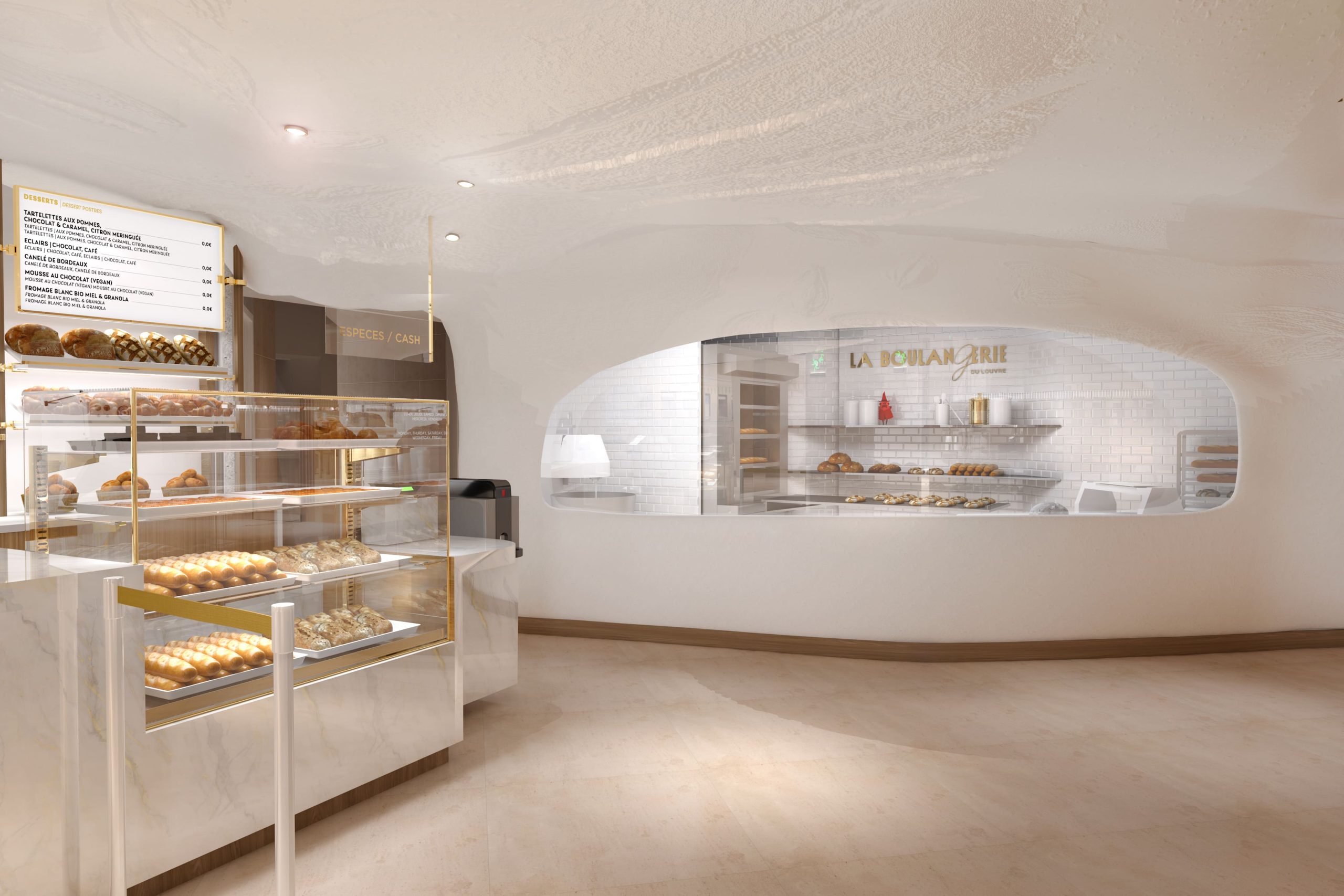
A prime example of this vision is La Boulangerie du Louvre (“Louvre Bakery”), set to open in 2025, which features a genuine bakery at the heart of the museum. Customers can watch the bread being baked before enjoying it – a simple yet immersive experience that extends the museum visit through a sensory dimension.
This approach highlights a fundamental trend: the profound transformation of retail. Physical stores are no longer mere transaction points; they’ve become spaces for expression, social interaction, and immersion. Consumers, accustomed to online shopping, no longer visit stores just to buy products, but to “live” the brand experience. This “experiential hospitality,” once exclusive to luxury brands, is now expanding across all sectors. Convinced that this trend has a bright future, CBA has made it one of its core areas of expertise.
Technology doesn’t replace human intuition; it reveals it. At a time when artificial intelligence is disrupting creative professions, this is CBA’s deeply held belief.
“Our work remains one of ideas and emotions,” Cécile Ayed reminds us. “AI helps us move faster, but it’s the team’s sensitivity that truly makes the difference.”
The future belongs to brands that can listen, understand, and dare with precision.
In the face of a continuous information deluge, visibility alone no longer differentiates them. What changes the game is their ability to resonate with collective emotions while remaining true to themselves.
As Cécile Ayed summarizes, “Our role is to help brands find their own voice, not to imitate others.”
[EN] Article published on challenges.fr on January 19, 2026