


France
Paris
Welcome to
In a market overwhelmed with messages and offers, differentiation is no longer a strategy. It is the condition for relevance. Attention, now the rarest of currencies, disappears within seconds. Loyalty is eroding, trends are accelerating, and consumers, more demanding than ever, seek authenticity beyond the noise. In this landscape, sameness has become the norm and caution a brake, leaving brands with an existential dilemma: how to exist, stand out, and balance uniqueness, commitment, and cultural relevance?
This is a bold alternative to the pursuit of mere visibility: a call for relevance, memorability, and, above all, differentiation through risk-taking.
As Cécile Ayed, President of the CBA and Coley Porter Bell network, explained in an interview with Le Figaro: “Branding is not about following trends, it is about creating them.” This bold perspective underpins our philosophy at CBA. It is made possible through a deep understanding of cultures and audiences, strategic coherence, and local adaptation — without losing sight of the brand’s heritage.
Today’s landscape is a battlefield for attention and relevance, where brands face several critical obstacles:
In this environment, playing it safe is tempting. Yet the numbers are clear: only 13% of companies consider themselves ready to take creative risks (Lions, 2025). Meanwhile, bold brands grow 33% faster (Deloitte, 2025). The real risk is no longer boldness, but inertia.
A striking example is Lux (Unilever), the feminine hygiene brand, which embraced women’s empowerment; but adapted its message to each market. In Saudi Arabia, where women are more educated than men but only 16% are employed, Lux supported local women (doctors, photographers, and more) by improving their online visibility through Google search.
Instead of launching a generic feminist campaign, Lux created a subtle yet powerful gesture of empowerment, one that respected cultural codes while offering lasting impact.
This measured approach embodies a new kind of engagement: rooted in local realities, faithful to brand values, and expressed through concrete action.
It begins with a step too often overlooked: understanding the starting point, the audience, and the cultural context. This is the principle of grounding that CBA stands for.
It is no longer a service provider but a true partner, an architect of boldness, a catalyst for distinctiveness. Its mission is to help brands carve their own path, break free from convention, and unlock their unique potential.
We bring in experts from the human sciences, anthropologists, ethnologists; who, supported by AI, help us gain a qualitative and precise understanding of consumers in every market. This enables us to define sharp insights and test creative concepts quickly, accelerating the design process.
At CBA, our philosophy rests on three core principles:
As Cécile Ayed sums it up:
By building confidence and encouraging informed risk-taking, aligned with audiences, we help brands break free from limitations and define their own standards of success.
People expect brands to act.
First, you need legitimacy to take on a cause.
Second, you must have the means to act consistently over time.
The brands that succeed do not follow, they inspire and resonate. They dare to break conventions, shape their own rules of the game, and express a unique, authentic identity.
At CBA, we are proud to act as catalysts of this transformation. We invite brands to trust themselves, embrace boldness, and use innovation as a lever for impact. We remain attuned to cultures and communities not to be led by them, but to transcend them. With this foundation, every act of communication can become a defining moment — meaningful, consistent, and aligned with both brand identity and future ambition.
With boldness and cultural insight, the era of brand differentiation can truly begin.
The future belongs to brands that dare.
Each market has its own symbols, habits, and expectations. Integrating them doesn’t dilute the brand—it ensures credibility. This is about coherence with the brand’s DNA, not just image.
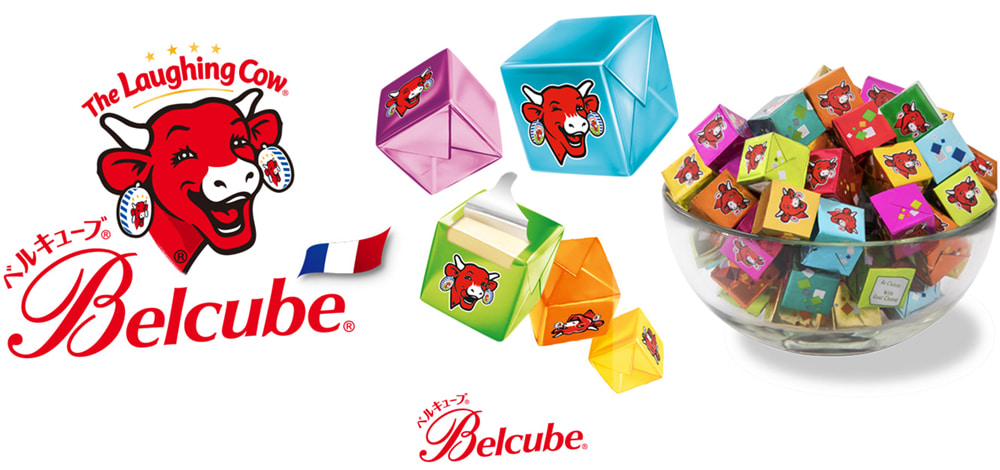
Consider Bel in Japan: selling cheese portions as in France wasn’t viable. Instead, the product was reinvented as a healthy, bite-sized “sweet cheese” snack—evoking French macarons while fitting Japanese tastes. The result: a product that feels new, yet unmistakably Bel.
This cultural translation is also a narrative one: ensuring the brand remains consistent and credible, even far from its origins.