Or select a location to continue to your local agency
/ let's set the terms
In an era where natural resources are overexploited, brands are expected by consumers to incorporate more responsible practices to facilitate mindful consumption.
Sustainable design thus becomes their best friend in successfully championing this cause! However, the recurring question is: is this greenwashing, or a genuine employer brand promise?
Here are the aspects to pay attention to in order to determine if a brand is truly sustainable over time. Let’s explore!
/ packaging
Eco-friendly packaging is your (best) friend.
According to Ipsos, nearly 60% of French consumers plan to eliminate excessive packaging to fight climate change. That’s why companies are even more encouraged to innovate and rethink the way they design their packaging! The sustainability of packaging allows brands to reduce their environmental impact throughout the lifecycle of the products they offer.
How to determine sustainable packaging?
Materials: Packaging made from recycled or biodegradable materials minimizes waste and reduces reliance on single-use items.
Size: Optimally-sized packaging prevents space and material wastage, cutting down shipping costs and carbon footprint.
Labeling: Labels that provide information about materials, manufacturing methods, and ecological certifications enable transparent communication.
Beyond informing consumers, an eco-designed packaging also communicates the brand’s identity and values, enhancing its reputation as a committed player. Sustainability of materials, transparency of origins, and supply chain traceability have become essential today.
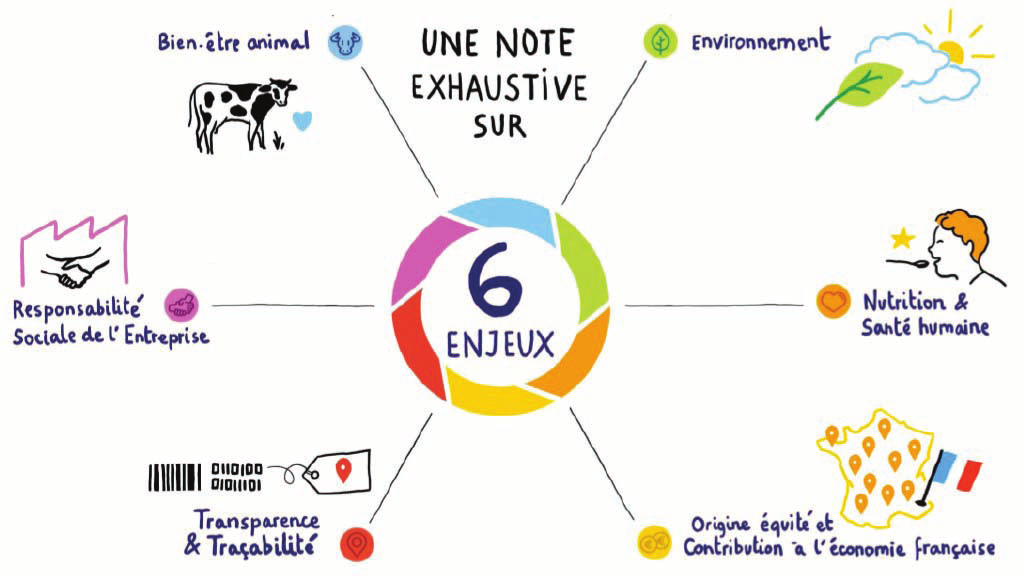
Let’s focus on La Note Globale (The Overall Score, in french), the first benchmark for the overall performance of food products calculated based on 6 criteria: animal welfare, environment, nutrition, origin, traceability, and corporate social responsibility (CSR).
By revealing the “hidden” attributes of a product, it empowers consumers to choose the one that best aligns with their personal expectations.
By combining creativity, functionality and sustainability, design offers new perspectives to rethink our way of producing, distributing, and consuming food.
Sustainable branding is not just about sustainability.
If you thought that sustainability only applied to packaging, think again!
Visual identity, logos, and even the graphic identity of a brand can also be part of sustainable branding: one that goes beyond a company’s visual appearance to integrate practices that preserve the environment and promote social responsibility.
Why sustainable branding?
Eco-friendly colors: Brands that choose ink and energy-efficient color options for printing – such as pastel colors with ink coverage below 100% – contribute to reduced carbon footprint.
Green printing: Environmentally friendly printing techniques, like using vegetable-based inks and certified FSC papers, minimize toxic waste and deforestation.
Adaptable graphic guidelines: Simplifying a visual ecosystem by using fewer colors and adopting a more minimalist style can save energy in both print and web applications.
/ fun fact!
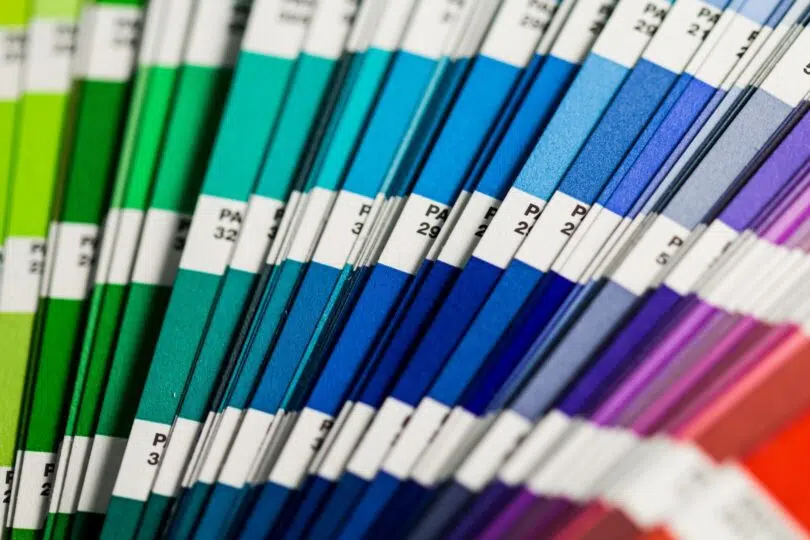
Did you know that, to achieve a beautiful pine green in printing, a CMYK ink coverage of 209% is required? 👀
However, despite being the color of sustainability, the ink coverage needed for green is significantly higher than 100%. Greenwashing or not… we’re not that sure!
On the other hand, for web applications, it’s advised to use colors like black or red, generally darker shades. In essence, the opposite of print! And why? Simply because these colors require less energy to display on screens.
Sustainability has also made its way into our favorite stores!
As a rapidly transforming sector, retail has adapted to ecological awareness by incorporating eco-responsible practices into all aspects of the retail sales process. From products sold to construction materials, sustainable retail fully participates in the CSR initiatives of the brands that have embraced it.
And brace yourselves: beyond the mere aesthetics of products, sustainable retail also influences the overall shopping experience and consumer habits!
But how?
Eco-Merchandising: Using recycled or bio-sourced construction materials optimizes natural lighting and creates an energy-efficient space.
Eco-Friendly Solutions: Fabric bags or bulk shopping options reduce plastic consumption and encourage customers to adopt sustainable practices.
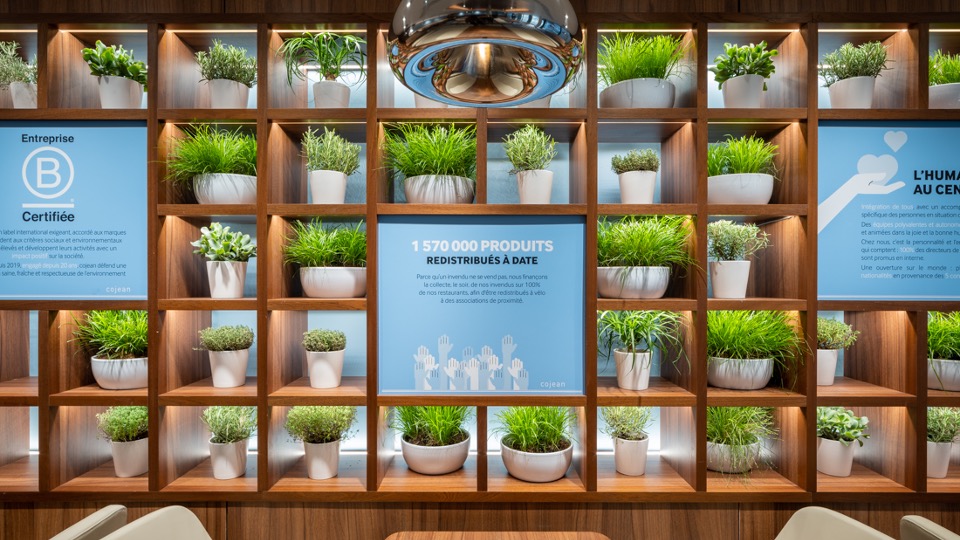
Awareness Tool: In a sustainable retail setting, displays provide more information about products, their origins, and environmental impacts, allowing the brand to communicate its CSR commitments as well.
/ cojean
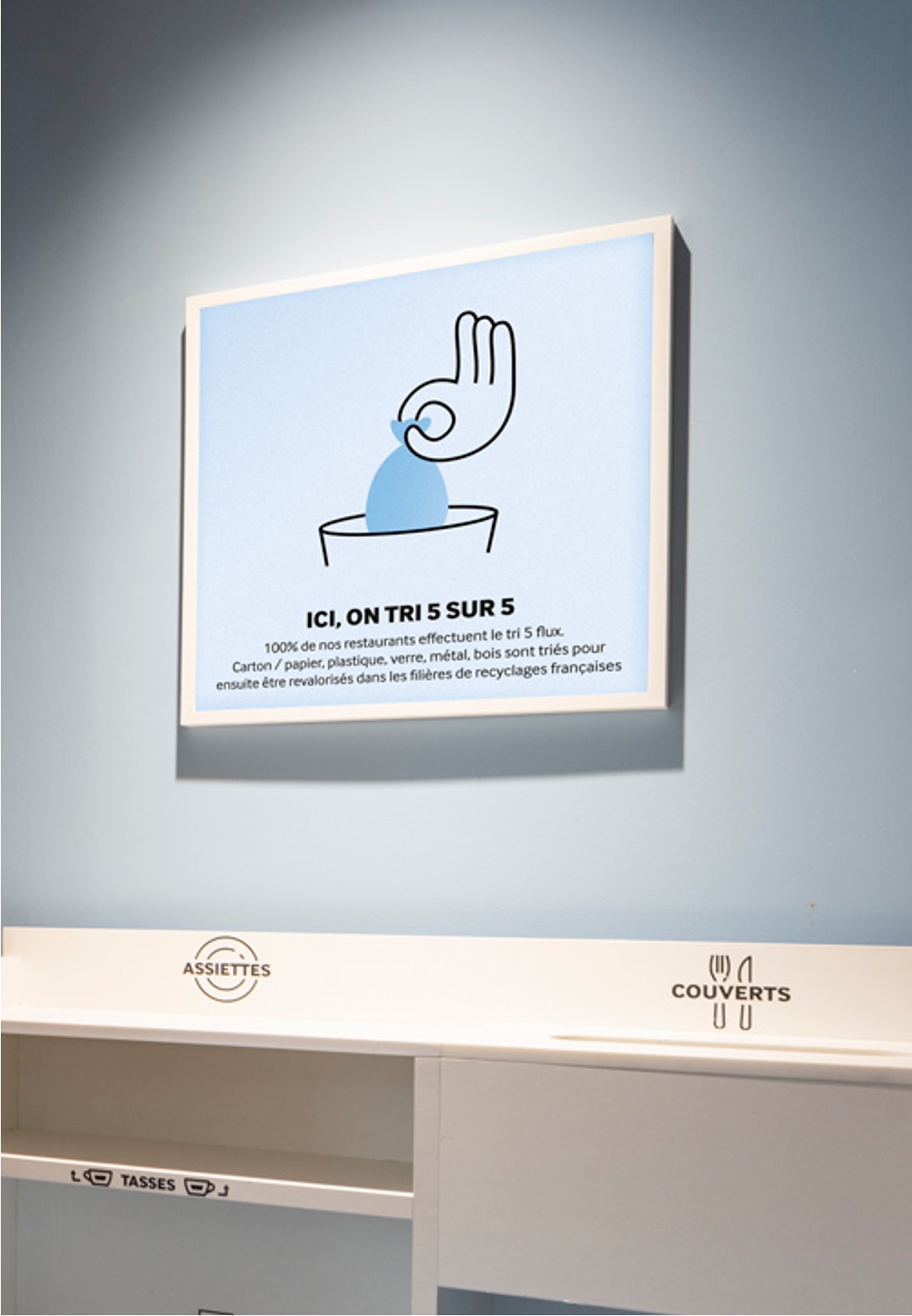
Focus on Cojean, the French top-of-mind in healthy fast food, for which CBA developed an overall identity system that reflects the brand’s CSR commitments.
This visual concept is also extended to the retail concept of their stores in Paris.
The goal? To go beyond the culinary experience and position themselves as a responsible actor, caring for the environment and the well-being of all.
Sustainable is certainly no longer a term to be used indiscriminately.
Whether it’s product packaging, the graphic ecosystem, or even the retail store concept, a brand can contribute to overall sustainability, and that can happen on multiple scales! ♻️
And you, what is the sustainable asset of your brand?