
France
Paris


Switch to your local agency
Retour au menu
In the current volatile and uncertain business climate, even the most experienced leaders can feel overwhelmed. If you’re looking for ways to boost your brand’s performance, CBA B+G has the answer: 360 Brand Performance.
Based on an intelligent combination of business design and deep data analysis, we deliver customized and actionable solutions that serve as a guide to improve your brand’s performance.
 SOUND ON
Our transformative approach dives into six essential angles that maximize results and promote growth. We identify gaps and propose interconnected action plans to build a strategic roadmap for your brand’s success.
You are a marketing, innovation, or product manager, or a company leader looking to effectively prioritize performance optimization and make informed investments. We provide a personalized and actionable guide for:
Design for Behavior Change is a methodology focused on people, with the aim of encouraging change and developing solutions that help them adopt new behaviors for benefiting themselves and the planet.
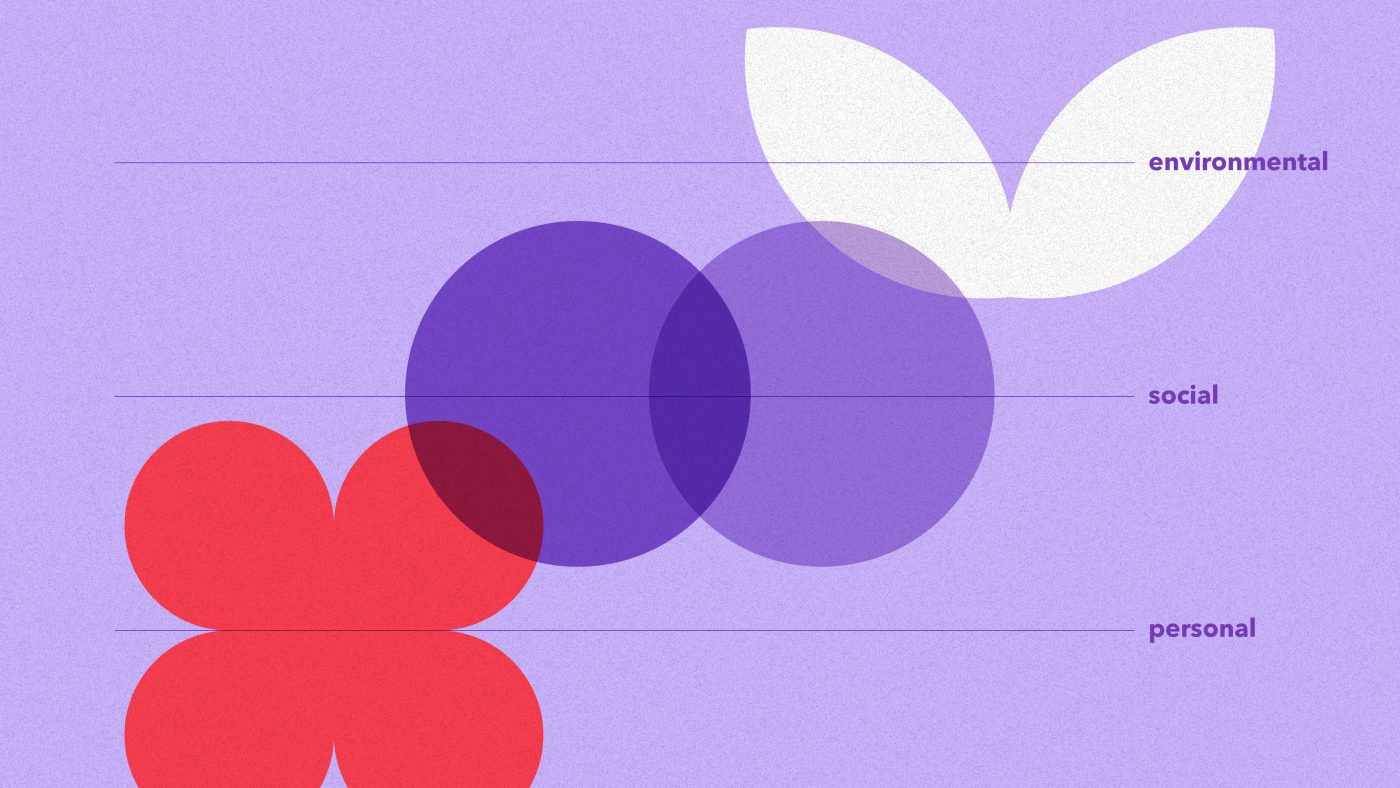
The techniques generated by this methodology are being increasingly used to develop user experience in digital products and services such as, for example, Carbon footprint applications, apps that monitor the carbon footprint, allowing people to see how their daily actions impact the environment. It is a design approach that has great potential as an amplifier of environmental awareness and can be used to transform the user’s sustainable intention into sustainable attitudes. There is an extensive agglomeration of personal, social and environmental factors that influence behavior. Most of them can be attributed to three levels:
Companies and brands with a sustainable purpose can play a leading role in these transformations, generating a product-as-a-service offer (product-service system) to meet user needs and generate value. It is also necessary to develop brand-users relationships, seeking to understand their motivations, consumption habits and information needs.
Below we list some examples of brands that take part in this movement:
Before having an idea for behavioral change, it is first necessary to fall in love with the problem, observing or interviewing individuals, trying to put yourself in their shoes. You will be surprised to note that a great deal of the thoughts and beliefs that each one holds are their own projected worldview, and not necessarily that of the target audience they wish to influence.
Lígia Dembinski, Design Manager & ESG Leader
Since August 2021, CBA B+G has been officially remote first. While many businesses are eager to resume face-to-face interactions, we believe that the future of successful organizations lies in adopting an essentially remote model and adapting to the digital processes inherent in this choice.
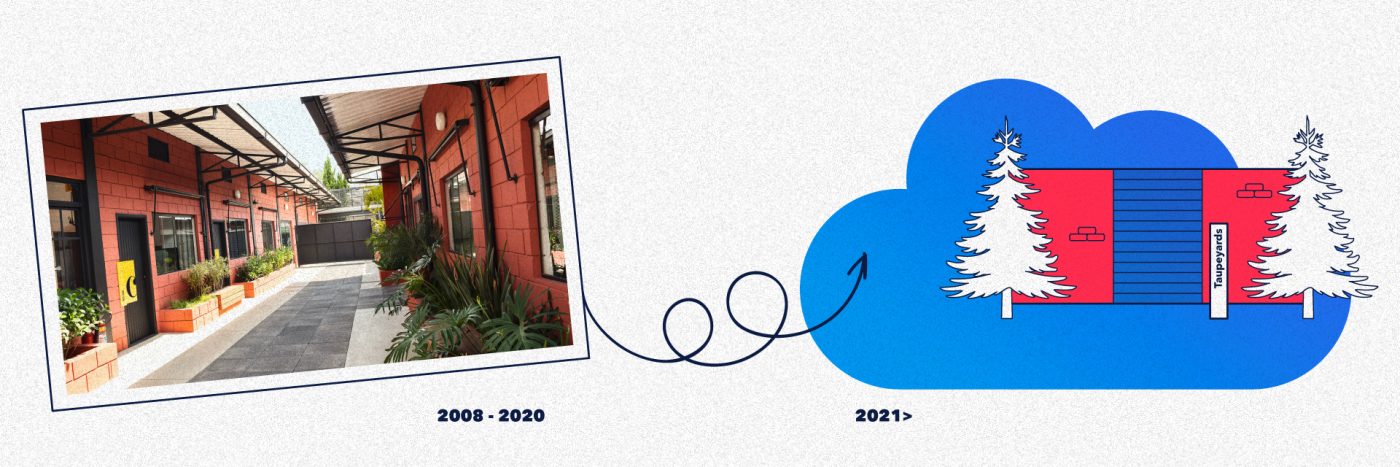
Since 2008, CBA B+G had been operating in a former warehouse on Rua Álvaro Rodrigues in the district of Brooklin, in São Paulo. The place perfectly matched us: it was an inviting space for teamwork, full of green areas and environments designed for collaboration, co-creation, and prototyping. We had created a very special environment over the years, that was loved and desired by everyone who had ever been there – employees, customers, or business partners.
In March 2020, the pandemic landed in Brazil. Like so many other companies, we had to adapt to the urgency of remote work to maintain the safety of each of the then-eighty employees. It wasn’t easy, we weren’t prepared. Almost nothing was in the cloud; we relied on a local server and heavy, immutable working tools. Many designers and production professionals had to take home their computers, mostly desktops, in a hurry. Chairs, ergonomic supports, monitors, and personal items had to be packed, and in addition to the logistic struggle, leaving our comfortable and beloved shed so abruptly felt as if a piece of our identity as CBA B+G had been ripped away.
We entered 2021 with many restrictions on social interaction, so we were forced to stick with the remote model. We noticed that companies of all sizes around the world were permanently adopting the hybrid or remote model. We realized it was a one-way path. Even after the end of the pandemic, the attitude toward work and productivity in organizations would never be the same. We chose the remote first model and said goodbye to the space we occupied, knowing that, of all the scenarios, the physical no longer had adherence to the new reality of work relationships, and the hybrid would be a potential combination of the worst of both worlds, preventing the cultural turn that we so desperately needed. It was not an easy decision, but I am confident that we made the right choice, a choice that contributed to ensuring the sustainability and success of our organization in the long term.
The remote first culture doesn’t happen overnight. It needs to be built. In a few months, we had to set up an office in the cloud, acquire new communication habits and tools in a remote work environment, learn remote project management skills, and build connection and trust without the help of a physical space. To put this into practice, it was necessary to review our metrics, behaviors, communication, and mindsets.
In addition to the structural challenges, we face an even greater cultural challenge. No matter how well a group of people works remotely, they miss getting together outside business meetings: bumping into each other in corridors, having coffee together, or celebrating birthdays. This is both natural and human. We recognize the importance of maintaining and nurturing this type of human connection, which is why we created our Get Together – in-person bonding events held every three months. Furthermore, by establishing a strong Culture and People department and improving the Communication department, we enhanced listening and increased the frequency and quality of content aimed at internal audiences. We also provide the benefit of a coworking network with over 1600 workspaces throughout Brazil to encourage meetings between teams that are in the same city.
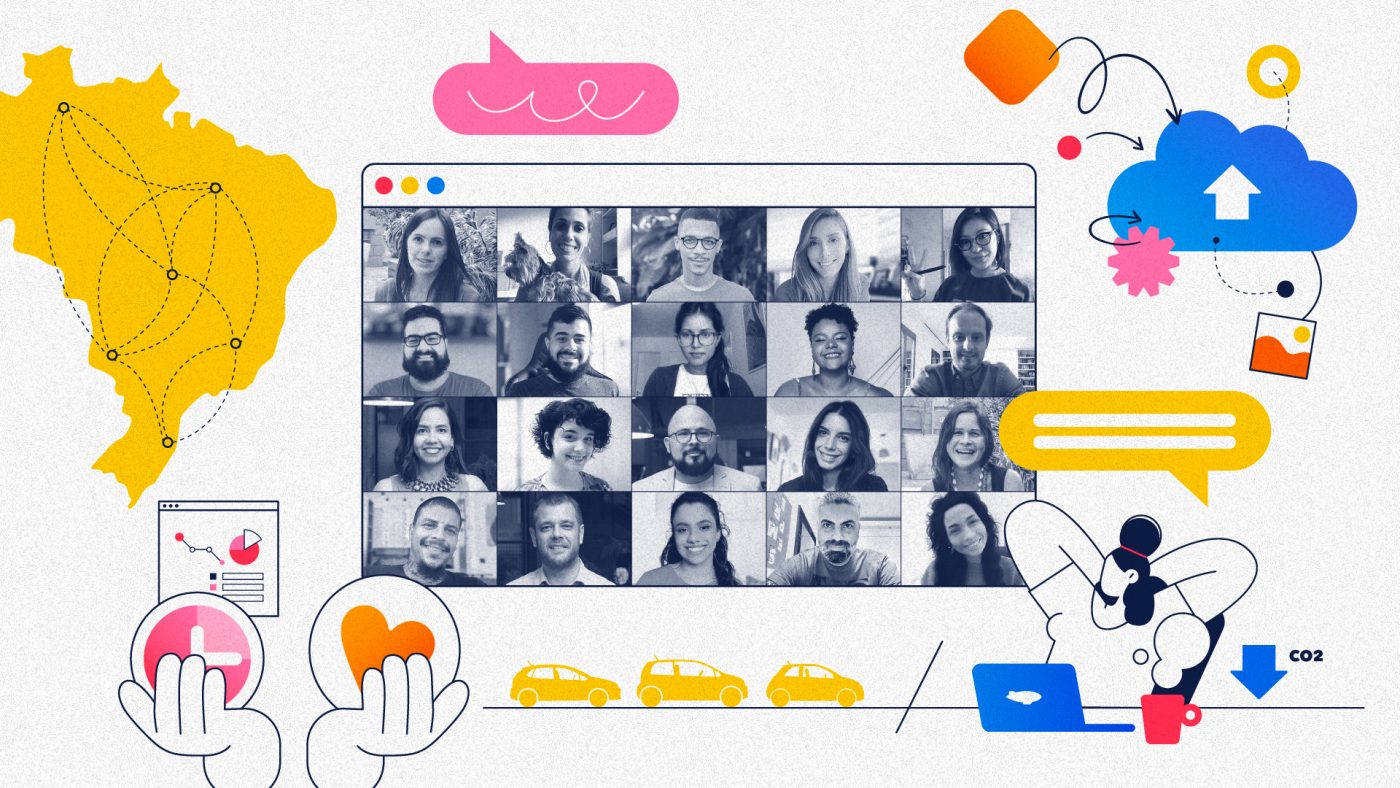
In a couple of years, our way of working evolved for the equivalent of a decade. Today, I see major positive changes:
I am proud and confident in our choice of business model. Today’s CBA B+G is more agile, diverse, and collaborative than ever before, and there is still enormous room for collective improvement ahead. Want to join us? Click here! Or if you would like to work with us on a project, come this way.
_
Luis Bartolomei
Business design is an operational style that combines business, strategic, and analytical approaches with the practices and mental model of design. It helps structure how each element of a business model affects the experience of customers and users.
In other words…
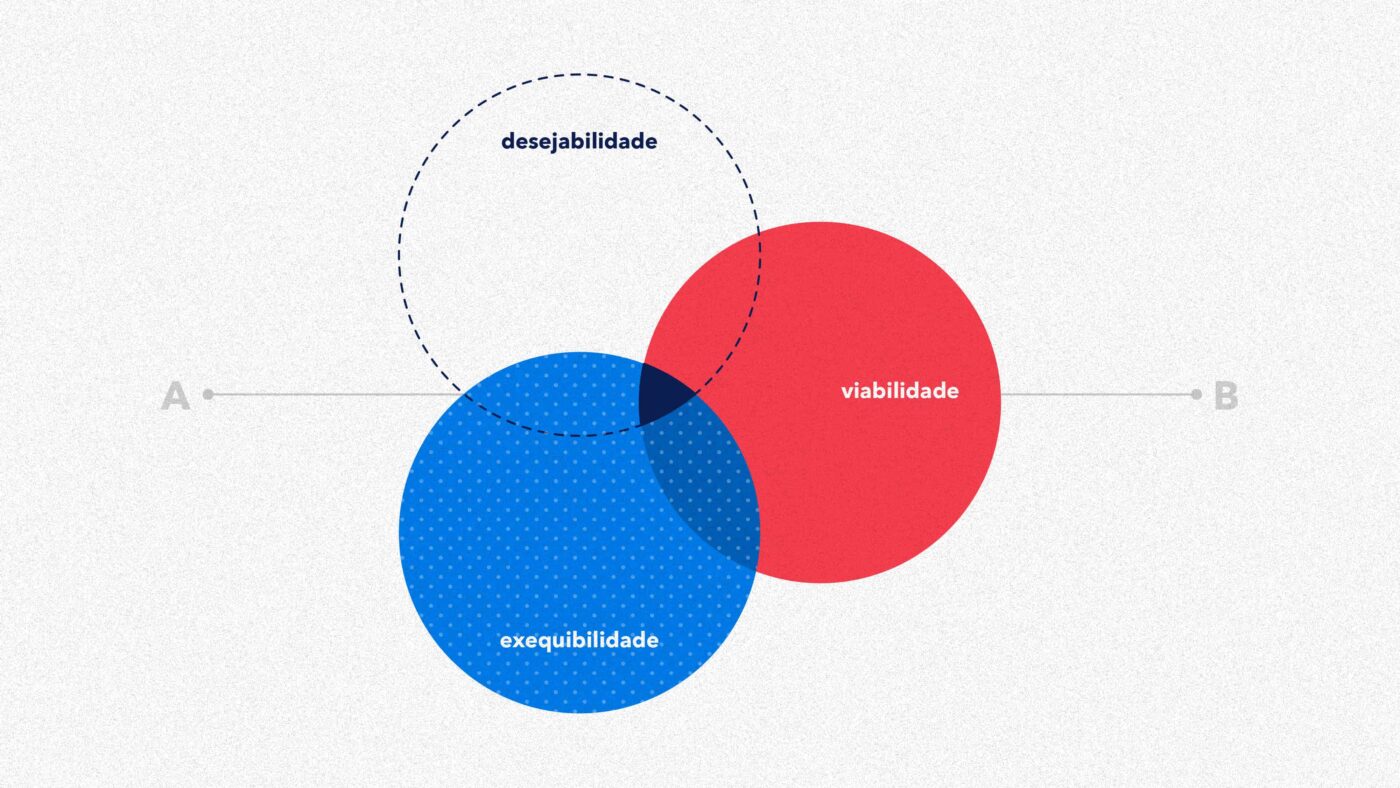
The discipline works at the intersection of feasibility, viability, and desirability to create innovation, helping companies and organizations move from point A to point B through a designed business model, or business model created based on the design approach.
In the BANI (“B:rittle, A:nxious, N:on-linear and I:ncomprehensible”) world we live in, business design can be extremely valuable to a company. The growth of startups, rapidly shifting markets, and ever-evolving technological possibilities require the creation of innovative business models and the reassessment of conventional ones. Business design, among other things, provides the tools and methods to develop and test business models with a truly human-centered value proposition. But the discipline addresses many other issues. Here are some of its applications:
It is a strategy that can help brands and businesses overcome a variety of problems, but how does this relate to the design approach? How does a business designer act in the design process?
The three primary functions of a business designer during a design process are:
1. Use a business perspective to guide or inform the design process in order to make sure that the final product effectively addresses business issues.
2. Translate design solutions into value and impact using a language that business stakeholders are familiar with in order to prove that design provides solutions to business problems.
3. Use human-centered methodologies to strengthen the commercial and financial aspects of design work to produce services and products that are viable.
To understand what is meant by business design and the mindset of business designers, it is essential to keep in mind four major pillars: multidisciplinary approach, abductive reasoning, customer focus, and prototyping.
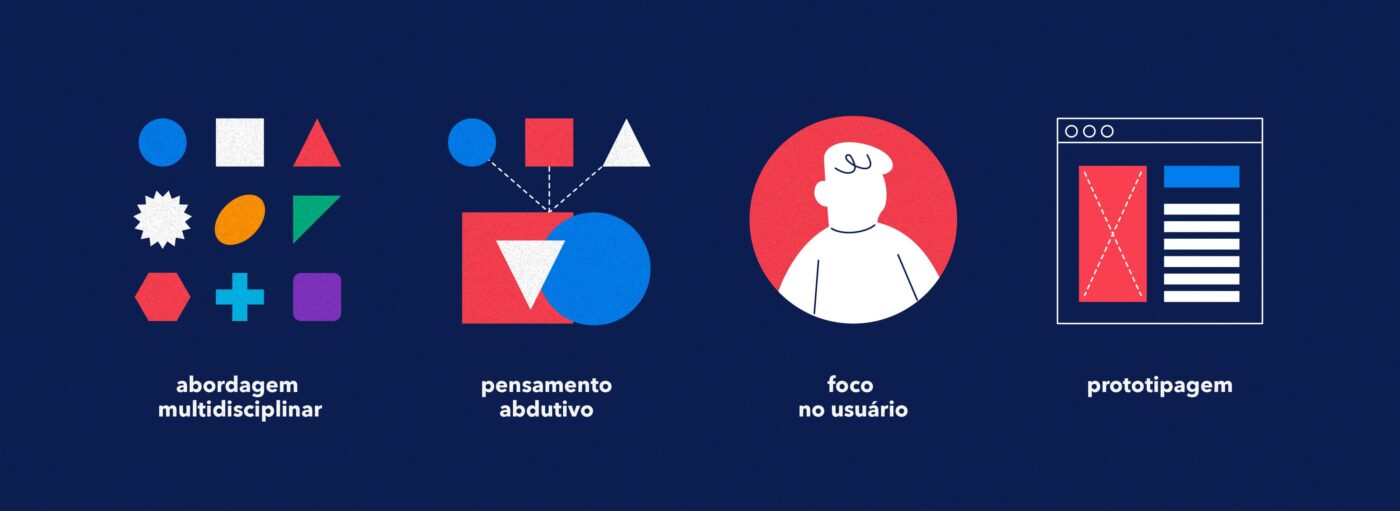
– Multidisciplinary approach
Design thinking emphasizes the value of assembling a diverse team, including the different stakeholders and users of the company’s product or service, to avoid having one viewpoint dominate the outcome. This combination enables us to examine the issue from various angles and ask the pertinent questions, such as: Is it desirable? Can we really do that? Does this make sense for my business?
– Abductive reasoning
Abductive reasoning derives from design thinking. Most business school programs teach deductive reasoning – from rules to conclusions – and inductive reasoning – from examples to rules. In clearly defined contexts, both deductive and inductive reasoning perform well. Working with businesses, however, frequently entails having access to insufficient information in a highly complex system. The concept of wicked problems, a term coined by Herbert Simon – a scientist and the inventor of design thinking, explains it: the more complex and multidimensional the problems, the more they demand a collaborative methodology and a deep understanding of human needs. Therefore, abductive thinking, a combination of inductive and deductive reasoning, is actually more suitable for such situations.
– Focus on the user
Business design uses user-centered and empathic design approaches. The starting point of any challenge is people. Every strategy is built based on a deep understanding of users, including information on their problems, objectives, and pain points. This helps us develop solutions that best fit their lifestyles.
– Prototyping
Business designers create prototypes not only to prove their validity but also to learn. To come up with the best-case scenario, we don’t simply consult a spreadsheet. We launch products and services to test the business. We develop financial projections and business cases to prove the financial viability of a product. We outline product ideas that represent strategic trade-offs to inform our strategic decisions. We create extreme business model scenarios and use them as prototypes to learn from customers, suppliers, and other stakeholders. We occasionally produce business pitches that help make new business ideas concrete so that organizations can support the development of spin-offs or fund a startup.
Business design is….
The discipline of business design is relatively new, the result of the growing pressure on design teams and design agencies to adapt their work to a business context. Today, it is part of CBA B+G’s worldview on design. From graphic to business design, we believe that design is first and foremost a way of thinking that uses methods and mental models to solve problems based on the consumer experience. We work beyond the surface of our clients’ businesses, fully meeting their needs through projects that include branding, service design, marketing, and business modeling.
If you want to know more about the subject or if you are interested in working with us on a project, do not hesitate to contact us.
Brand activism is nothing new. The importance of having a clear purpose has been extensely discussed for decades. Aligned with this foremost intention comes the necessity to define which causes a brand wants to support, meeting the demands of an audience that craves for more humane and coherent stances. Nowadays, brands have to stand for more than just profit: they are expected to contribute to building a better society.
The uncontrolled pandemic, the polarization of society, the stronger presence of social media and the growing cancel culture have boosted the game. What used to be an opportunity, is now a requirement – at times, essential for the survival. Brands have to build a positive impact territory; the mere position of trading goods and services, coupled with the neutrality towards relevant issues such as racism, gender, feminism and environment, is no longer a strong enough offer. Not taking a stand may give rise to the impression of consent, while stating an opinion can be seen as hypocrisy – if the talk is not followed by concrete actions, aligned with the brand’s DNA – depleting the brand’s value.
Thus, brands must take a clear stance and genuinely commit to one or more causes to remain competitive. The challenge faced is how to approach it constructively, being faithful to the brand’s values and not sounding self-serving, besides being careful to minimize the risks of boycott in an increasingly demanding environment where one slip can be fatal.
Bearing this challenging and intriguing setting in mind, we propose some reflections to help brands understand the different possible types and levels of activism, the risks and benefits of speaking up. Paths that, when followed with truth and transparency, can lead to a real and long-lasting commitment.
We all know, there is no single way to engage, and there is no right or wrong. We suggest below an ‘activism profile classification’ based on the brand’s DNA and its intended relation with its stakeholders, more than on the company’s size or category. Here they are:
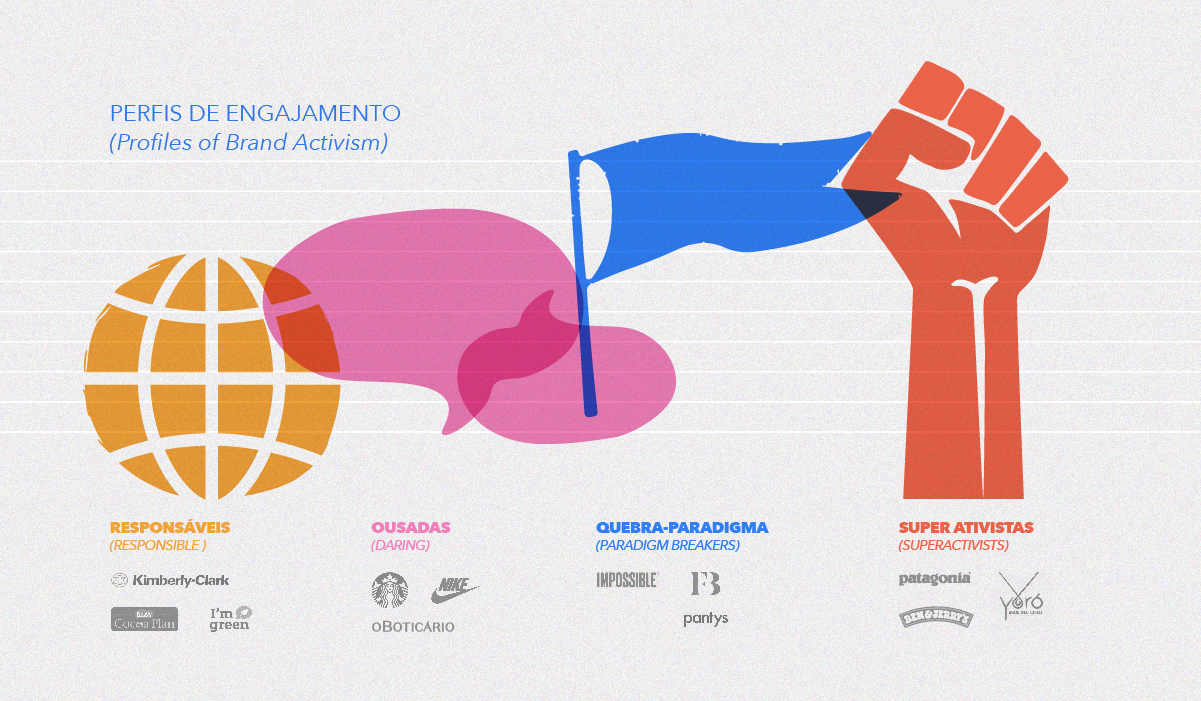
Superactivists
Brands that are activists since foundation, deeply engaged with causes related to the brand’s core values, and supported by the founding partners or CEOs themselves. They believe that action speaks louder than words, and they take to the streets with its public to be heard and actually aim to achieve social change. They create a strong emotional tie with its fans, so much that they usually become brand ambassadors.
Paradigm-breakers
Innovative brands, pioneers in their respective businesses since foundation. Their own core products or services are their flags, since their proposal is to change patterns and break a category status quo. They usually forge an emotional bond with their consumer base, for meeting previously unmet needs.
So, when is it worth to engage and get political about a current cause or issue? For Carolina Barruffini, CBA B+G Branding director, brands have to be more daring: “No doubt there are some risks involved when brands engage in relevant causes. However, many real examples have showed us that taking action is better than not taking a stand, even if there’s little impact – provided that the action is driven by truth and transparency.”
We listed below the pros and cons that every brand must consider before taking a stand.
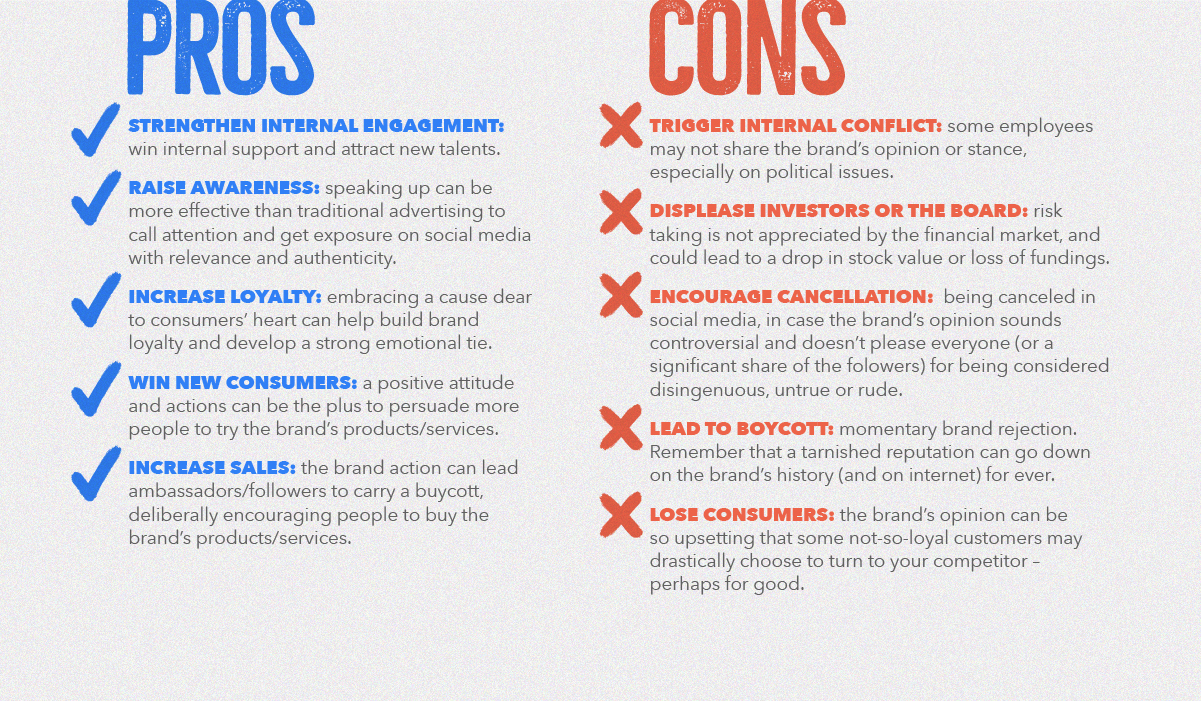
How then, can brand activism be a long-term, authentic and minimal-risk commitment? We suggest 8 steps to make it happen. It is a long journey, however it can surely put you on the right track to remain relevant in the future.
The 8 steps for achieving Positive Impact are:
1. Define a clear and powerful brand positioning
What is the brand reason for being, its beliefs? What is the brand’s DNA, its personality, its target audience? Branding for the future – a playbook with thoughts on how to reconnect brands, consumer and market – the three fundamental business spheres (which are still more importante in times of pandemic) – is a way to help you understand the brand context and its actions. Learn more about it here.
2. Choose your battles
Based on the brand core values – and aligned with them –identify the causes that the brand has credibility to support.
3. Define the stakeholders
Besides the target audience and brand consumers, who else does the brand impact, directly or indirectly, externally or internally? Stakeholders include employees and their family, board and investors, influencers, specialized media, government and social agents.
4. Look at the brand’s track record (and its present moment)
Although the brand purpose may have evolved over the years, the brand’s past cannot be ignored. It’s important to revisit previous actions, statements and campaigns to assess the credibility of engaging on a topic. And, sometimes, make a mea culpa (Skol has done this in 2017, who remembers?). Also, reputation must be considered; if it is fragile, spotlighting your brand may not be the best move.
5. Define the brand activism profile
Among the different profiles – superactivist, paradigm breaker, daring, responsible – which makes more sense for your brand today and which it aspires for the future?
6. Identify potential risks
The more renowned the brand is, the more important it is to assess the risks and benefits of taking a stance – or of staying neutral.
7. Walk the talk
Promises, great speeches or fierce campaigns are not enough to guarantee a brand’s survival without significant and real actions to support them. Consumers expect the brand (company) to engage in a realistic and tangible way, and if it doesn’t, they will ask for it.
8. Listen to feedback
Stakeholders feedback deserve attention. The brand must learn from its mistakes and successes and act quickly. Monitoring the brand’s “promises versus deliveries” can be decisive for the brand’s health and reputation.
Would you like to delve deeper into the topics of activism, brands and branding? We recommend: watching the interview with Rose Marcaria – Patagonia President and CEO – for Stanford students; listening to the episode Ativismo nos dias atuais (Today’s activism), from the podcast “O Tempo Virou” by Giovanna Nader, with the social activist Alessandra Orofino; and last but not least, reading this excellent article on the importance of taking risks, written by brand strategist Jasmine Bina.
You can always get in touch with us if you wanna chat about the challenges and opportunities for your brand. And if this subject inspires you and you are or know business professionals, strategists and designers who are interested in being part of our team, send an e-mail to [email protected] with expectations, goals and stories. We are always looking for new talents!
The content of this article had the contribution of: Carmen Beer, Ana Cerqueira, Giuliana Sanchez, Thaísa Miyahara, Carolina Barrufini, Ana Biselli, Renato Storni, José F. Ramirez, Fabiana Quiroga, Josy Lamenza, Daniela Irrazabal, and Luis Bartolomei.
The metaverse is undoubtedly one of the hot topics of the moment, especially for the marketing and communication sectors. More and more businesses, especially the big ones, are investing time, money and energy in building their metaverse presence. Every company wants to establish itself in this new digital world – from tech to fashion, from food to mobility, no matter the field. In their eyes, the metaverse is either the internet’s future or a dreamy alternative to reality (or both).
Our first step was to look into what, in essence, the metaverse is. The first important information we gathered is that currently, there is no single metaverse but several, each with its characteristics. Decentraland, for example, is a space mainly geared towards entertainment; Bloktopia, self-defined as the “home of crypto”, features informative and educational materials on cryptocurrencies. The Sandbox is the home of the most exclusive events in the metaverse, while Horizon Worlds – developed by Meta, the celebrated evolution of Facebook – provides experiences and services for businesses. Finally, Roblox is the explosive new gaming frontier, where the new generations can gather to create new video games.
After taking a deep dive into the main metaverses and their various definitions, we have found our own semantic and functional description for it:
The metaverse is an undefined, independent and interactive virtual space.
It is undefined in that the users alone define it; their only limit is their own creativity. It is independent because it would continue to exist persistently and decentralised, even without any active users. Lastly, it is interactive because of its substantial social component: user interaction goes beyond replicating everyday life, even evolving it.
Now we know what the metaverse is and what its principal incarnations are. But one thing remains unclear: why was it created? Why is the metaverse growing, commanding so much interest and attracting crowds of people?
The answer, as suggested earlier, lies in people’s needs. This new digital universe is developing in response to specific drivers and necessities that have recently become most prominent.
First is the issue of accessibility; the metaverse is a universe without walls and barriers, allowing everyone to express themselves freely. People – especially Gen Z – increasingly stress the importance of this aspect, which is of great value to them.
This instance is in line with their desire for active participation in the life of brands: today, we are moving beyond the traditional concept of branding, creating communities, and users want to belong.
This feeling of belonging to a community introduces a further need: aggregation. Thanks partly to new technologies, human connections have become increasingly important in a world disrupted by a pandemic and social distancing. New technologies, in particular, have evolved to respond to an ever-increasing need for collaboration due to social distancing. Digital socialisation and technology-enabled peer-to-peer support are helping Gen Z meet their desires. They want to feel empowered in enhancing and building their education and careers, bypassing conventional processes typical of the labour market.This generation also seeks a higher level of interaction with their reference brands, which they view as a beacon in their daily lives online and offline. And it is precisely for this reason that the standards of the buying experience are changing and evolving, becoming increasingly decisive for brands’ success.
What drives purchases in this new context? Uniqueness. With the advent and widespread adoption of NFT and blockchain, people increasingly value uniqueness in objects they own, whether physical or digital.
Once we have defined the metaverse and the reasons for its growth, we need to understand how the brands already present within are trying to respond to people’s needs. Noticing a correlation between needing and acting, we will here examine significant case studies of brands already working within this process:
Accessibility: Nike has recreated its HQs within Roblox’s 3D immersive space, enhancing the brand’s mission to turn sport and play into a lifestyle. Inside Nikeland, you can play different sports, create personal challenges, and dress your avatar with dedicated Nike products.

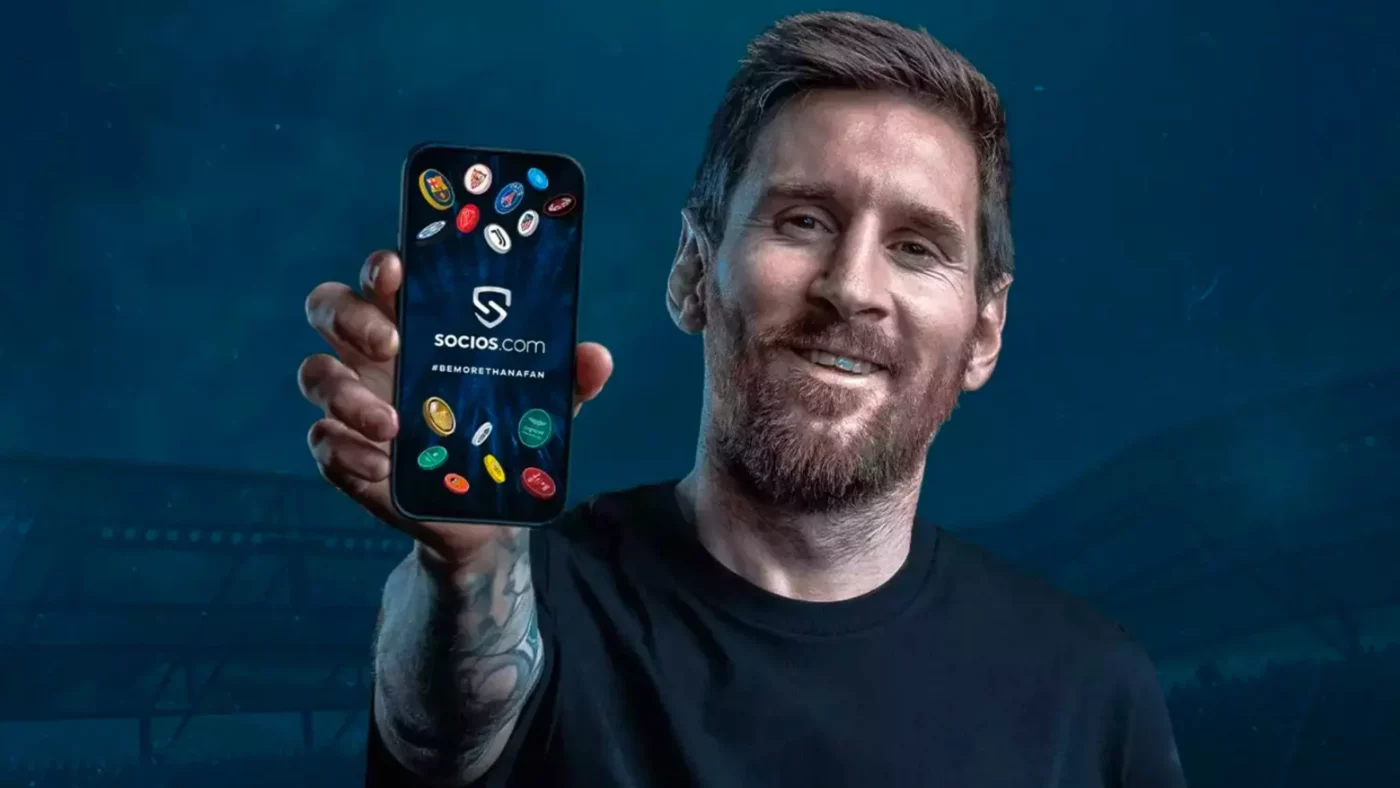
Participation: Socios.com is a fan tokens platform that cooperates with leading European football clubs. By purchasing tokens, users can directly influence team decisions and win and participate in exclusive experiences, all through the app, feeling even more part of their club.
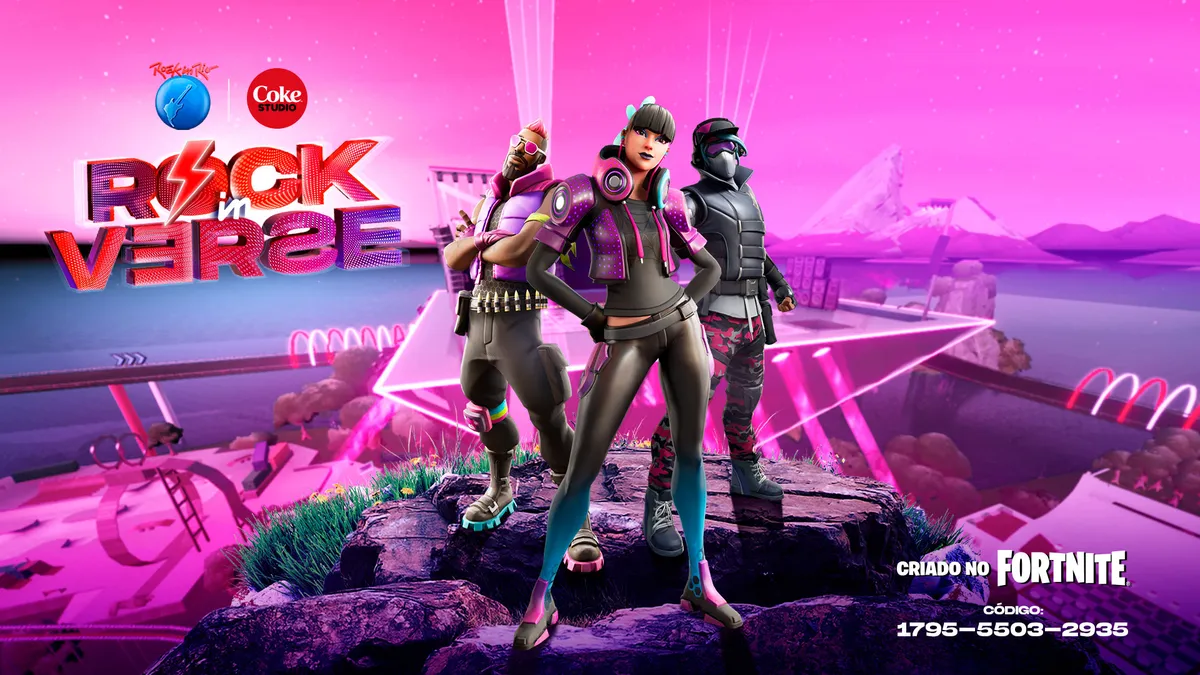
Aggregation: In partnership with Coca-Cola, Rock In Rio invaded the Metaverse with RockinVerse. Fans were able to watch streamer Casimiro reacting on his Twitch channel to the 12 spaces created by Rock in Rio inside an island in Fortnite, and also engage in various challenges that the attractions present.
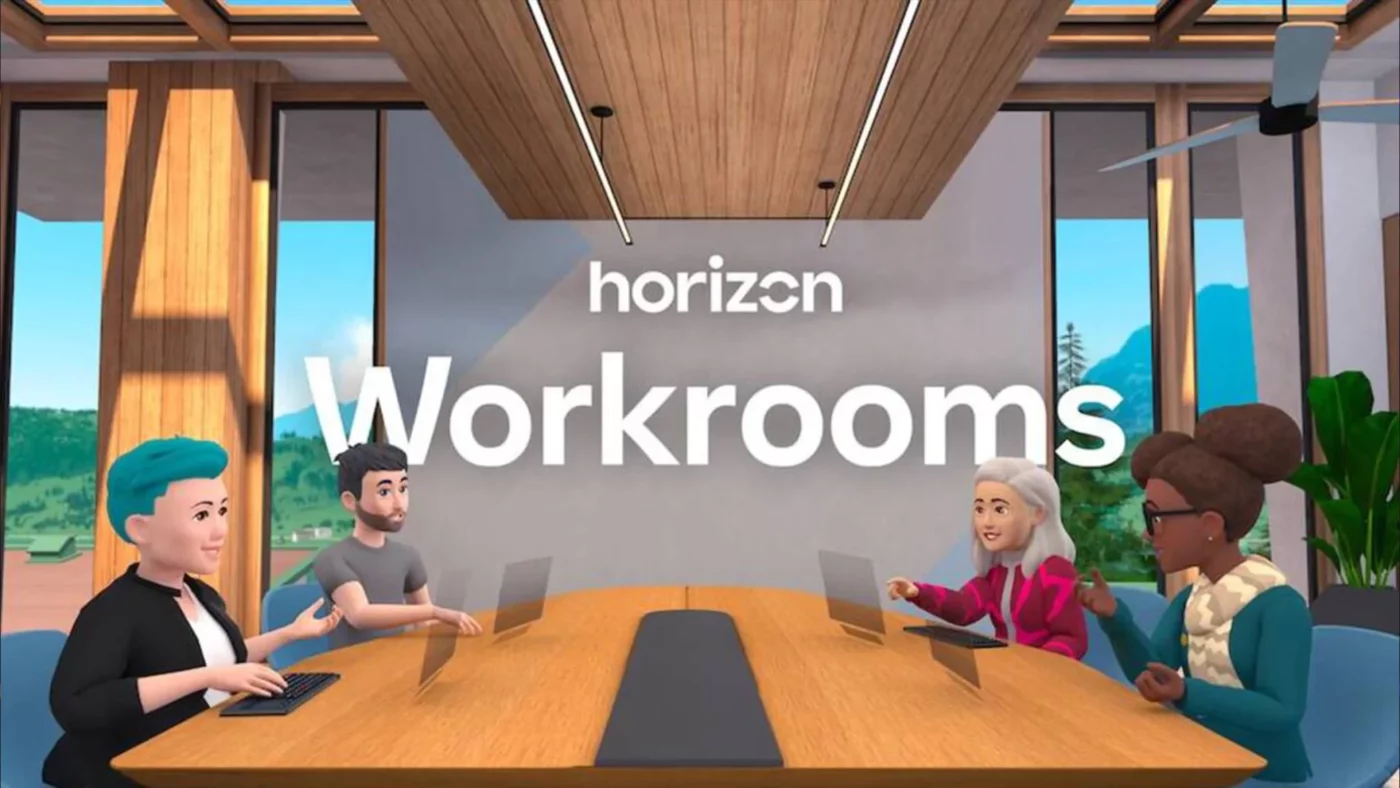
Collaboration: Meta’s Horizon Workrooms is a collaborative tool for people to come together and work in the same virtual room, regardless of physical distance. It works in virtual reality and on the web, enhancing a team’s ability to collaborate, communicate and connect remotely through the power of Virtual Reality.
Empowerment: GucciXFACEIT Last year, Gucci announced its collaboration with FACEIT, an E-Sports tournaments organiser. Together they aim to create a gaming academy, providing players with all the tools they need to become professional gamers and develop their skills.

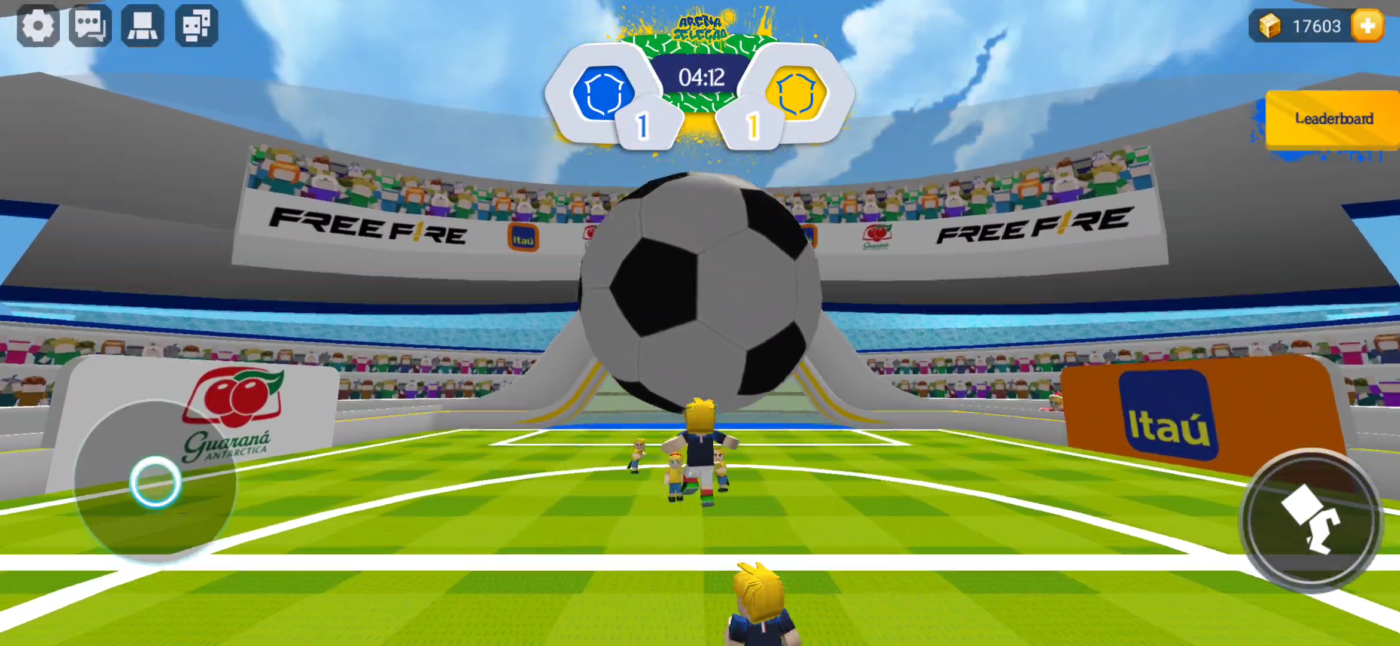
Interaction: The Brazilian Football Confederation (CBF) debuted in Garena’s Blockman Go Metaverse. The organization launched the Arena Seleção, a space that brings together interactive activities, museum, area for photos and games for users. The goal is to get closer to young fans of the Brazilian national soccer team through the digital world and games, a market that CBF aims to invest more in.
Shopping experience: Satiko, virtual influencer of Sabrina Sato, opened an activation space in Metaverse: Peixe ao Cubo, a restaurant of which she is a partner in the real world, enters the virtual reality of Cidade Alta, in GTA. The space, in addition to serving virtual meals, is a place where brands can run activations and interact with regulars.

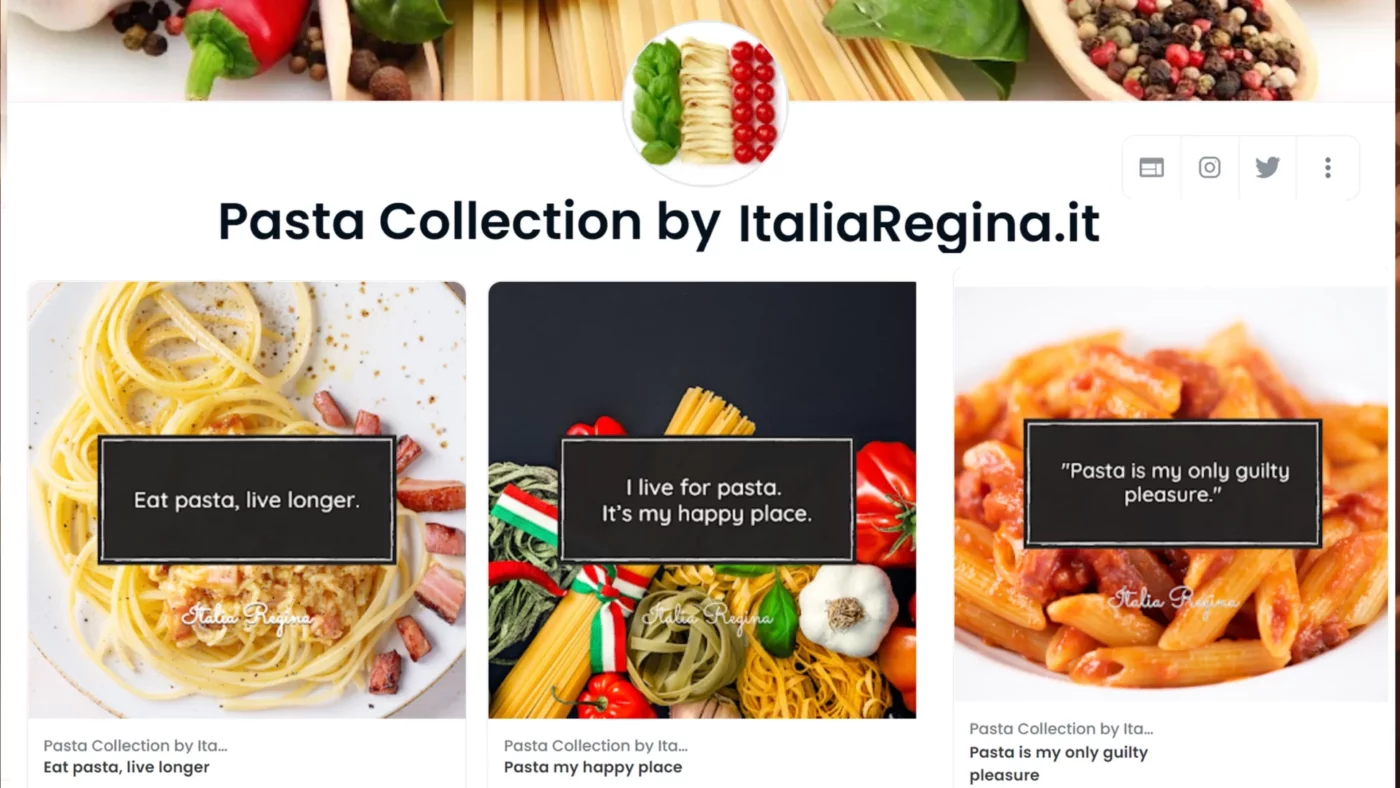
Uniqueness:Italia Regina launched its Eatable Tokens on OpenSea. These thematic NFTs focus on the most iconic Italian food products: tokens translate to unique vouchers of an equal amount to spend on “www.italiaregina.it”, uniting tasty food and the digital world.
If you are wondering how your brand could position itself within the metaverse and how to create a closer relationship with its users, email us.
The business concept by women for women lately applied in the world of brands has been calling our attention. If on one hand we are living a chaotic situation, where feelings of radicalism and neglect seem to reign – and we are not speaking (only) of politics, on the other hand we have to value the openness we are experiencing regarding gender issues, representativeness and empowerment of different groups in society. It has been, is and will always be – as far as we are concerned – the time to open dialogue on inequalities and let them take center stage in the debate.
Data show that the female presence in leadership positions is still very limited, and not only in Brazil. In Standard and Poor’s 500 index, (stock market index that tracks 500 U.S. publicly traded companies), women make up only 6.2% of all CEOs. Moreover, they face a lack of diversity in the types of businesses developed. A GEM survey, conducted by Sebrae in 2020, shows that women entrepreneurs work mainly in 6 segments – among them food, beauty and clothing. Whereas among men, this figure rises to 14.
And what can we say about women’s self-esteem? A study conducted by Kantar (WPP) in 2019 in the UK, called What women want, revealed that 85% think film and advertising misrepresent the real women, leading two-thirds of them to skip ads that negatively stereotype them. The same survey conducted in 2021 with Latin women points out that only 25% of them feel comfortable and free to make decisions concerning their body and sexuality, showing that there is still a lot to be done by brands in terms of representation.
Knowing that there is still a long way to go, but looking again at the bright side of this discussion, we searched for references from brands and organizations headed by women who are turning the tide.
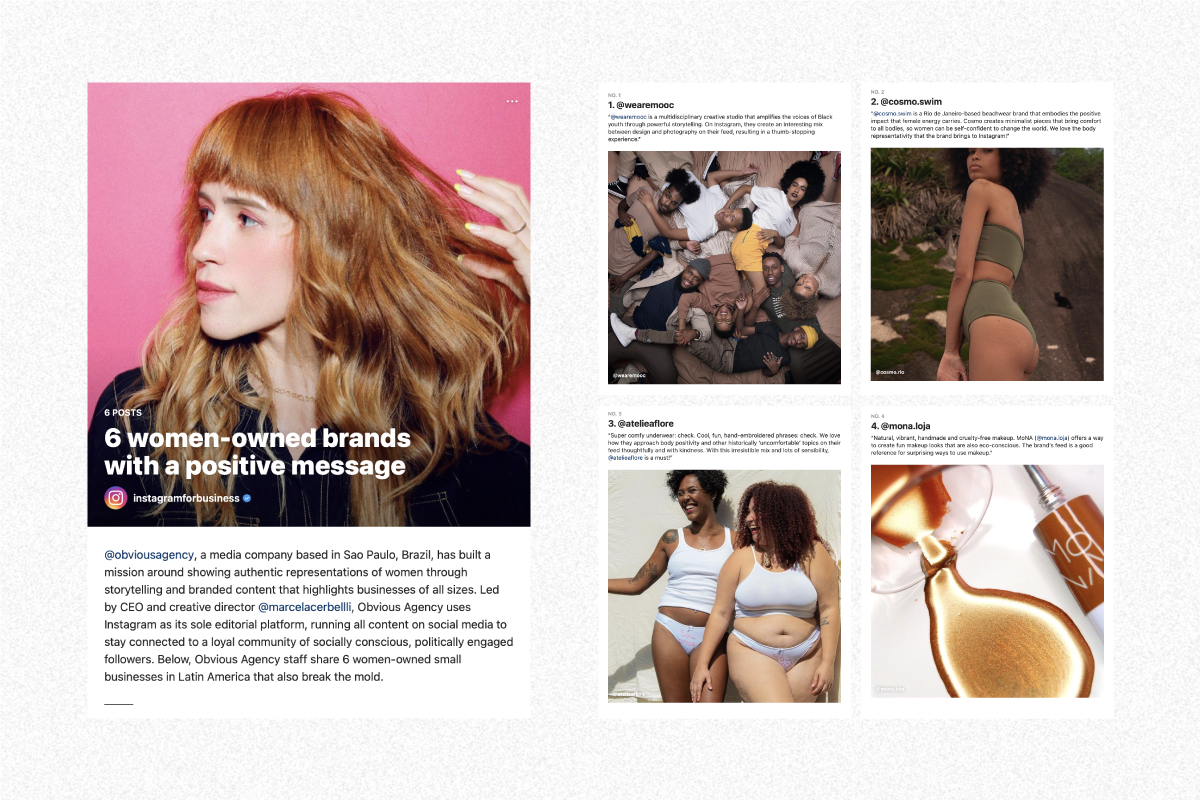
The first is a list compiled by Obvious Agency, which in itself is an inspiration, given the revolutionary way it builds content about and for women (it approaches everything: women’s rights, motherhood, self-care, sex, career, self-esteem, relationship, culture, trends). Obvious shared a list of six small businesses created by Brazilian women and how their brands transmit positive and affirmative messages. Take a look, it’s well worth it!
Another amazing example is that of the consulting company Filhos no Currículo, which invites companies to rethink working relationships and deconstruct biases about fathers and mothers. The initiative arose when Michelle Terni and Camila Antunes, the two founders, became mothers and were faced with a hostile labor market for those seeking to balance work and family life.
In the United States, the emergence of brands led by women in the category of alcoholic beverages, a sector traditionally taken by men and thought for men, is remarkably interesting. Actress Eva Longoria launched her own tequila brand last year – Casa del Sol – inspired by the goddess of agave, Mayahuel. Yola Mezcal also represents this trend: the openly feminist brand, founded and managed by 3 women, seeks to promote autonomy for its female partners who grow agave and produce the drink in the Oaxaca region of Mexico. Stepping further, the brand promoted Yola día, an “all-female” music festival, completely run by women: on stage, behind bar counters, and even working as security guards.
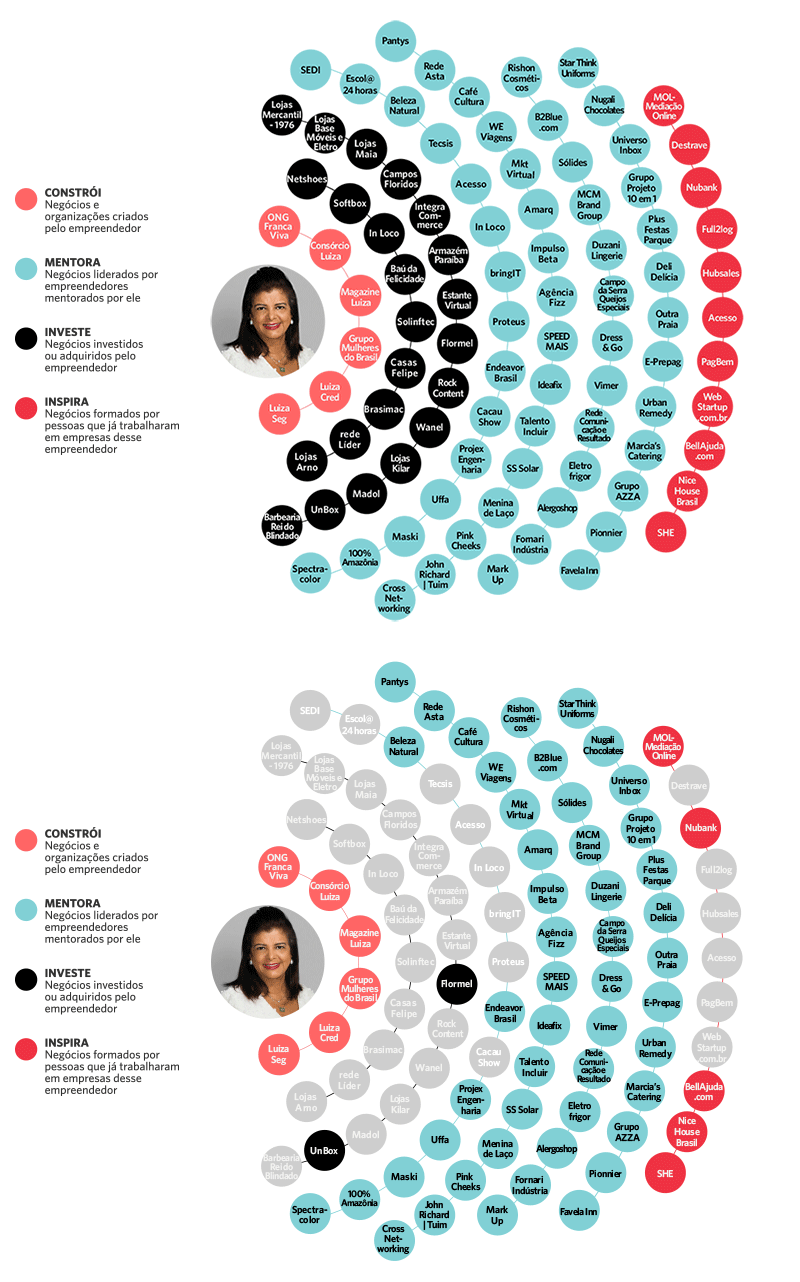
Women in power pull other women, creating a virtuous circle, as the numbers prove: a survey by the Women Entrepreneur Network Institute IRME 2021 states that 73% of women-led businesses are overwhelmingly female. Moreover, in this article of Endeavor we can see the direct impact that a leader like Luiza Trajano has on an ecosystem made up of hundreds of women, through her actions as an entrepreneur, mentor, investor and inspirer.
There is also a growing and powerful movement when it comes to deconstructing the menstruation taboo. An example of awareness campaign here in Brazil is the #ChegadeEstigma, by Intimus – Kimberly-Clark®’s brand of feminine care. “The campaign challenges society to break paradigms and negative perceptions about menstruation, which usually place women in a fragile and limited situation”, explains the brand’s Marketing Director Samia Chehab. “It is more and more my role to give voice and make room for these causes and also meet consumers’ current expectations about an active brand positioning in society”. Another woman, Thais Hamer, CBA B+G’s responsible for Intimus brand, shares Samia’s view: “the freedom I experience at work today and the purpose of the brands I assist, such as ‘Intimus’, in synergy with my values, fulfill me and motivate me to keep building a fairer world, where there’s room for all, men and women.”
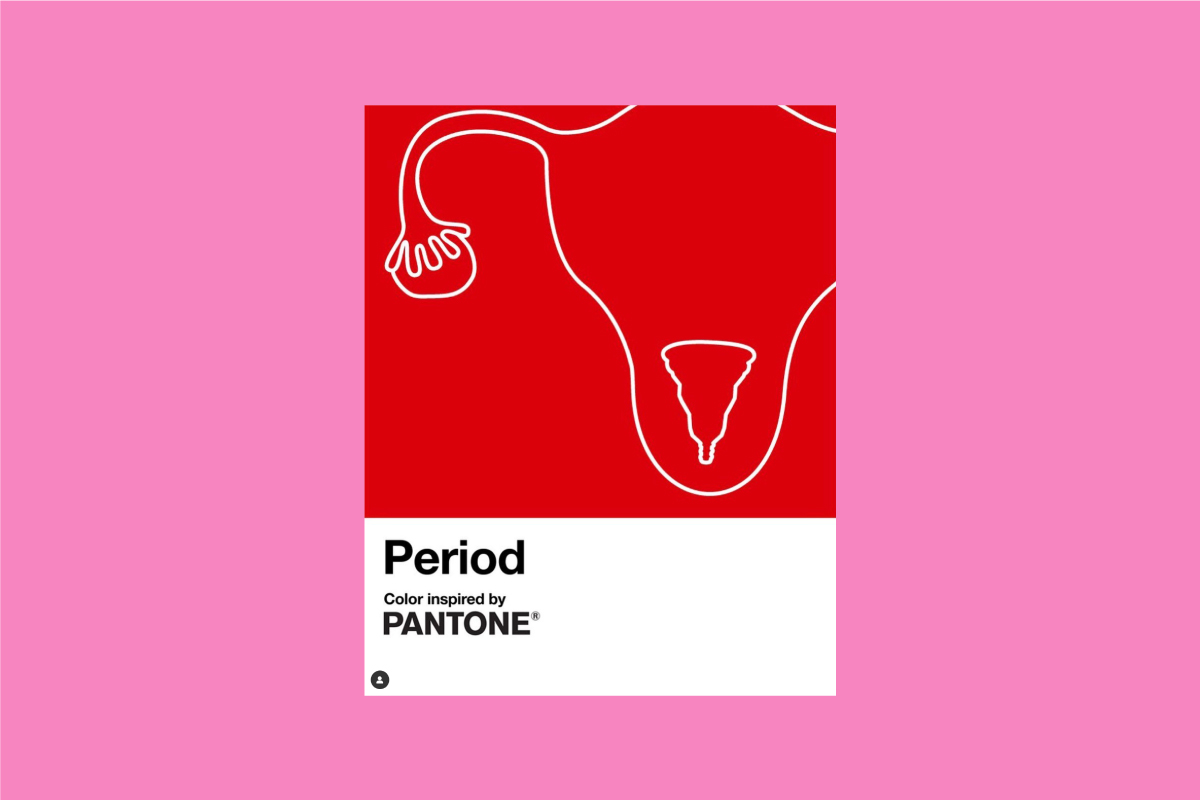
And there is more! A recent collaboration of Pantone® with a Swedish brand of menstrual cups has resulted in the red hue Period, in a campaign to promote menstrual positivity, encouraging people, regardless of gender, to feel comfortable and at ease to discuss and normalize the topic.
Transcending business, the role of women in this pandemic must be highlighted. On the one hand, it is sad to see that the female entrepreneurs were the most impacted during this period, since they have to cope with double shifts – at home and at work. On the other hand, it is worth remembering that, from the 12 countries that have better coped with the pandemic, nine are governed by women. The positive role that the feminine view and handling can play in the leading of possible solutions with respect to the pandemic scenario, becomes clear.
Speaking of view, what do we see when we look inside? How are we behaving, in our CBA B+G community, towards women? From which stance are we discussing this struggle for social change and evolution?
Women are nothing short than 65% of our total workforce, and they hold more than half of the managerial positions (54%). Considering this large representation, simple but impacting initiatives have been sought and implemented. We have introduced, since 2019, an internal policy aimed at mothers, aware of the fact that during the first year of maternity it is hard for them to balance the roles played in their family, social and business life. In addition to the 4-month maternity leave secured by law, a short-time and gradually restored work schedule – in a home-office regime – allows mothers to resume the regular work activities 12 months after giving birth.
Working on the assumption that we are all exposed to structural contamination, gender issues are being closely observed, beyond the figures. As for example at the Board of Directors, where only one of the four positions is held by a woman. “Balance is the key-word”, says Shirley Rodrigues, HR manager. “The search for equity is one of the reasons for the internal study we are conducting to understand, historically, how our recruiting process and career development program have been driven, so that we are able to realize, in the course of time, if we are promoting gender equality, for example. And if not, what are the factors that cause this imbalance, in spite of our mostly feminine management environment – which has an active voice concerning promotions and bonuses. We want to understand which causes are structural – and therefore invisible to the arguments; which are cultural – and must be reviewed; and finally which are contextual and temporary… an on-going analysis and adjustment motion which, in spite of the two decades of operation, we are examining in-depth for the first time.”
From brands to products, personal stories to social policies, across countries and continents, and in all spheres, women carry the power of change in a world that longs for balance through pro-women solutions. Finally, we would like to indulge with a time capsule, recalling now and forever, some of the icons of feminism. To print and fix on your fuchsia, cyan, black, period – or whatever color you please – wall!

Fragmented markets, multiplied channels, diversified audiences: it’s increasingly complex for companies to offer their products and services. Under pressure to grow exponentially, they often launch a very high number of new lines every year. In the United States alone, 30,000 new products in the FMCG (Fast Moving Consumer Goods) category are launched on average each year by thousands of brands (Nielsen 2019). But the expansion needs to be well done to work. The uncontrolled proliferation of new brands can confuse the consumer, diluting positioning and generating unnecessary expenses.
In view of this reality, having a solid portfolio strategy, associated with a coherent brand architecture is essential to leverage its potential in the market, facilitating management, directing expansion and defining a clear vision of innovation. But what exactly are portfolio strategy and brand architecture – complementary yet different concepts, and what are their benefits?
For Alex Espinosa, head of strategy and partner at CBA B+G, “Portfolio strategy, together with brand architecture, is a journey through which the company defines, organizes and brings life to its vision in a way that is connected with its offer. Only then can it translate these elements to the consumer.” This makes them key branding elements, as they reinforce differentiation among competitors, in addition to guiding design choices and helping to outline a clear vision of innovation.
On the other hand, David A. Aaker, author of the book Brand Portfolio Strategy (2004), compares the brand portfolio to a football team that works together, where each member has defined roles to enable and support the business as a whole, aiming to prosperity and expansion. This view of brand management isn’t limited to large multinationals. Regardless of the size of the company, it contributes to:
Optimize investments, getting rid of unproductive brands and strengthening the identified key brands;
Segment messages, products and services for each of the target audiences, making the customer aware of the proposals of each brand;
Ensure visual and verbal consistency of all lines and SKUs.
Polenghi: how the construction of the portfolio architecture strengthened the brand’s presence in special cheeses
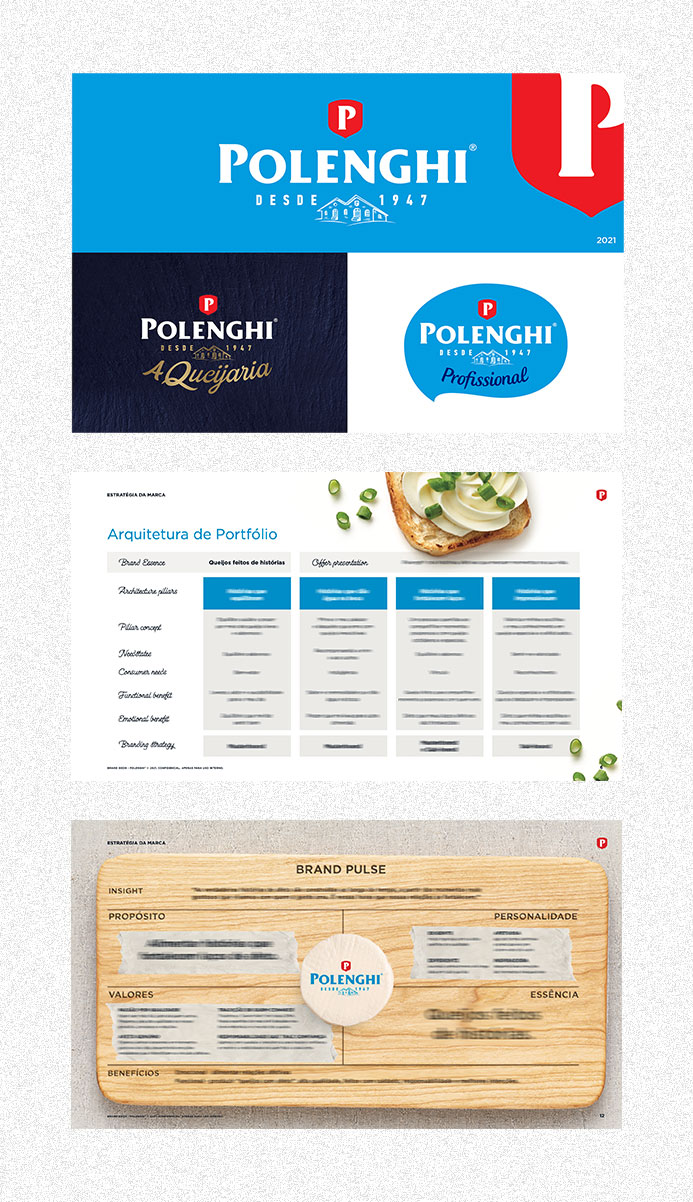
Polenghi, the most beloved cheese brand in Brazil that has been on the market for almost 80 years, came to us to make a deep repositioning, seeking to capture its essence and attract new consumers. One of the major challenges of the project was to develop a solid portfolio architecture because the brand had never created one. After in-depth research, we got together with customers and consumers to structure it: we connected each pillar with its positioning and consumer needs (need states). More specifically, the new organization of products showed the need to strengthen the brand’s presence in the special cheese segment. This was the impulse needed to get rid of the Polenghi Sélection, a sub-brand that was not bringing the expected results and create Polenghi A Queijaria®, with the mission of democratizing fine cheeses through unique and uncomplicated products with a renewed identity. Read the complete portfolio repositioning and structuring case here.
Within the portfolio strategy, architecture is the system that establishes a clear value proposition for brands, helping their audience to identify them. In addition to defining the hierarchy and the relationship between them, it establishes how brands are perceived by consumers, their unique characteristics and how they satisfy their needs. Therefore, the architecture makes it possible to create a conceptual guide on how this portfolio should be developed and actually presented to consumers, including answers on how each brand should communicate, visually and verbally.
From PORTFOLIO STRATEGY…
Aims to create synergy, optimization, and clarity, providing answers about what the company should do regarding the competition, and its market share.
A global view of brand management, prior to brand architecture.
Focused on the company’s business vision.
In-depth analysis of the role and relevance of each brand for the business.
Helps the company make decisions about where to place investments, which brands to prioritize, which brands to eliminate, and where to innovate
… to BRAND ARCHITECTURE
From PORTFOLIO STRATEGY…
Aims to create synergy, optimization, and clarity, providing answers about what the company should do regarding the competition, and its market share.
A global view of brand management, prior to brand architecture.
Focused on the company’s business vision.
In-depth analysis of the role and relevance of each brand for the business.
Helps the company make decisions about where to place investments, which brands to prioritize, which brands to eliminate, and where to innovate
… to BRAND ARCHITECTURE
Together, they make it possible to build relevant, differentiated, and resilient brands.
There are four famous architectural models adopted by companies, which help them choose the most appropriate relationship between the master brand and the other brands in the portfolio.
I’m green™: how the transformation of a product brand into a masterbrand expanded its scope in renewable sources
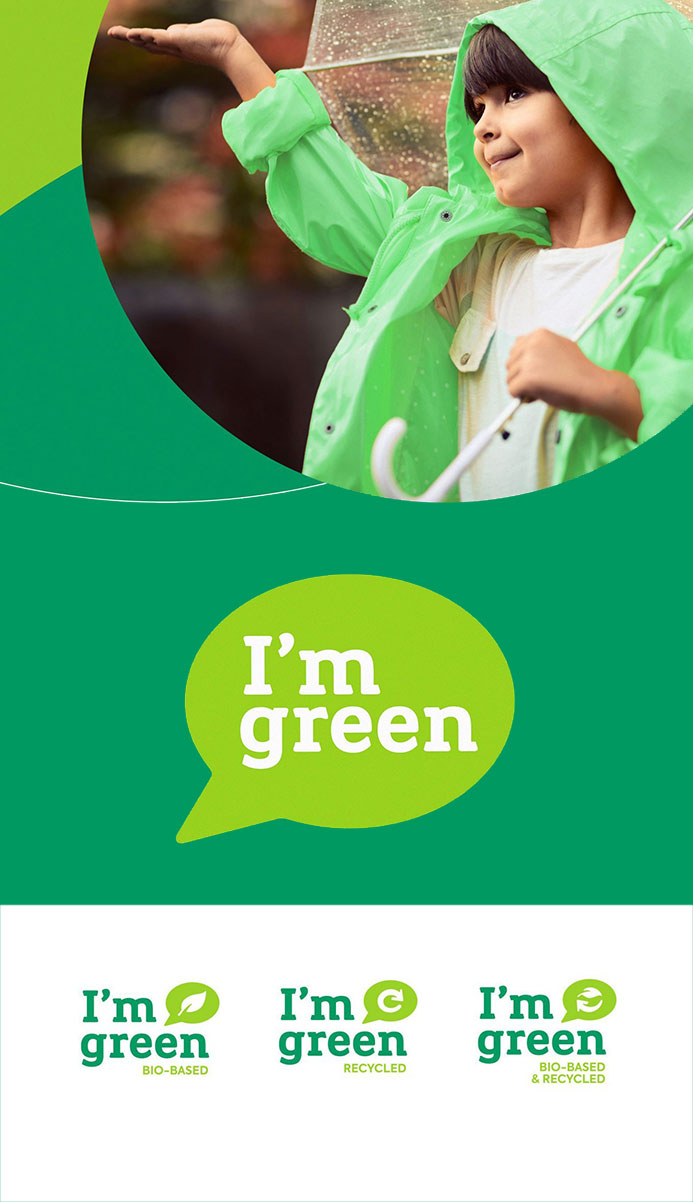
For Braskem, we designed the expansion of the product portfolio in favor of the Circular Economy based on the I’m green™ brand. The brand designated only one type of plastic resin produced from renewable raw material, the so-called ‘bio-based’, while other products from a renewable and recyclable source were scattered throughout the portfolio. When we looked at the portfolio strategy as a whole, we saw an opportunity to expand and bring together all renewable sources under one strong brand, the already recognized I’m green™. Thus, through the reorganization and transformation of a product brand into a masterbrand, we expanded Braskem’s sustainable activities, building Brand Equity. Read more about the case here.

There are three fundamental elements to take into account when creating the pillars that will structure a brand’s portfolio:
Positioning: When creating the pillars, the portfolio must be connected with the positioning of the master brand, present or invisible, and all its sub-brands or endorsed brands, reflecting their values, attributes and personality, avoiding developing offers that are not aligned with your vision and that dilute your brand equity. Therefore, our portfolio organization always starts with a deep redefinition of the brand essence, as this will provide a clear direction.
Consumer needs (needstates): It is common for companies to segment by functional criteria strictly linked to their internal vision, such as price, channel or sales units. However, the most successful segmentation must be driven by consumer needs. Therefore, at CBA B+G we prioritize segmenting by needstates, which can be defined as the intersection between what consumers want and how they want it.
Business objectives: The portfolio strategy bridges the gap between brand management and the company’s business vision. Therefore, in addition to the positioning, it is necessary to keep in mind how each pillar and each brand meets these objectives and, if they do not meet them, the right decisions must be taken to ensure good results, growth and profit.
Carlos V: how the creation of emotional pillars, based on consumer needs, strengthened the brand and guided the expansion of the premium line
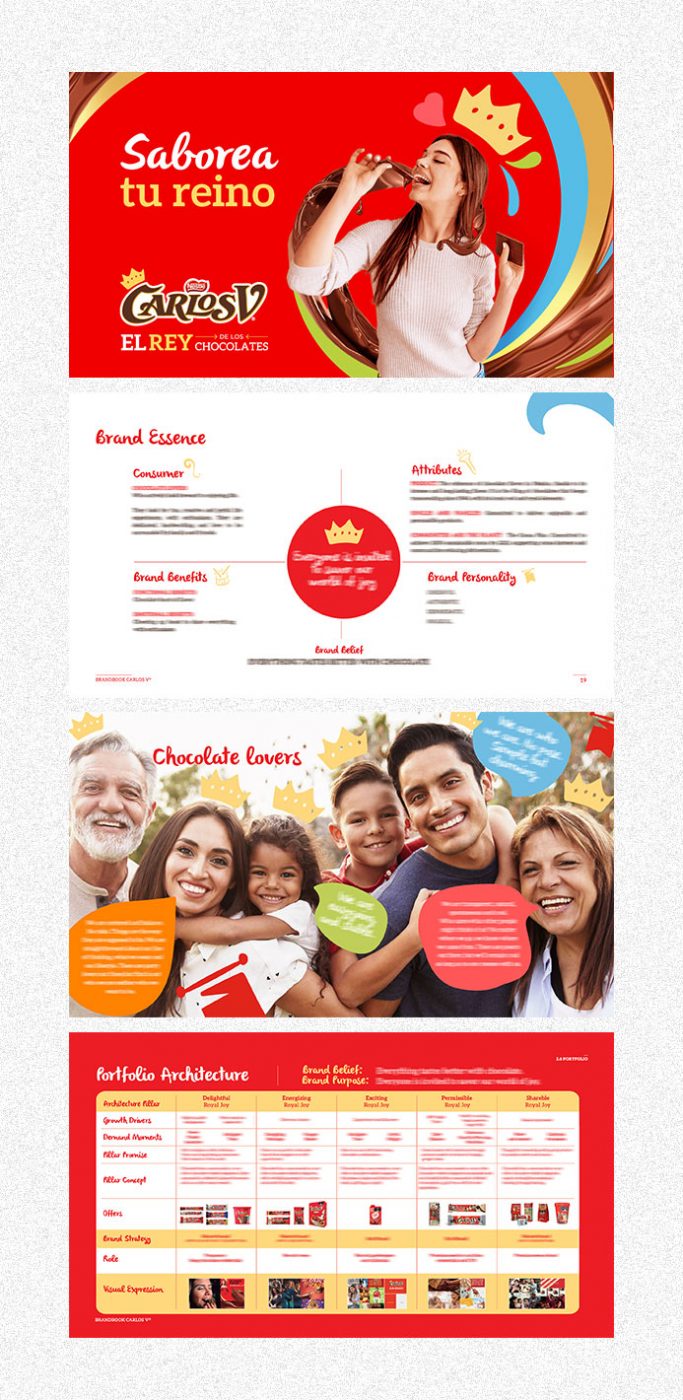
Carlos V, Mexico’s most popular and traditional chocolate, was suffering from intense competition from other snack brands, perceived as having higher quality and greater engagement with children. The challenge was to modernize it and build a unique territory while maintaining its historical legacy.
When reviewing the entire brand strategy, we saw the opportunity to expand audiences to also target chocolate-loving adults, re-signifying the brand’s fun and magical personality. Based on its new essence, we reorganized the portfolio so that each pillar was aligned with the needstates and brought emotional attributes. This helped define differentiated product features, which led to the establishment of powerful brand properties and a complete renewal of the visual identity of all lines. See more about the case here.
Designing a coherent portfolio strategy with a solid architecture is not easy, which is why we help our clients to draw a complete vision of the brand, uncovering opportunities for line extensions and renewals. Polenghi, Braskem and Carlos V are just some of the portfolio strategy jobs that we have developed. We have many other partners such as Häagen-Dazs, Ninho or Purina. Come and transform your brand with us, creating clarity in your brand portfolio, based on deep positioning work. Click here for more information.
CBA B+G
Goodbye 2021, long live 2022!
After almost two years of pandemic, people around the planet have resumed their activities, with a burning desire to make the world a better place.
To start off this new cycle on the right foot, we invite you to read the Useful Design Trends 2022, our proprietary report with 15 trends in five major areas, which inspire utility through design.
*By filling in your details you agree to receive Blimp, our bimonthly newsletter.
To access the report, subscribe to Blimp, our monthly newsletter which brings together exclusive content on branding and design.
If this report has given you ideas, do not hesitate to contact us, to think together about how to make them happen.
Interaction and transformation are the actions that guide Café+, the internal initiative of CBA B+G – a space to think about sustainability, diversity, inclusion and many other urgent matters. Last month, our guest speaker at Café+ Circularity, was Fabio Sant’Ana, Braskem’s Specialist in Market Development of Packaging for Circular Economy and Consumer Goods.
The almost two-hour chat was attended by a room full of inquiring people, who were eager to learn what the designer and entrepreneur had to share. Here are some passages:
How should design rethink the plastic in the packaging?
We are well aware that this is an urgent topic, and the market has changed a lot regarding the briefing for packaging production. In the past, progress used to be based on cost, performance and communication; today the scenario has changed; these factors are still important, of course, but other drivers, such as sustainability and convenience, have been included.
The constant consumer movements demanding the commitment of companies to sustainability has led to increasingly complex environments. In this context, which requires an enlarged look, the circular economy model gains momentum, and design plays a very important role.
Tell us a little bit more about circular economy.
The circular economy is a business model that looks at sustainability as an intrinsic part of the process of industrialization and monetization, unlike the linear economy model. In the latter, the high point is when the consumer buys the product, and the idea is to make him buy again. However, in that model, there’s a constant extraction of raw material in high volume, while the value of the product decreases dramatically after use, since after use no alternative is considered other than low-value disposal.
The circular economy model promotes reuse and alternative solutions for post-consumption, such as maintenance, remanufacturing, and recycling. If we focus on the reuse model alone, which proposes the use of products for longer, we will notice that different opportunities for new business models associated with it eventually arise. And this requires a design-oriented thinking.
What do you mean? How does the circular economy encourage new business models? In what sense is it innovative?
It is innovative in the sense that the focus shifts from the product itself, to services. For example: there are furniture brands that, being familiar with the practices of the circular economy, have developed a new service: the repurchase of used furniture (buy back service) – and doing so with an interesting and engaging narrative, proposing that old furniture gain a new life. Another example: not so long ago, it was considered top-notch for computer companies to be able to assemble their computers in two minutes. Today, their KPI is certainly moving towards offering a product that can also be DISassembled in two minutes… It is the application of the concept ‘reuse, recycle, reduce’, and this directly impacts the type of product that we, designers, have to propose and design.
In your opinion, what should be done to broaden the vision of ‘product as a service’ and engage companies in this issue?
It’s a complex path. That’s how we see it at Braskem: we have a short-term focused team dedicated to the sale of resins. Meanwhile, the market development area thinks of a medium and long-term scope, predicting and planning five years ahead, to build a future market for managers to act. So it is a construction; a long, continuous and extremely necessary transition. It is an exercise of looking to different directions and changing the way you relate to products. We need to face the issue of scarcity, and in this sense, the circular economy, as a hybrid model, presents itself as a viable path: it is more sustainable both economically – searching for solutions and models that replace use by reuse, the production of goods by the supply of services – as well as environmentally, proposing a greater balance of ecosystems.
It’s a controversial topic, even more so in petrochemicals. Thinking from our point of view, as a design office, what should be the approach with customers? Where should we focus first: on material resources, logistics, post-consumption?
There is no ready recipe, it depends on the market in which each company operates. In the food sector, for example, the attention given to packaging demands a specific approach, since it works almost like an extended concept of the health and nutrition that it involves. In the hygiene products sector, on the other hand, the issue of water consumption is crucial, so the approach can be sustainability in the industrial process.
But the entire industry, to a greater or lesser extent, is launching its commitments to sustainability, which are based on four pillars: material optimization; production of 100% recyclable, reusable or compostable packaging; use of recycled and use of renewable. Based on that, it is necessary to look at the customer’s need and understand: where are they inserted? What kind of business are they in? What is your consumer’s journey? And how to integrate it with the packaging journey, making it more circular and sustainable? While industries think about efficiency, the FMCG sector also values other attributes, such as consumer experience. The power of the brand reverberates differently depending on the universe. All of this provides the consumer with different value propositions.
Indeed, there is a great opportunity to make the most of the consumer journey. How to design a product, thinking about this journey?
Influencing the journey can be a starting point, but circular thinking is much greater. It is a responsibility of businesses and consumers. See, the world works in a linear way, that’s the challenge. Everyone has to compromise and collaborate from their position; it is more than sustainable packaging; it is a sustainable solution. The entire cycle – supply, use, reuse – requires a transition to new models of thinking and consumption. We are all looking for solutions, and it is not just about who “pays” for the changes.
Privacy Overview