Or select a location to continue to your local agency
Did you know that on average, a household throws away 25 single-use plastic bottles of hand soap a year, most of which are not recycled?
The beauty and cosmetics industry has been in the spotlight for the past decade; sustainability criteria and new generations of consumers demand a radical change in packaging policies. What if our favorite products disappeared after use… along with their packaging?
/ Soluble packaging, what is it?
Water-soluble packaging, edible packaging… they all have the same purpose (and fate): enemies of single-use packaging, they’re meant to disappear! This innovative initiative, led by committed startups, offers an ecological solution to reduce plastic waste across all sectors. Designed to completely dissolve in water, soluble packaging eliminates the need to dispose of non-biodegradable materials, thus reducing the environmental footprint.
Soluble packaging is already a reality. According to Insight Ace Analytic, the global soluble packaging market was estimated at $3.39 billion in 2023 and is expected to reach $6.06 billion by 2031. This technology has already found its place in the food sector. How can we package water without leaving an impact on the planet?
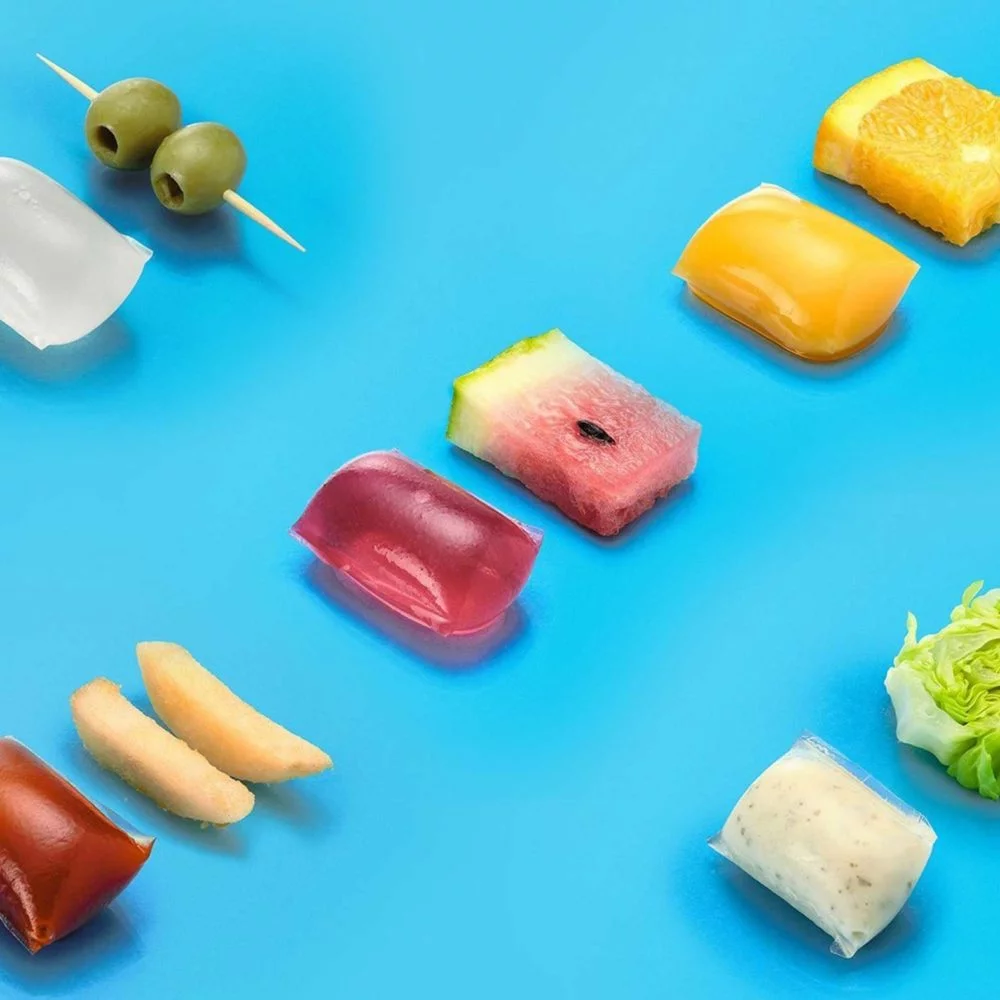
NotPla, the startup behind algae and plant-based packaging, believes it has found a solution with its Ohoo range: water in the form of an edible blob. You basically eat your drink.
Soluble packaging is already a reality. According to Insight Ace Analytic, the global soluble packaging market was estimated at $3.39 billion in 2023 and is expected to reach $6.06 billion by 2031. This technology has already found its place in the food sector. How can we package water without leaving an impact on the planet?
NotPla, the startup behind algae and plant-based packaging, believes it has found a solution with its Ohoo range: water in the form of an edible blob. You basically eat your drink.
And… what about beauty and cosmetics? Soluble packaging is gradually being integrated into all categories. From shower gels to hair care, makeup, body and hand soaps, cleansers, masks, creams… by expanding into consumer goods, all categories are affected. Several successful startups have already adopted soluble packaging as a competitive advantage. Let’s discover this trend together.
/ Gen Z: Balancing consumption and sustainability concerns
How to reconcile the desire to consume with the need for sustainability? Soluble packaging is an ideal solution for Generation Z. By offering products in single doses in packaging that dissolves in water, this innovation helps reduce waste. Gen Z, conscious consumer-actors, thus favor more sustainable options while maintaining their comfort, a smart compromise between consuming and preserving the environment.
INVISIBLEBAG, a soluble packaging provider, enables manufacturers and brands to replace conventional plastic packaging with compostable, biodegradable packaging without harmful residue on land.
How to reconcile the desire to consume with the need for sustainability? Soluble packaging is an ideal solution for Generation Z. By offering products in single doses in packaging that dissolves in water, this innovation helps reduce waste. Gen Z, conscious consumer-actors, thus favor more sustainable options while maintaining their comfort, a smart compromise between consuming and preserving the environment.
INVISIBLEBAG, a soluble packaging provider, enables manufacturers and brands to replace conventional plastic packaging with compostable, biodegradable packaging without harmful residue on land.
/ Life in plastic, not so fantastic
Reducing plastic waste is an unavoidable challenge for the beauty and cosmetics industry. From conception to disappearance, soluble packaging reduces the carbon footprint of our products, thus demonstrating our commitment to sustainability. We can FINALLY enjoy our well-being routine without feeling guilty.
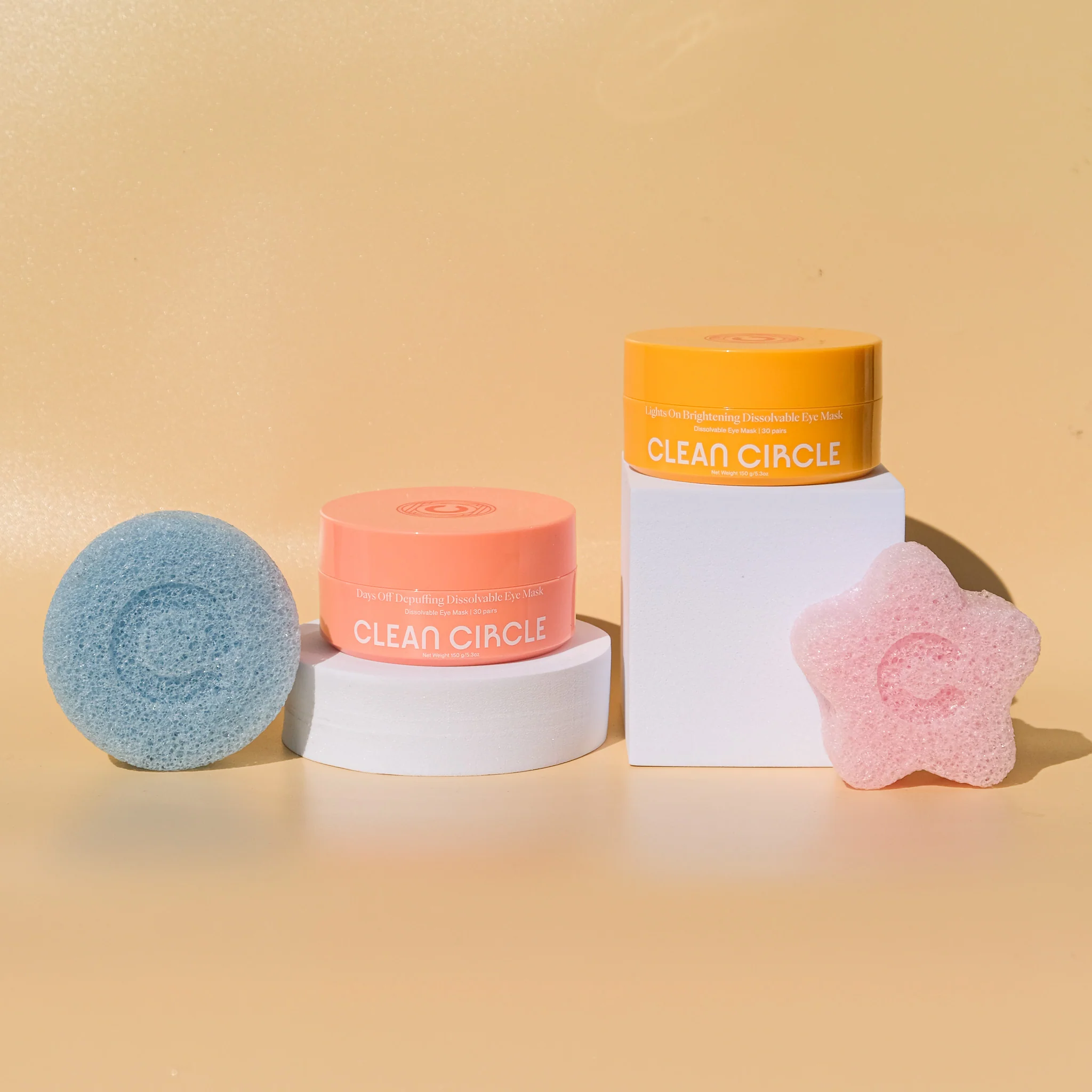
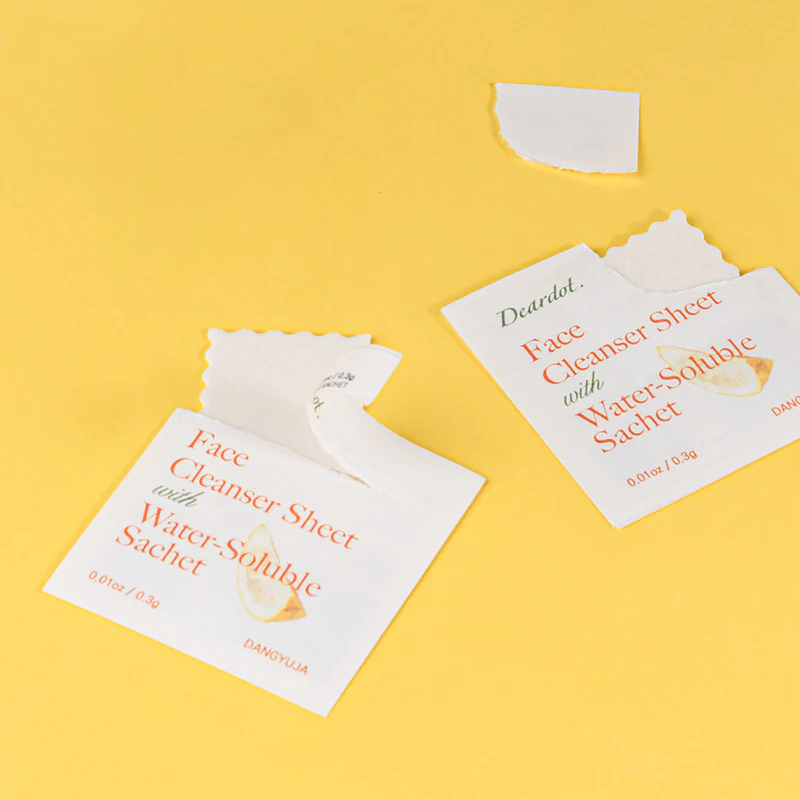
Clean Circle, an engaged cosmetics brand, has created water-soluble eye patches after use. Deardot, on the other hand, has developed solid sheets that transform into cleansers after being moistened, all in a soluble bag that dissolves in the sink in… 5 seconds!
One of the soluble packaging’s best friends is the soluble ingredient (bestie check!) The latter refers to solid formulations that, once moistened, take their final usable form. Solid formulations offer appreciable benefits in terms of stability, allowing high concentrations of active ingredients, resulting in a better user experience for customers.
Let’s focus on shower gels. The principle is both simple and ingenious: instead of regularly buying traditional bottles, which contain a large amount of water and are packaged in disposable plastic packaging, consumers can now opt for a format of shower gel in solid active ingredient. The latter comes in the form of bars that can be dissolved in water at home to reform the liquid shower gel. Refill, moisten and shake it off! It’s also a moment of entertainment and learning for children, Do It Yourself-wise. Your kids (and the planet) will thank you later.
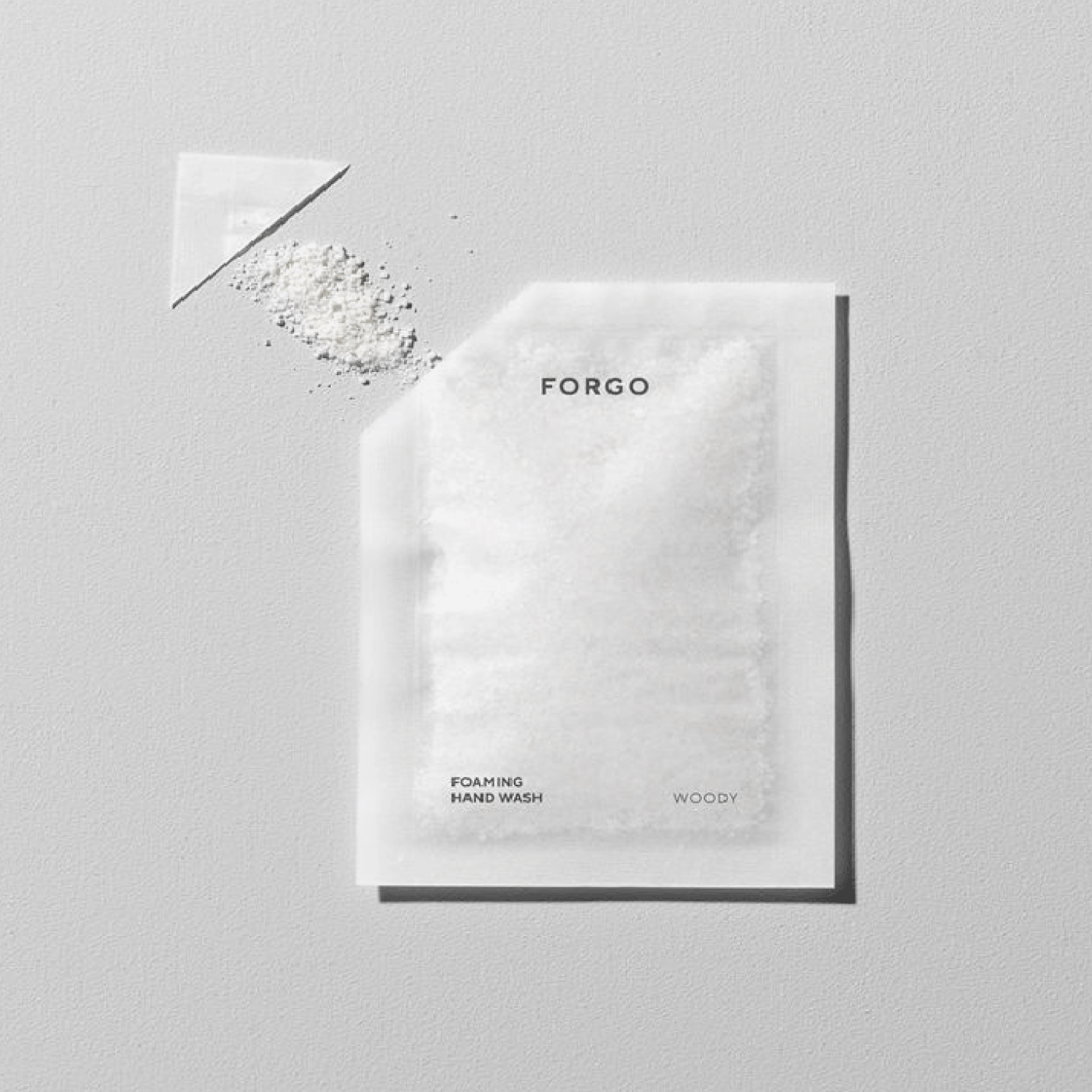
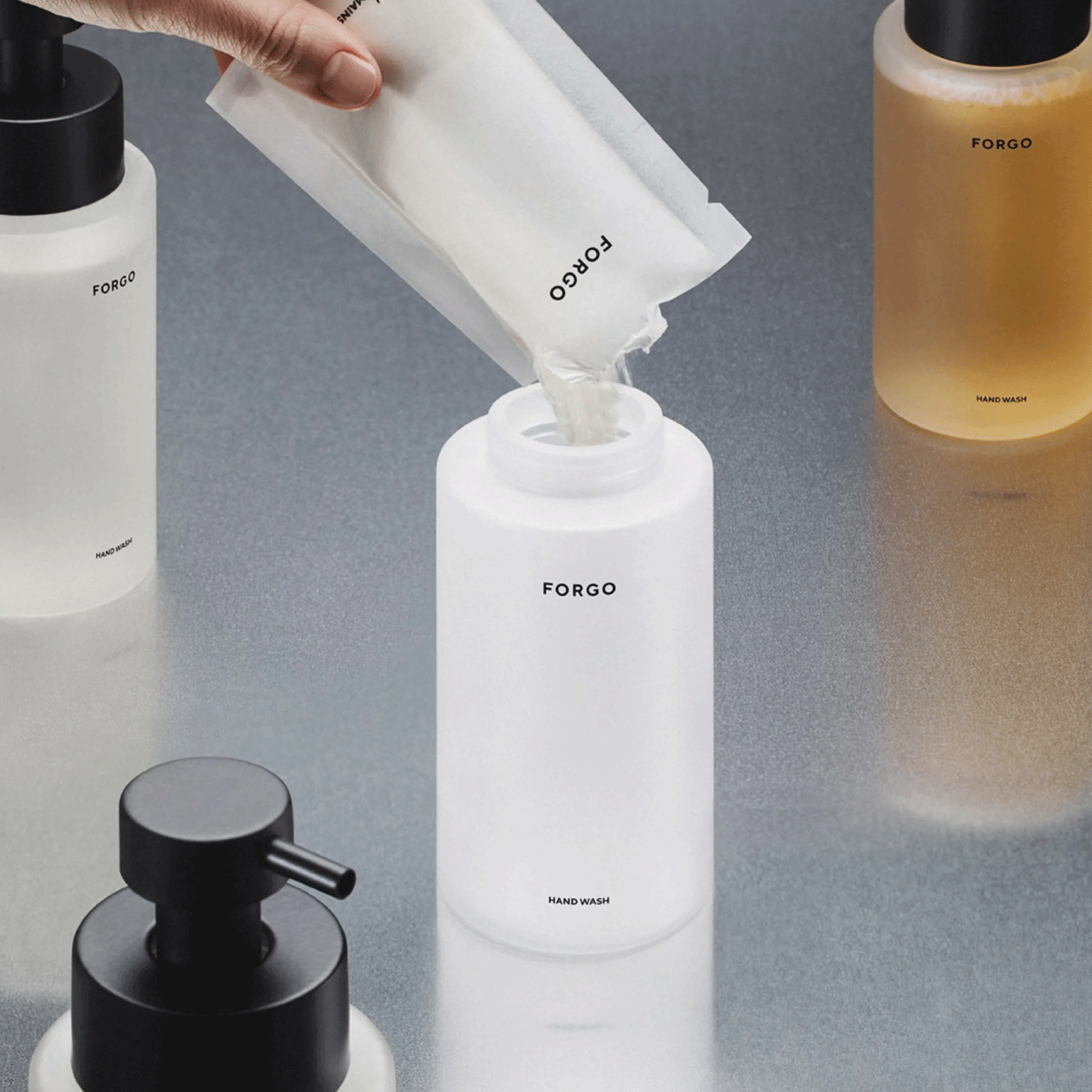
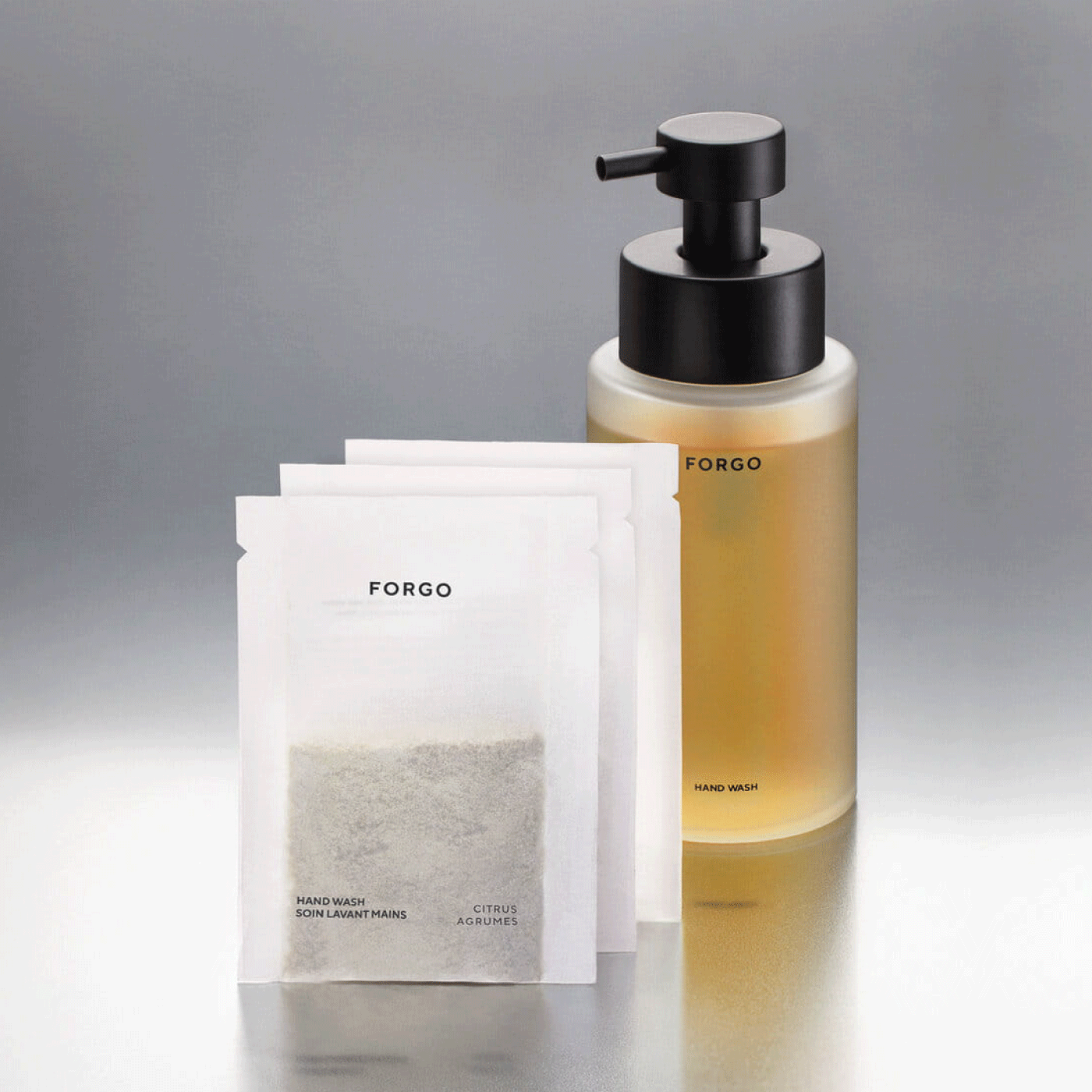
Forgo, a Swedish cosmetics brand, has developed an effective solution to eliminate plastic: a refillable glass bottle and plastic-free paper refills to make hand soap. Just pour the refill powder into the bottle, add water, and shake (a Mojito, please)! Each refill means no plastic bottle and up to 85% fewer greenhouse gas emission.
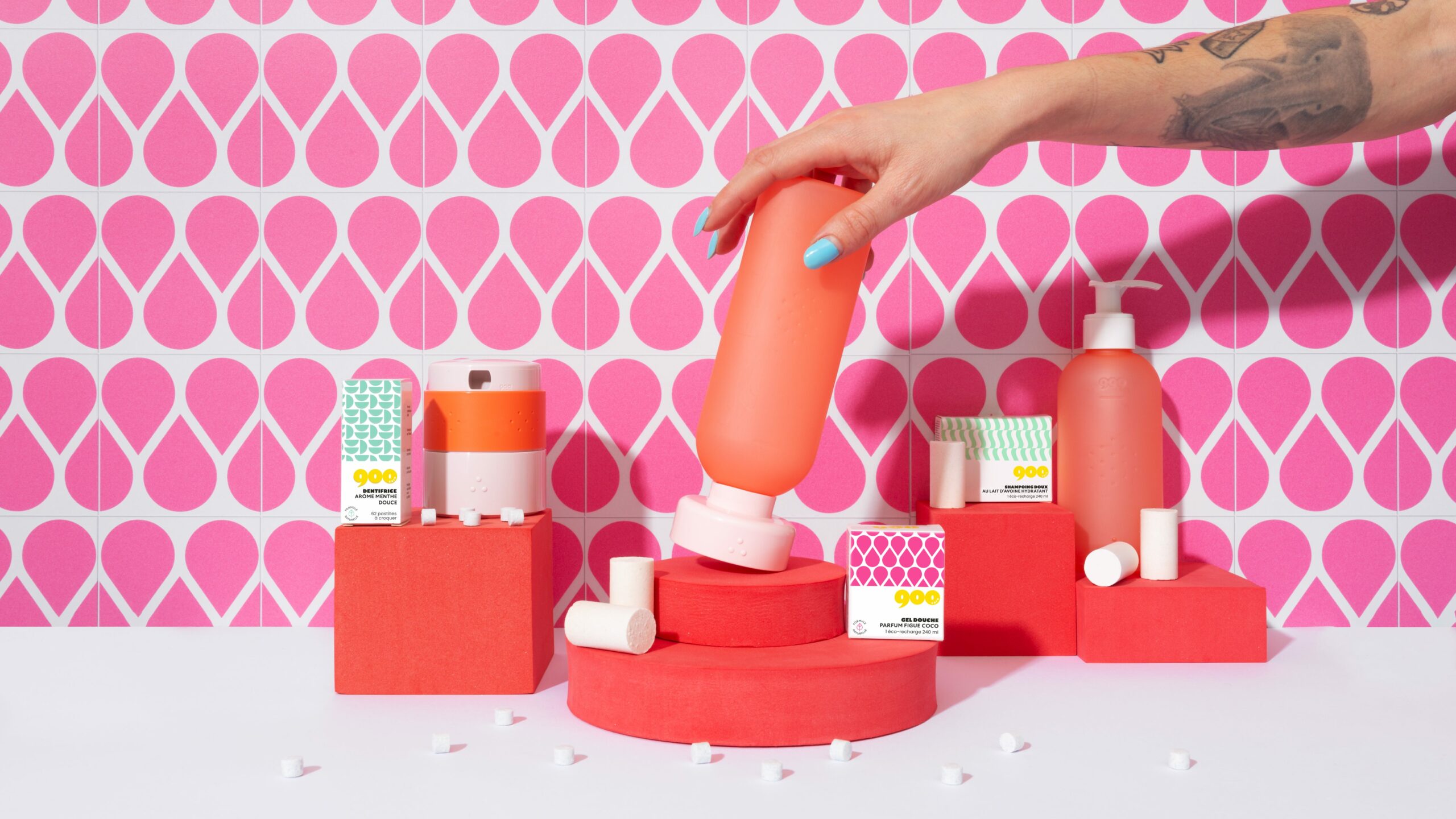
From self-care to household products, 900.care has already conquered the French market for refillable products. Having raised 21 million euros in April 2024, the startup continues its revolution within households.
In 2024, soluble packaging is no longer a miracle solution; it is now a reality that addresses many sustainability challenges in the industry. Between consumption needs and global concerns, it fully meets the expectations of a new generation of consumers. Perhaps it is the lever you need for your next launch? You too, take the step towards change.
To discover more trends, download right now our 2024 Useful Design Trends report.
In today’s world, social connection is more important than ever, especially post-pandemic. Citizens, specifically Generation Z, are increasingly craving real-life social interactions and experiences. This shift in consumer behavior has had a profound impact on the retail landscape.
As physical retail gains momentum once again, brands are reevaluating the undeniable importance of brick-and-mortar stores. They are actively seeking ways to elevate brand experiences and create meaningful connections with their customers. This underscores the critical need to stay abreast of current retail design trends and consumer preferences.
/ CONSUMER NEEDS
Despite having less purchasing power compared to older generations, Gen Z comprises a significant portion of the global population and represents the future consumer base. Their proficiency with the internet and social media not only influences market trends and brand decisions but also plays a pivotal role in shaping the retail landscape.
Gen Z, being digital natives, shows nearly equal engagement with brands in physical stores and online platforms, as evidenced by survey published by ICSC in 2023. Consequently, brands must ensure a seamless path-to-purchase experience in-store that mirrors the online experience while offering tangible benefits to customers visiting physical stores.
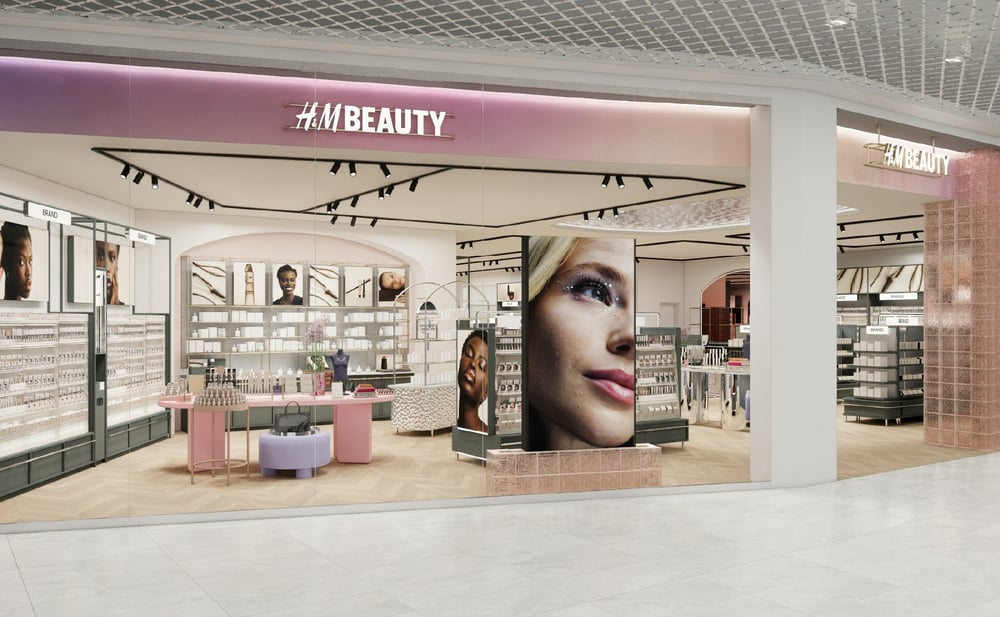
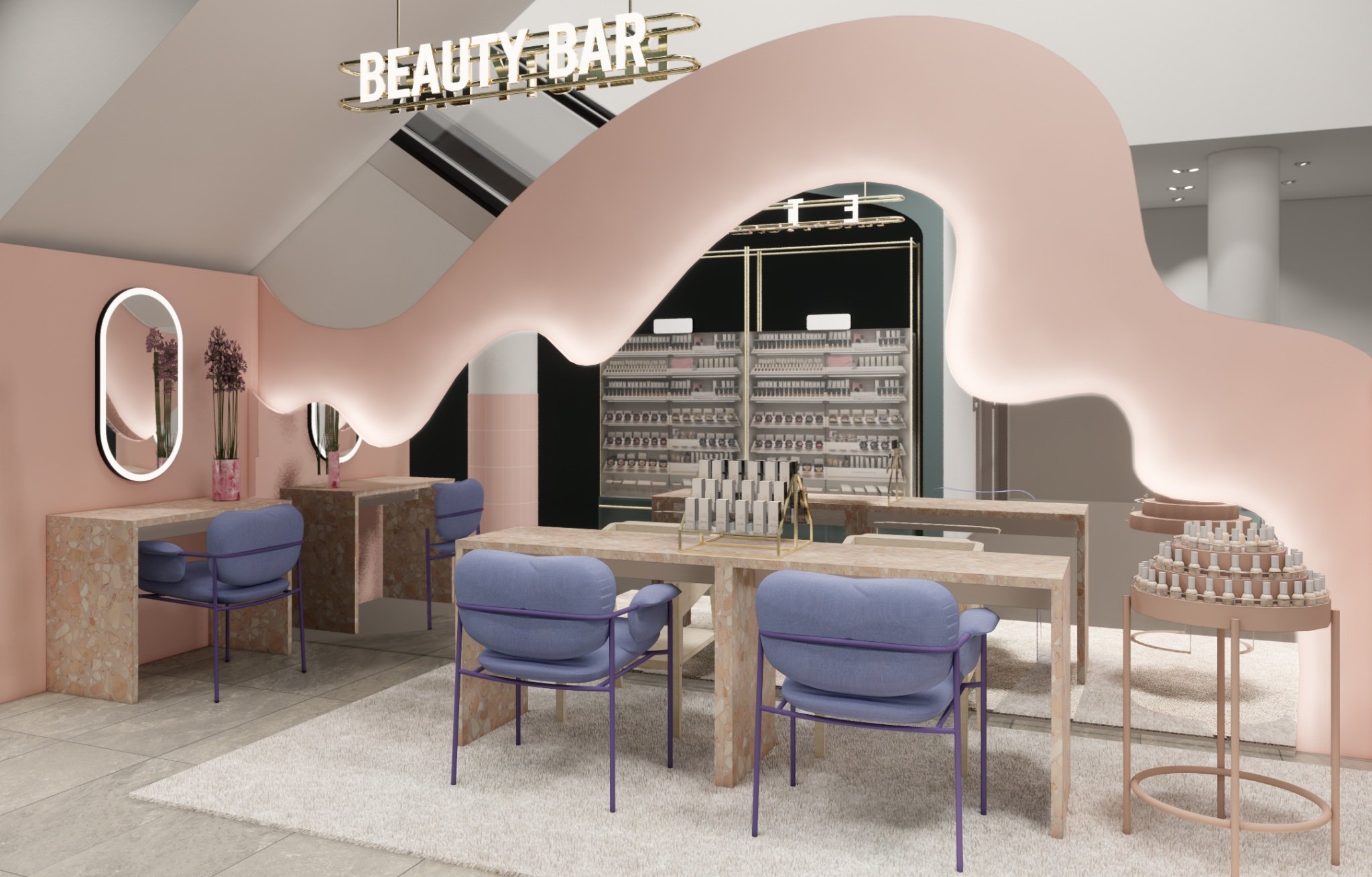
In 2023, H&M introduced its first Beauty stores with a design concept inspired by cocktail bars, promising a social scene.
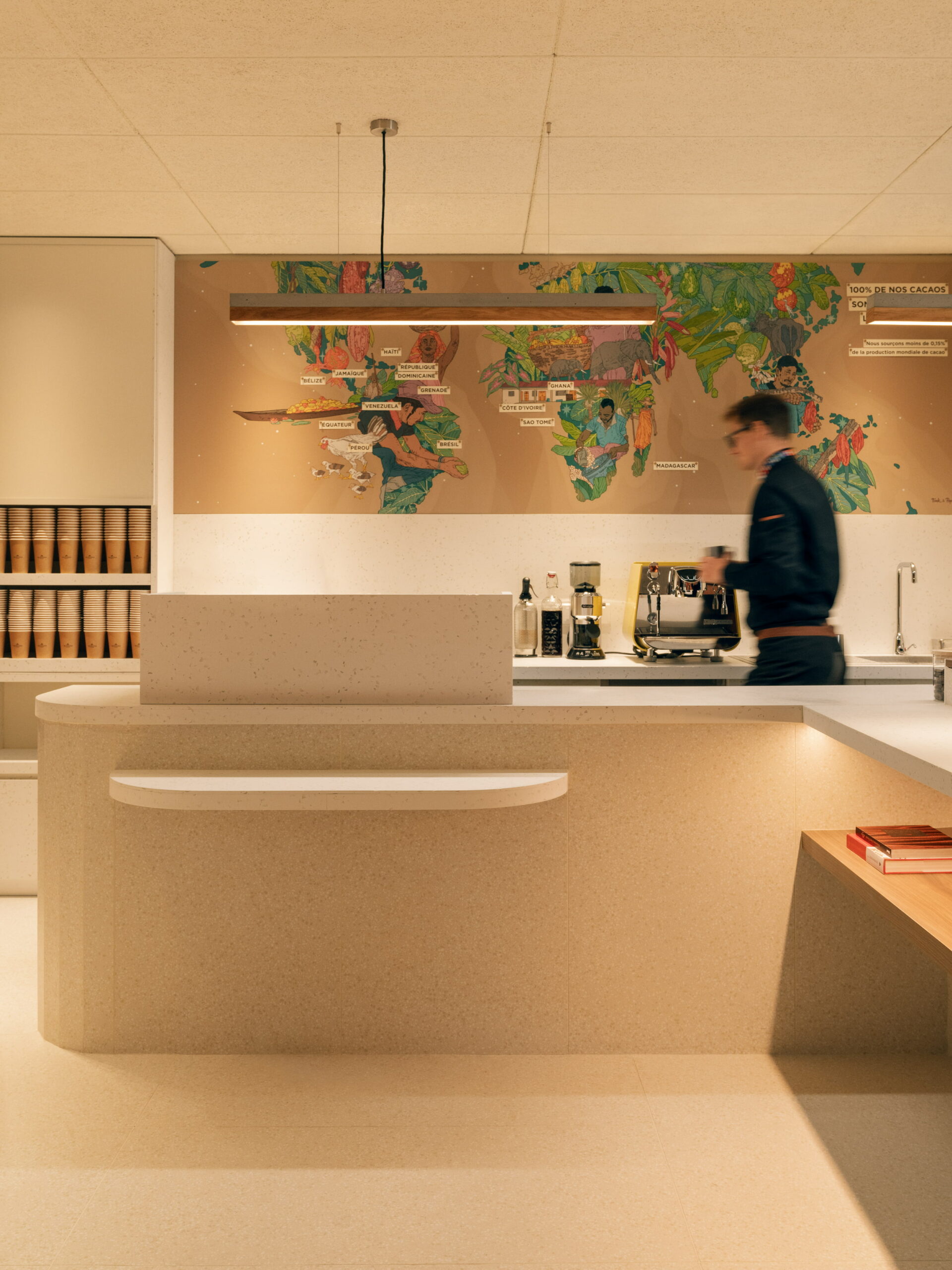
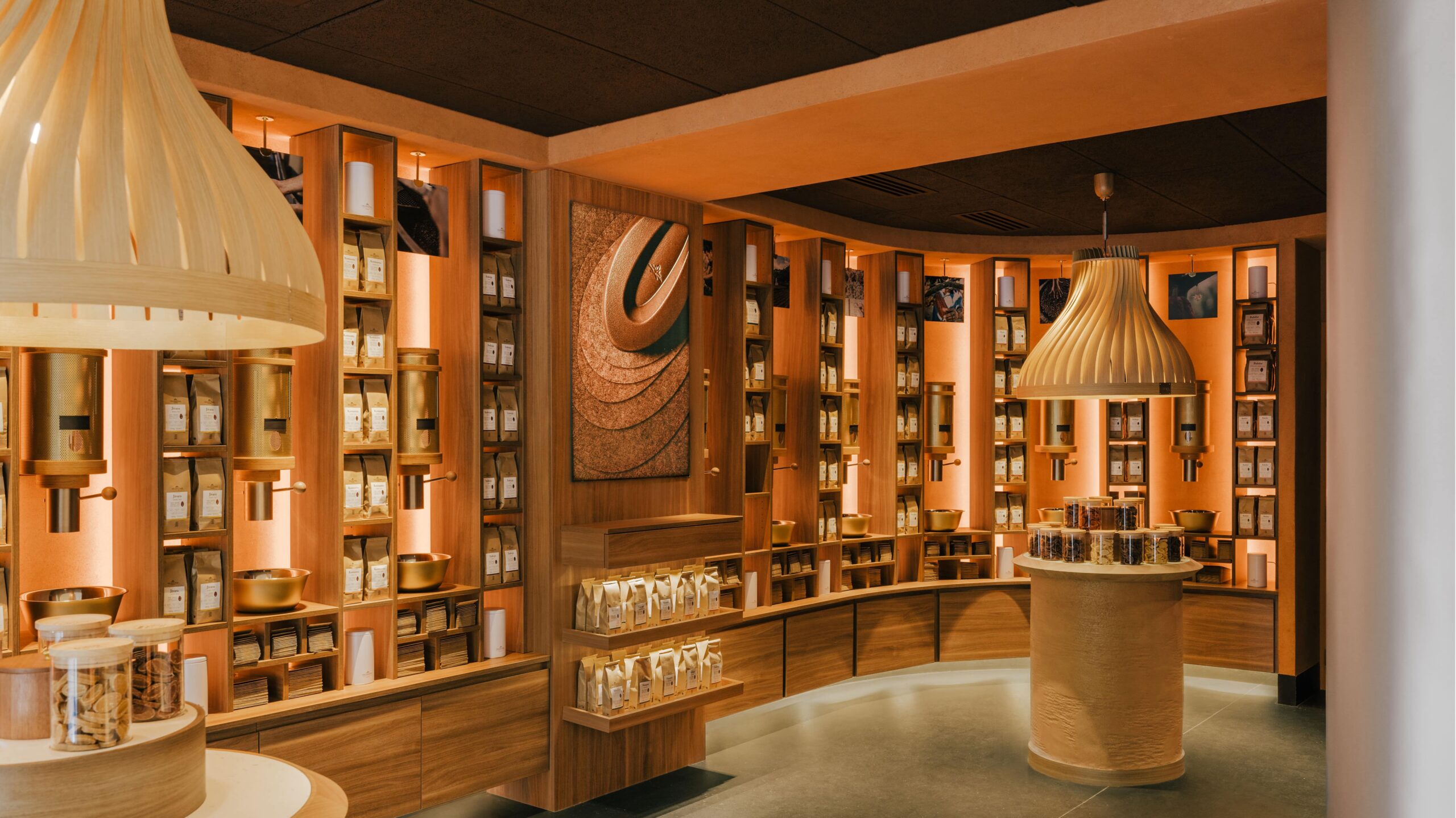
Similarly, VALRHONA, exemplifies how brands can leverage retail design to create unique brand experiences for visitors. While the stores feature dedicated sections for their products, the brand also developed a tasting table designed to immerse shoppers in a tasting experience, accompanied by a Valrhona expert.
This approach not only showcases products but also fosters a deeper connection between the brand and its customers, enhancing the overall retail experience.
Technology continues to play an increasingly significant role in all aspects of our lives, including retail design. Over the past five years, retailers have embraced technology to elevate customer experiences. According to Stylus’s NFR, Retail’s Big Show 2024 report businesses implementing AI and machine learning have experienced substantial growth in sales (2.3 times) and profits (2.5 times) compared to competitors in 2023.
AI holds immense potential to support retail staff in assisting customers, with a survey indicating that 86% of consumers interested in AI for shopping want to explore its benefits for product research and information.
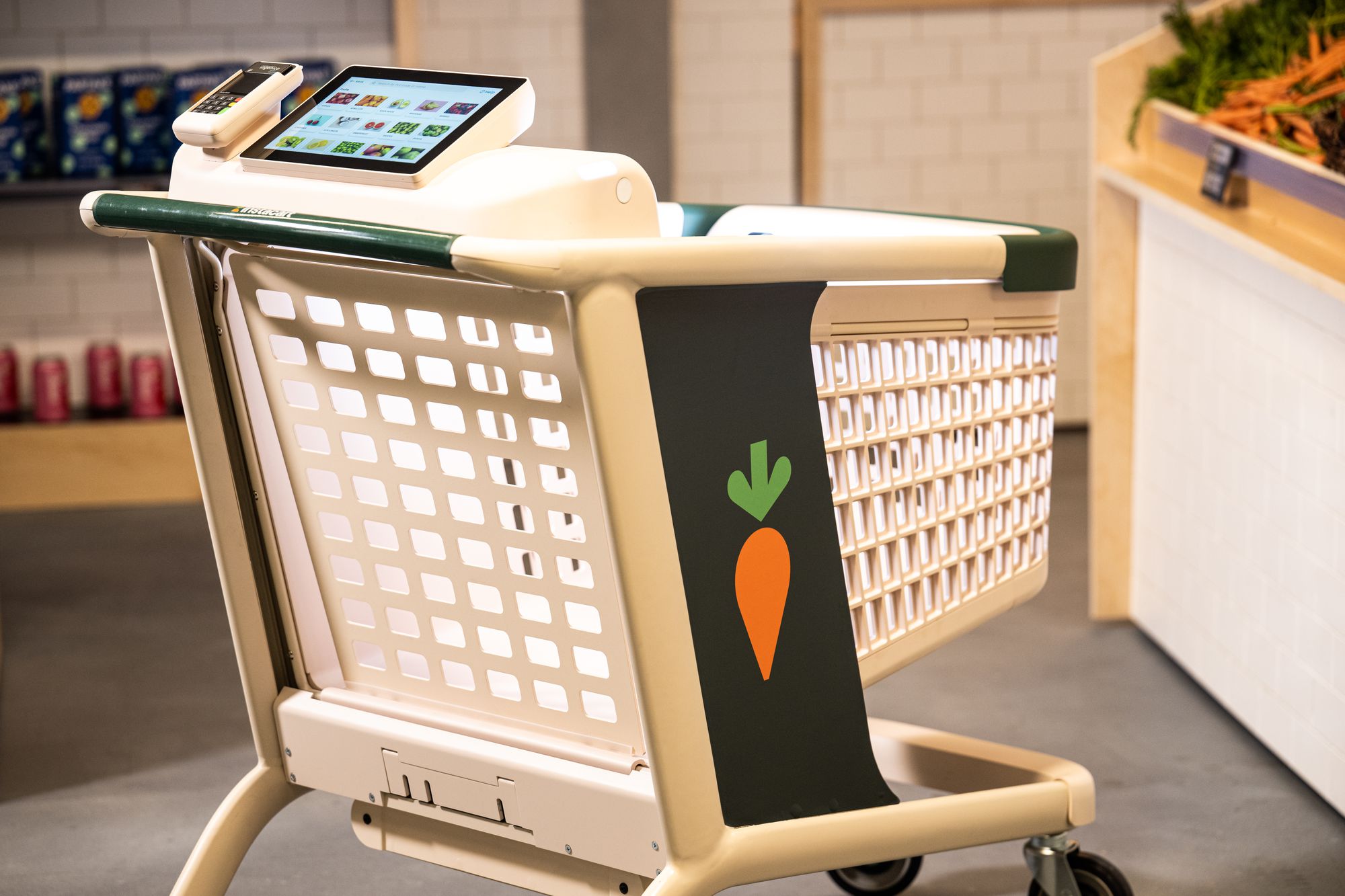
For instance, Instacart‘s AI-powered Caper Carts enhance the shopping experience by displaying personalized grocery lists, running promotions, conducting budget checks, and suggesting recipes based on contents.
Sephora‘s AI fragrance experience at their Champs-Élysées flagship store utilizes generative AI to offer personalized fragrance recommendations, streamlining the search for the ideal scent.
For instance, Instacart‘s AI-powered Caper Carts enhance the shopping experience by displaying personalized grocery lists, running promotions, conducting budget checks, and suggesting recipes based on contents.
Sephora‘s AI fragrance experience at their Champs-Élysées flagship store utilizes generative AI to offer personalized fragrance recommendations, streamlining the search for the ideal scent.
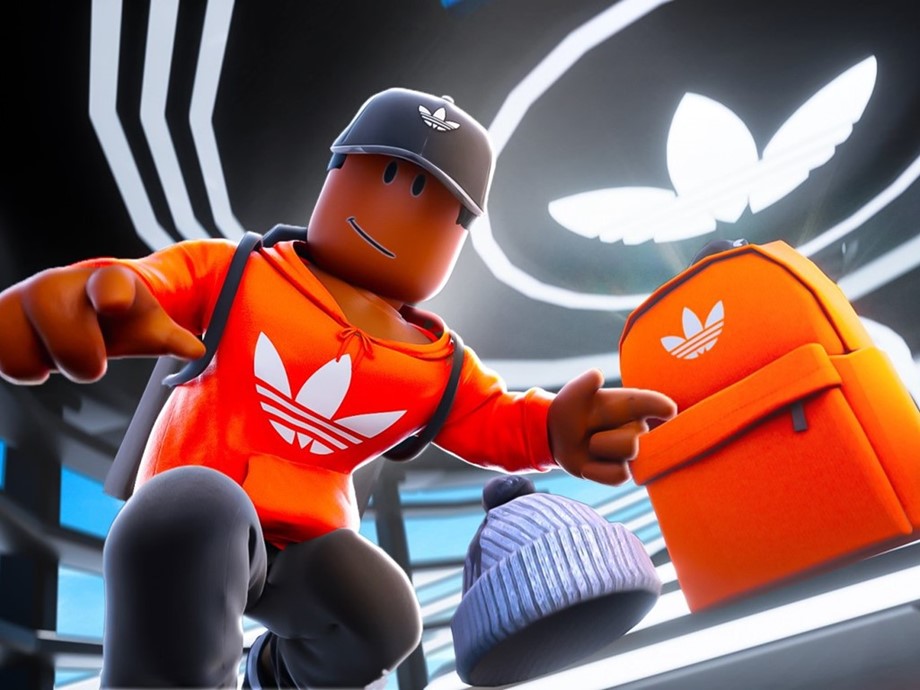
In addition to AI, virtual spaces hold significant importance in the retail sector, as exemplified by brands like Adidas. Adidas has tapped into the metaverse trend by launching pop-up shops on Roblox (metaverse gaming environment with pop-up stores), offering digital wearables and accessories tailored for the platform.
In addition to AI, virtual spaces hold significant importance in the retail sector, as exemplified by brands like Adidas. Adidas has tapped into the metaverse trend by launching pop-up shops on Roblox (metaverse gaming environment with pop-up stores), offering digital wearables and accessories tailored for the platform.
Moreover, retail design innovations like Colmar‘s new flagship store in Milan showcase how technology can create immersive experiences for customers. The store features multiple LED screens throughout, with a horizontal LED screen spanning the entire shop facade providing real-time forecasts and air quality data. Additionally, an interactive LED floor recreates the visual and acoustic sensations of walking on snow, evoking brands natural habitat.
These technological advancements empower brands to construct a universe where their vision seamlessly intertwines with customer preferences, offering a compelling investment opportunity.
/ POP UP STORE
Pop-up shops have become a captivating strategy for brands to attract young consumers. Inspired by the allure of “drop culture,” where limited-release merchandise generates hype and anticipation, brands are increasingly embracing pop-up stores to tap into this phenomenon.
In a market driven by a desire for novelty and sensory experiences, pop-ups can yield significant revenue boosts, often ranging from 20% to 30% more than traditional stores. Recent surveys highlight the success of brands experimenting with pop-ups, showing a 46% increase in sales, a 51% rise in market visibility, and a remarkable 66% boost in brand awareness.
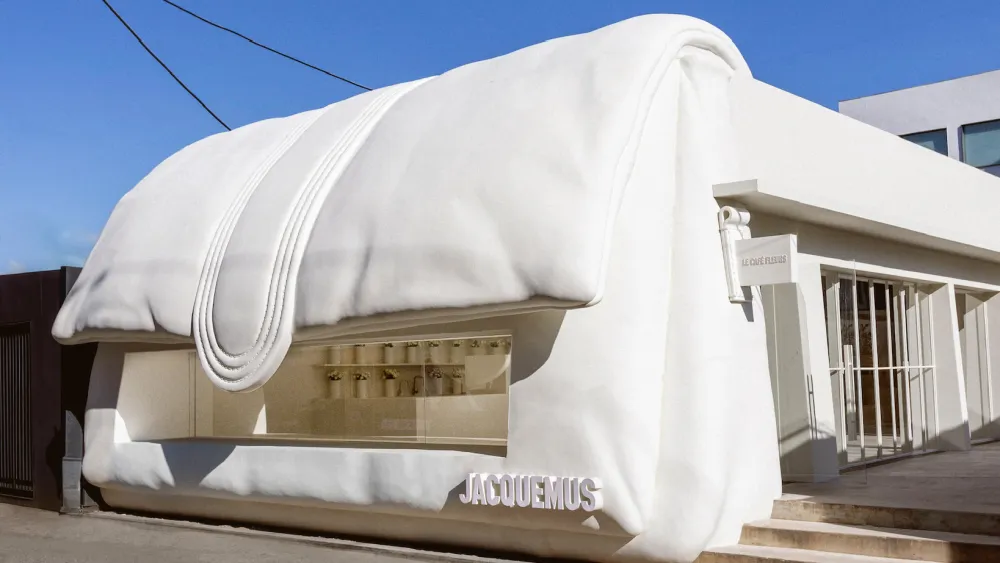
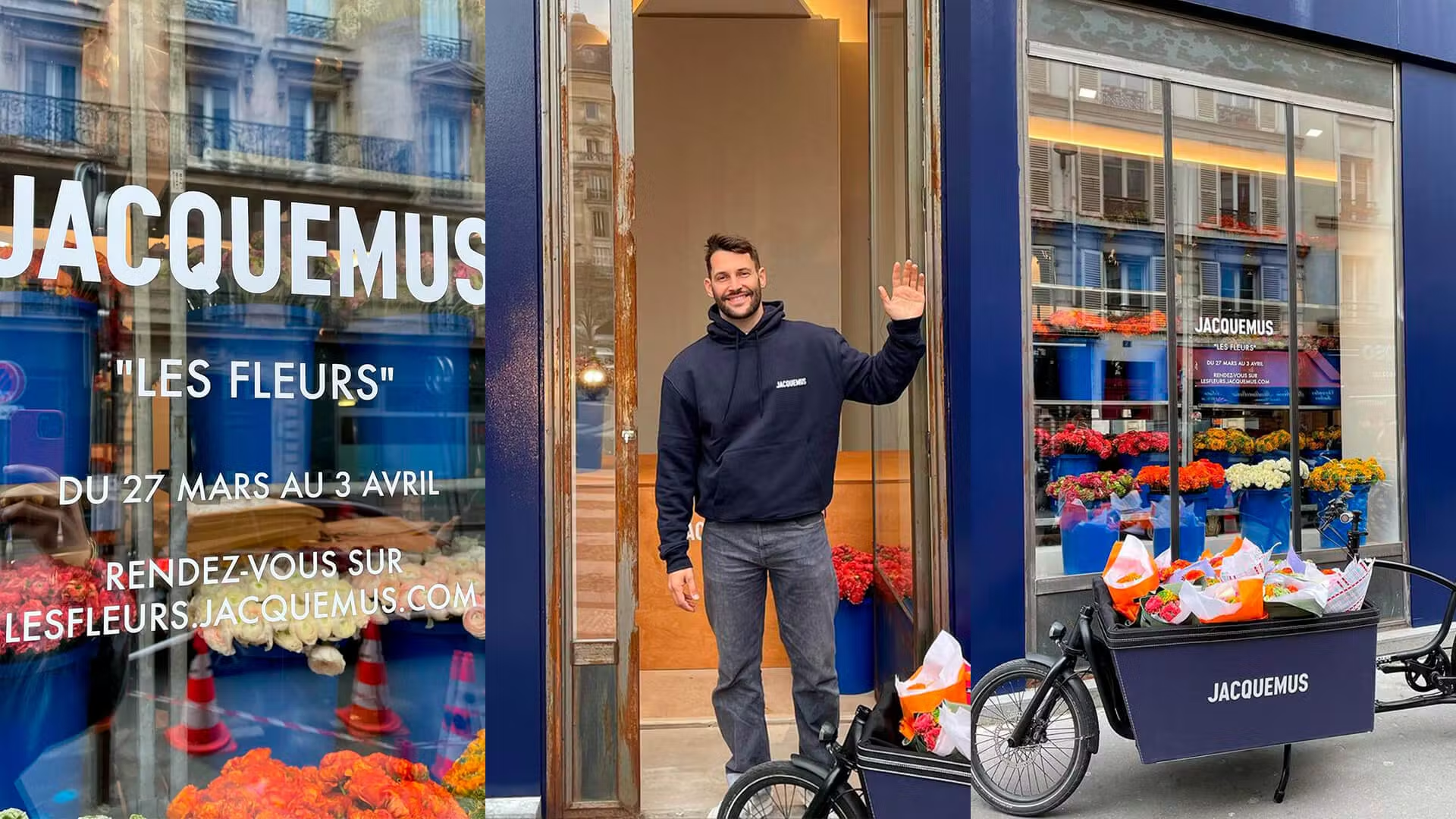
Jacquemus showcases how the limited availability of hyped products in a drop ignites aspiration and desire among consumers. By capitalizing on new trends and niche markets through various pop-ups like those in London, Ramatuelle, and the Café Fleurs concept in both Paris and Seoul, Jacquemus not only provides an elevated, personable brand experience but also enhances its reputation and visibility. These pop-up initiatives not only generate brand awareness and create buzz but also attract new customers while retaining the loyalty of existing ones.
Retail design trends for 2024 highlight the importance of creatively blending experiential and transactional retail elements to foster engaging store visits and establish an authentic connection with consumers. As retailers embrace these trends, from AI integration to pop-up stores, the key to thriving in an ever-changing market lies in maintaining innovation and prioritizing customer-centric approaches.
To discover more trends, download right now our 2024 Useful Design Trends report.
To discover more trends, download right now our 2024 Useful Design Trends report.
The latest report published by Stylus highlights the exponential growth of the beauty market, reaching $85 billion by 2024, with make-up leading the way (33% of total sales).
The cosmetics market is constantly evolving, with the emergence of distinct trends: the use of make-up as a means of countering so-called conventional and traditional beauty, and the rise of inclusive and accessible cosmetics, for all.
The arrival of new players is prompting established brands to reinvent themselves and rethink their strategy to stand out. But how? That’s what we’re going to discover!
/ OUT OF THE BOX
Makeup as a form of self expression
Consumers are looking for simpler ingredients, but also want to have fun and use cosmetics as a form of self expression.
In the 2024 edition of our Design Trends, we highlighted the « Out of the Box » trend. The new generation is rejecting the dictates of traditional beauty and aspires to greater transparency. They use makeup as a means of expressing their personality and embracing imperfections, without concern for societal judgment.
The idea of « perfection » is challenged, and « imperfection » or what could be perceived as original is brought to the fore.
For now on, authenticity is elevated to the status of perfection.
Brands now offer products that let you play with textures and colors.
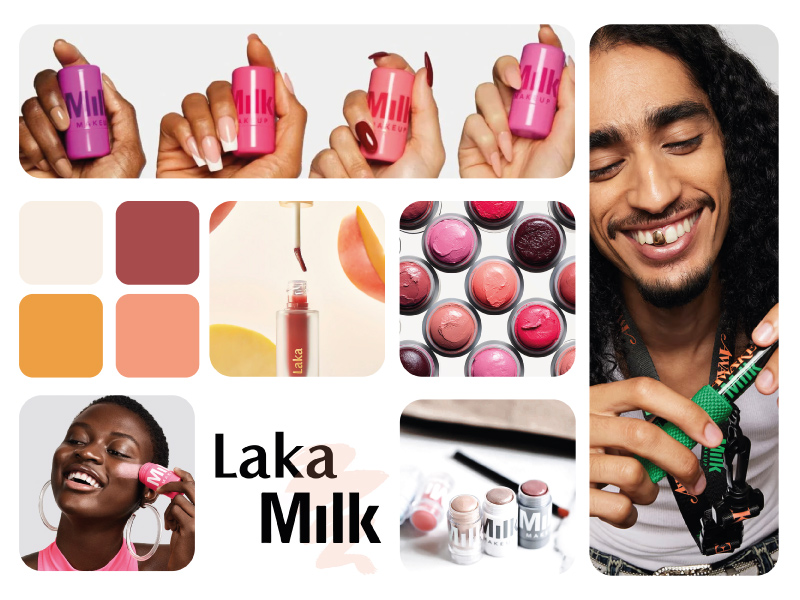
Between Laka (Korea) which offers chromatic products that reflect light or Milk Makeup (US) with its Jelly Blush, gelled blushes, brands are encouraging us to use makeup in a playful way and to express our personality!
Talking about originality, let’s take Fenty Beauty as an example.
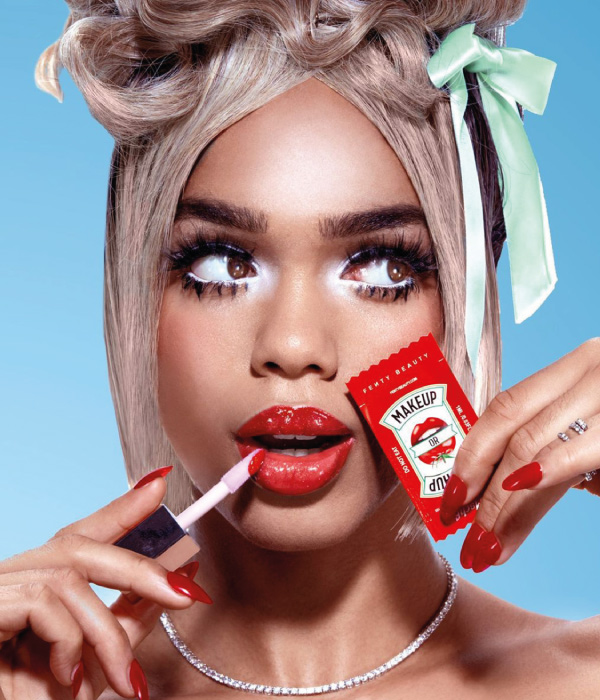
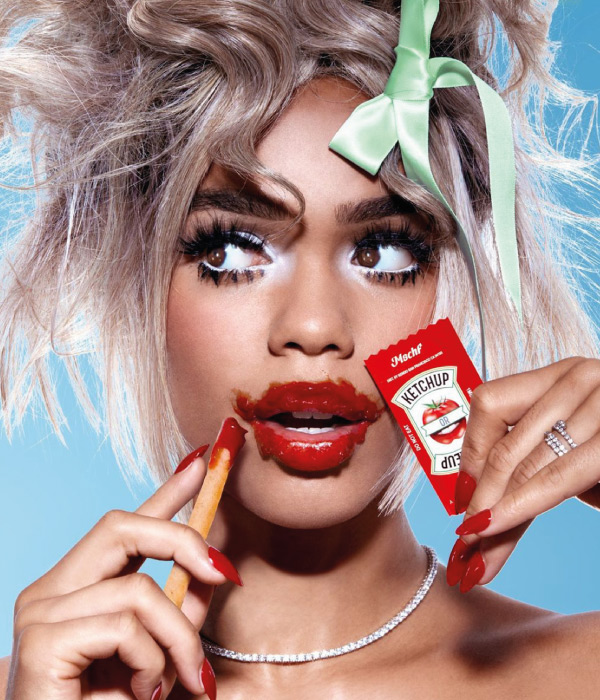
The brand has launched a palette of 6 highly original red and pink lip glosses, presented in the form of little restaurant sauce sachets, among which is hidden… ketchup. You can either discover the real gloss or come across real ketchup. A brilliant marketing move that has once again showcased the brand’s uniqueness and innovation in the face of its many competitors.
THE OPPORTUNITY FOR YOUR BRAND?
Embrace the strange, experiment, and encourage your target audiences to play with the products to step out of their comfort zone.
/ Cosmetics for men? Yes please!
The rise of men's cosmetics
The market for men’s beauty products continues to grow, and according to Statista, it is set to reach 105 billion euros by 2028. There are many factors contributing to this surge in the men’s cosmetics.
Social media plays a significant role in the surge of cosmetics dedicated to men. Men now showcase their beauty routines on social media, accumulating billions of views. Men’s cosmetics are brought into the spotlight, allowing these gentlemen to realize both the aesthetic and dermatological benefits.
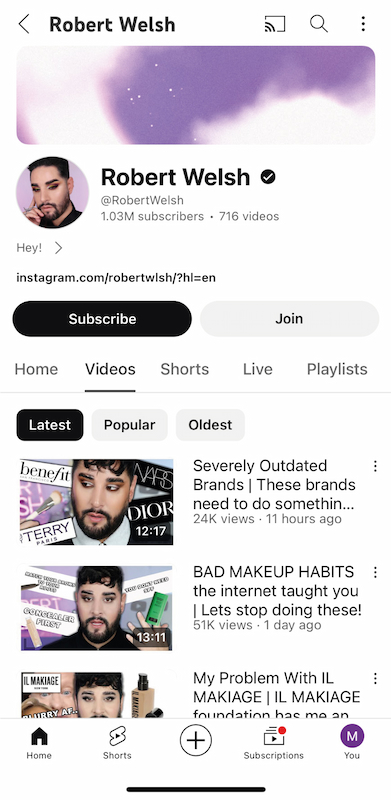
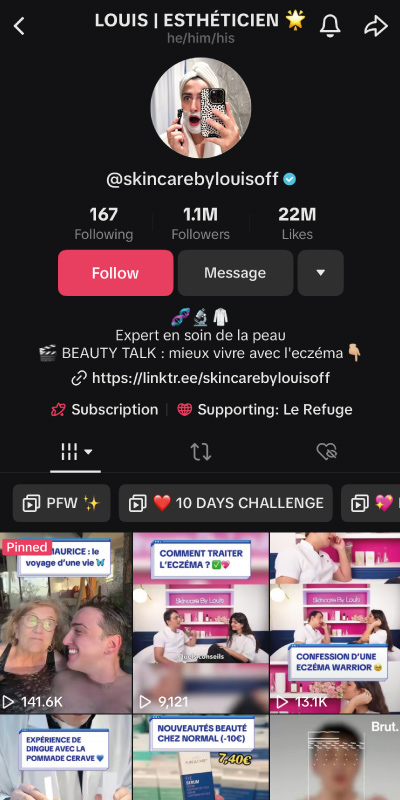
The number of male influencers in this market has been steadily growing since the global pandemic. In the US, Robert Welsh, an American YouTuber with over 1 million subscriber, posts videos featuring make-up tutorials, advice, and brand reviews. In France, Skincarebylouisoff, an influencer mainly active on TikTok with over 1.1 million subscribers, focuses his content on skincare and skin issues.
We’re witnessing an increasing number of men embracing cosmetics, which helps normalize their usage among males.
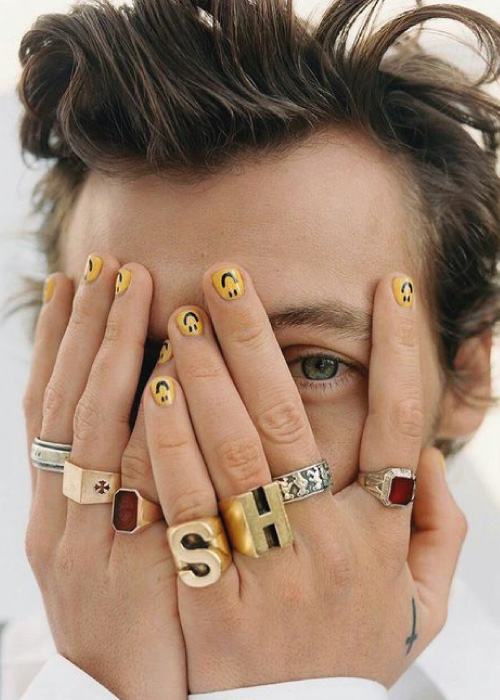
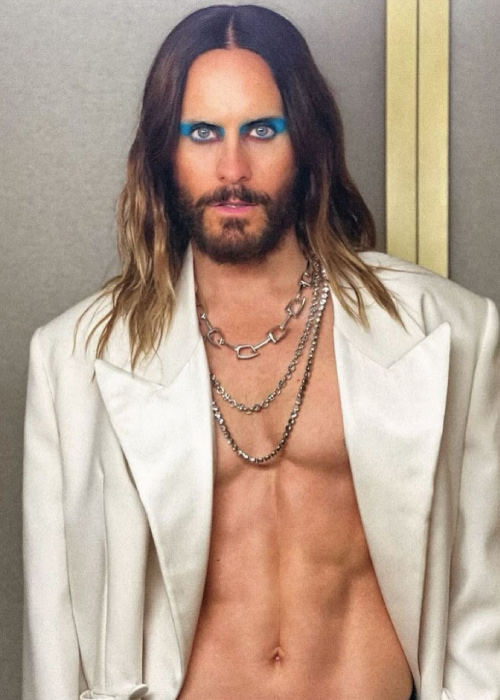
Famous figures such as Harry Styles and Jared Leto, who don’t hesitate to wear make-up and nail varnish, or Sam Smith, who shows off his beauty routine on Vogue’s Youtube channel, play a crucial role in breaking down these gender stereotypes.
Credit: Jenny Longworth
@jaredleto instagram account
@vogue YouTube account
THE OPPORTUNITY FOR YOUR BRAND?
The market is constantly evolving, and more and more men are becoming aware of their skin’s needs and the aesthetics benefits that make-up can provide. Consumers’ habits are changing and evolving!
To all brands, become active participants in this change! It is time for you to respond to this growing demand, while promoting inclusivity in this still highly standardized beauty industry.
/ Addressing solutions through universal design
One motto? Inclusion.
According to the World Bank, one billion people – 15% of the global population – have a disability. The inclusion of people with disabilities continues to gain ground. They are increasingly being highlighted and “considered” by brands.
We mentioned it in our article on Diversity and Design: many brands denounce the lack of representation in this market
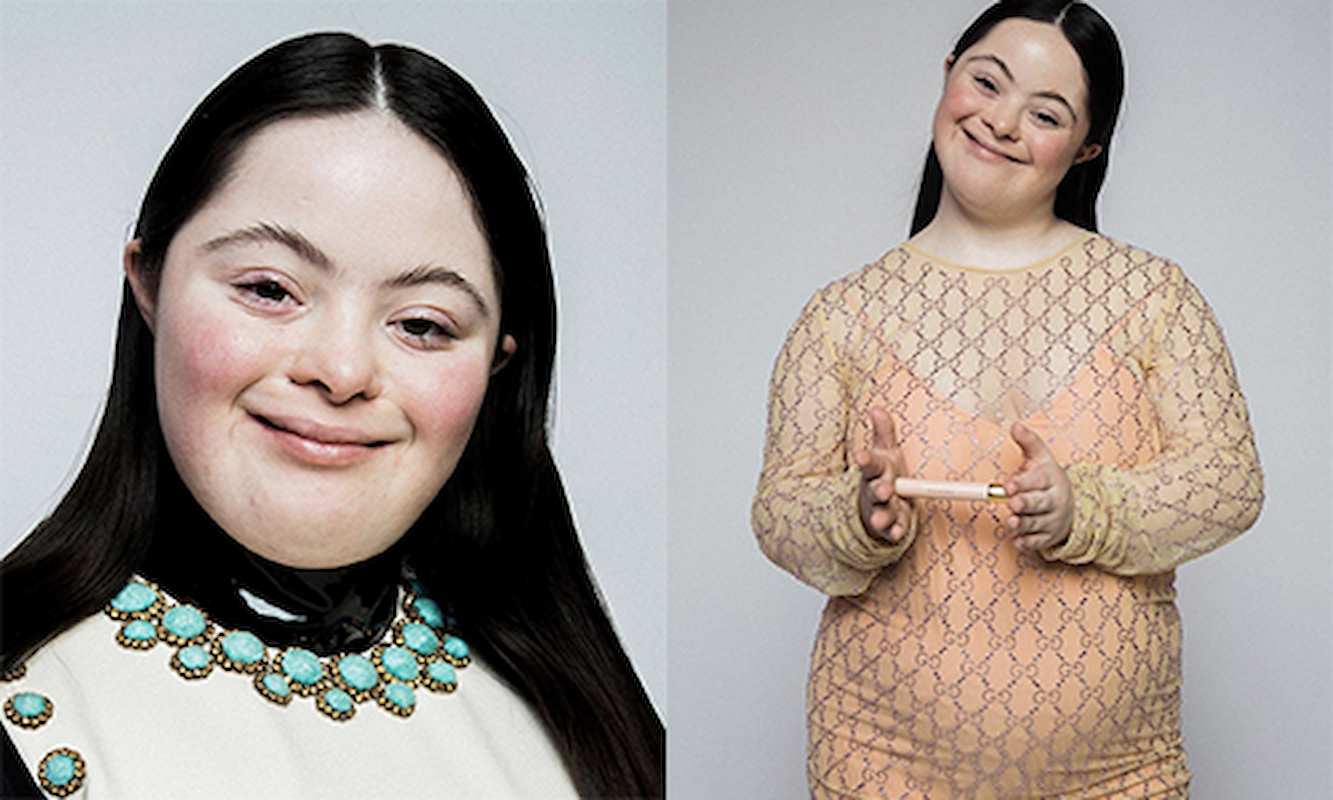
Gucci had chosen to name Ellie Goldstein, who has Down syndrome, as its brand ambassador. Although this choice has helped advance the cause, ‘media’ representation alone is no longer sufficient. Inclusivity must now be embedded in product design.
Credits: informations.handicap.fr
The focus is on universal design: creating for everyone, regardless of their unique challenges, be it mobility issues, visual impairments, autism, or tremors associated with Parkinson’s disease.
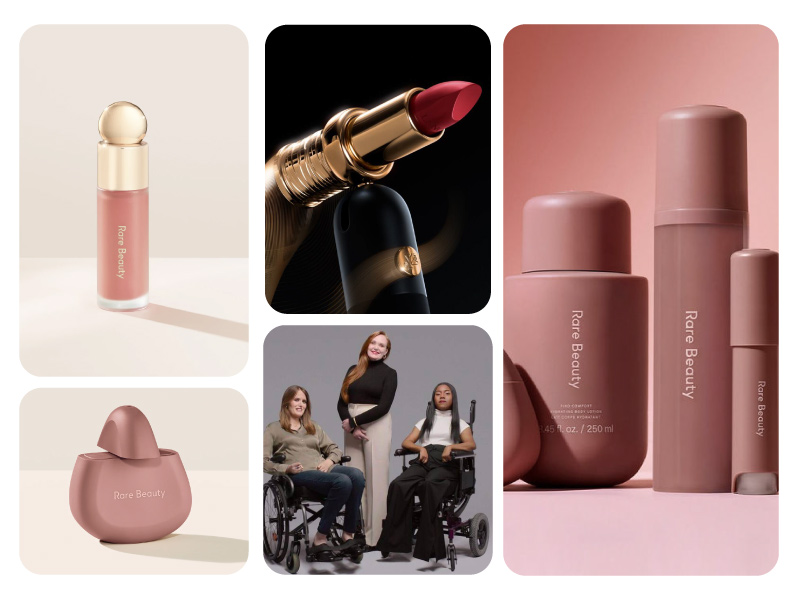
Rare Beauty, a makeup brand founded by Selena Gomez who suffers from Lyme disease, was designed for people with physical disabilities. The packaging is ergonomic, with each featuring a ball for easier product opening.
Lancôme, part of L’Oréal Group, presented its Hapta technology at the CES Show in Las Vegas in early 2023: a computerized, portable make-up applicator. This revolutionary device, based on AI, will help people with limited dexterity to apply lipstick or mascara. Through this technology, Lancôme is committed to making beauty inclusive and accessible to all.
What teachings can be derived for your brand?
Following the life cycle analysis of a product, where the product is carefully thought out and designed to be more sustainable, it must now also be designed to be accessible and inclusive.
To discover more trends, download right now our 2024 Useful Design Trends report.
The latest report published by Stylus highlights the exponential growth of the beauty market, reaching $85 billion by 2024, with make-up leading the way (33% of total sales).
The cosmetics market is constantly evolving, with the emergence of distinct trends: the use of make-up as a means of countering so-called conventional and traditional beauty, and the rise of inclusive and accessible cosmetics, for all.
The arrival of new players is prompting established brands to reinvent themselves and rethink their strategy to stand out. But how? That’s what we’re going to discover!
/ OUT OF THE BOX
Makeup as a form of self expression
Consumers are looking for simpler ingredients, but also want to have fun and use cosmetics as a form of self expression.
In the 2024 edition of our Design Trends, we highlighted the « Out of the Box » trend. The new generation is rejecting the dictates of traditional beauty and aspires to greater transparency. They use makeup as a means of expressing their personality and embracing imperfections, without concern for societal judgment.
The idea of « perfection » is challenged, and « imperfection » or what could be perceived as original is brought to the fore.
For now on, authenticity is elevated to the status of perfection.
Brands now offer products that let you play with textures and colors.
Between Laka (Korea) which offers chromatic products that reflect light or Milk Makeup (US) with its Jelly Blush, gelled blushes, brands are encouraging us to use makeup in a playful way and to express our personality!
Talking about originality, let’s take Fenty Beauty as an example.
The brand has launched a palette of 6 highly original red and pink lip glosses, presented in the form of little restaurant sauce sachets, among which is hidden… ketchup. You can either discover the real gloss or come across real ketchup. A brilliant marketing move that has once again showcased the brand’s uniqueness and innovation in the face of its many competitors.
THE OPPORTUNITY FOR YOUR BRAND?
Embrace the strange, experiment, and encourage your target audiences to play with the products to step out of their comfort zone.
/ Cosmetics for men? Yes please!
The rise of men's cosmetics
The market for men’s beauty products continues to grow, and according to Statista, it is set to reach 105 billion euros by 2028. There are many factors contributing to this surge in the men’s cosmetics.
Social media plays a significant role in the surge of cosmetics dedicated to men. Men now showcase their beauty routines on social media, accumulating billions of views. Men’s cosmetics are brought into the spotlight, allowing these gentlemen to realize both the aesthetic and dermatological benefits.
The number of male influencers in this market has been steadily growing since the global pandemic. In the US, Robert Welsh, an American YouTuber with over 1 million subscriber, posts videos featuring make-up tutorials, advice, and brand reviews. In France, Skincarebylouisoff, an influencer mainly active on TikTok with over 1.1 million subscribers, focuses his content on skincare and skin issues.
We’re witnessing an increasing number of men embracing cosmetics, which helps normalize their usage among males.
Famous figures such as Harry Styles and Jared Leto, who don’t hesitate to wear make-up and nail varnish, or Sam Smith, who shows off his beauty routine on Vogue’s Youtube channel, play a crucial role in breaking down these gender stereotypes.
Credit: Jenny Longworth
@jaredleto instagram account
@vogue YouTube account
THE OPPORTUNITY FOR YOUR BRAND?
The market is constantly evolving, and more and more men are becoming aware of their skin’s needs and the aesthetics benefits that make-up can provide. Consumers’ habits are changing and evolving!
To all brands, become active participants in this change! It is time for you to respond to this growing demand, while promoting inclusivity in this still highly standardized beauty industry.
/ Addressing solutions through universal design
One motto? Inclusion.
According to the World Bank, one billion people – 15% of the global population – have a disability. The inclusion of people with disabilities continues to gain ground. They are increasingly being highlighted and “considered” by brands.
We mentioned it in our article on Diversity and Design: many brands denounce the lack of representation in this market
Gucci had chosen to name Ellie Goldstein, who has Down syndrome, as its brand ambassador. Although this choice has helped advance the cause, ‘media’ representation alone is no longer sufficient. Inclusivity must now be embedded in product design.
The focus is on universal design: creating for everyone, regardless of their unique challenges, be it mobility issues, visual impairments, autism, or tremors associated with Parkinson’s disease.
Rare Beauty, a makeup brand founded by Selena Gomez who suffers from Lyme disease, was designed for people with physical disabilities. The packaging is ergonomic, with each featuring a ball for easier product opening.
Lancôme, part of L’Oréal Group, presented its Hapta technology at the CES Show in Las Vegas in early 2023: a computerized, portable make-up applicator. This revolutionary device, based on AI, will help people with limited dexterity to apply lipstick or mascara. Through this technology, Lancôme is committed to making beauty inclusive and accessible to all.
What teachings can be derived for your brand?
Following the life cycle analysis of a product, where the product is carefully thought out and designed to be more sustainable, it must now also be designed to be accessible and inclusive.
To discover more trends, download right now our 2024 Useful Design Trends report.
The latest report published by Stylus highlights the exponential growth of the beauty market, reaching $85 billion by 2024, with make-up leading the way (33% of total sales).
The cosmetics market is constantly evolving, with the emergence of distinct trends: the use of make-up as a means of countering so-called conventional and traditional beauty, and the rise of inclusive and accessible cosmetics, for all.
The arrival of new players is prompting established brands to reinvent themselves and rethink their strategy to stand out. But how? That’s what we’re going to discover!
/ OUT OF THE BOX
Makeup as a form of self expression
Consumers are looking for simpler ingredients, but also want to have fun and use cosmetics as a form of self expression.
In the 2024 edition of our Design Trends, we highlighted the « Out of the Box » trend. The new generation is rejecting the dictates of traditional beauty and aspires to greater transparency. They use makeup as a means of expressing their personality and embracing imperfections, without concern for societal judgment.
The idea of « perfection » is challenged, and « imperfection » or what could be perceived as original is brought to the fore.
For now on, authenticity is elevated to the status of perfection.
Brands now offer products that let you play with textures and colors.
Between Laka (Korea) which offers chromatic products that reflect light or Milk Makeup (US) with its Jelly Blush, gelled blushes, brands are encouraging us to use makeup in a playful way and to express our personality!
Talking about originality, let’s take Fenty Beauty as an example.
The brand has launched a palette of 6 highly original red and pink lip glosses, presented in the form of little restaurant sauce sachets, among which is hidden… ketchup. You can either discover the real gloss or come across real ketchup. A brilliant marketing move that has once again showcased the brand’s uniqueness and innovation in the face of its many competitors.
Embrace the strange, experiment, and encourage your target audiences to play with the products to step out of their comfort zone.
/ Cosmetics for men? Yes please!
The rise of men's cosmetics
The market for men’s beauty products continues to grow, and according to Statista, it is set to reach 105 billion euros by 2028. There are many factors contributing to this surge in the men’s cosmetics.
Social media plays a significant role in the surge of cosmetics dedicated to men. Men now showcase their beauty routines on social media, accumulating billions of views. Men’s cosmetics are brought into the spotlight, allowing these gentlemen to realize both the aesthetic and dermatological benefits.
The number of male influencers in this market has been steadily growing since the global pandemic. In the US, Robert Welsh, an American YouTuber with over 1 million subscriber, posts videos featuring make-up tutorials, advice, and brand reviews. In France, Skincarebylouisoff, an influencer mainly active on TikTok with over 1.1 million subscribers, focuses his content on skincare and skin issues.
Credit: Jenny Longworth
We’re witnessing an increasing number of men embracing cosmetics, which helps normalize their usage among males.
Famous figures such as Harry Styles and Jared Leto, who don’t hesitate to wear make-up and nail varnish, or Sam Smith, who shows off his beauty routine on Vogue’s Youtube channel, play a crucial role in breaking down these gender stereotypes.
@vogue YouTube account
THE OPPORTUNITY FOR YOUR BRAND?
The market is constantly evolving, and more and more men are becoming aware of their skin’s needs and the aesthetics benefits that make-up can provide. Consumers’ habits are changing and evolving!
To all brands, become active participants in this change! It is time for you to respond to this growing demand, while promoting inclusivity in this still highly standardized beauty industry.
/ Addressing solutions through universal design
One motto? Inclusion.
According to the World Bank, one billion people – 15% of the global population – have a disability. The inclusion of people with disabilities continues to gain ground. They are increasingly being highlighted and “considered” by brands.
We mentioned it in our article on Diversity and Design: many brands denounce the lack of representation in this market.
Gucci had chosen to name Ellie Goldstein, who has Down syndrome, as its brand ambassador. Although this choice has helped advance the cause, ‘media’ representation alone is no longer sufficient. Inclusivity must now be embedded in product design.
Credits: informations.handicap.fr
The focus is on universal design: creating for everyone, regardless of their unique challenges, be it mobility issues, visual impairments, autism, or tremors associated with Parkinson’s disease.
Rare Beauty, a makeup brand founded by Selena Gomez who suffers from Lyme disease, was designed for people with physical disabilities. The packaging is ergonomic, with each featuring a ball for easier product opening.
Lancôme, part of L’Oréal Group, presented its Hapta technology at the CES Show in Las Vegas in early 2023: a computerized, portable make-up applicator. This revolutionary device, based on AI, will help people with limited dexterity to apply lipstick or mascara. Through this technology, Lancôme is committed to making beauty inclusive and accessible to all.
What teachings can be derived for your brand?
Following the life cycle analysis of a product, where the product is carefully thought out and designed to be more sustainable, it must now also be designed to be accessible and inclusive.
To discover more trends, download right now our 2024 Useful Design Trends report.
Foodtech has revolutionized the culinary industry, transforming not only our eating, cooking habits but also our mindset. The constantly evolving sector offers numerous opportunities for brands looking to stand out in the market. According to Emergen Research, it is estimated that the global Foodtech market could climb up to $342 billion by 2027. However, it’s important to understand that Foodtech is not just about food, but also about the overall consumer experience. And this is where design comes into play.
/ THE RISE OF FOODTECH
Foodtech has come a long way since its inception. From simple innovations like canned goods and refrigeration to more complex ones like molecular gastronomy and plant-based meat substitutes. Food technology has continually pushed the boundaries of what’s possible in the culinary world. Today, it involves creating sustainable, healthy, and convenient food options that cater to the needs of modern consumers.
This topic is gaining importance, now touching a wide range of players including schools, thanks to the expansion of foodtech. Rebellyous Foods, a company specializing in plant-based nuggets, is expanding its influence, with more and more educational establishments opting for its products. According to this Seattle-based company, this trend reflects a growing movement within US schools, aiming to offer a greater variety of plant-based options.
Design plays a crucial role in this evolution. By integrating a design approach into the development of new food products and services, Foodtech companies can create solutions that are not only functional but also aesthetically pleasing. For instance, the packaging design can make or break a product’s success in the market. By using environmentally friendly materials and attractive designs, brands can attract environmentally conscious consumers while standing out on the shelves.
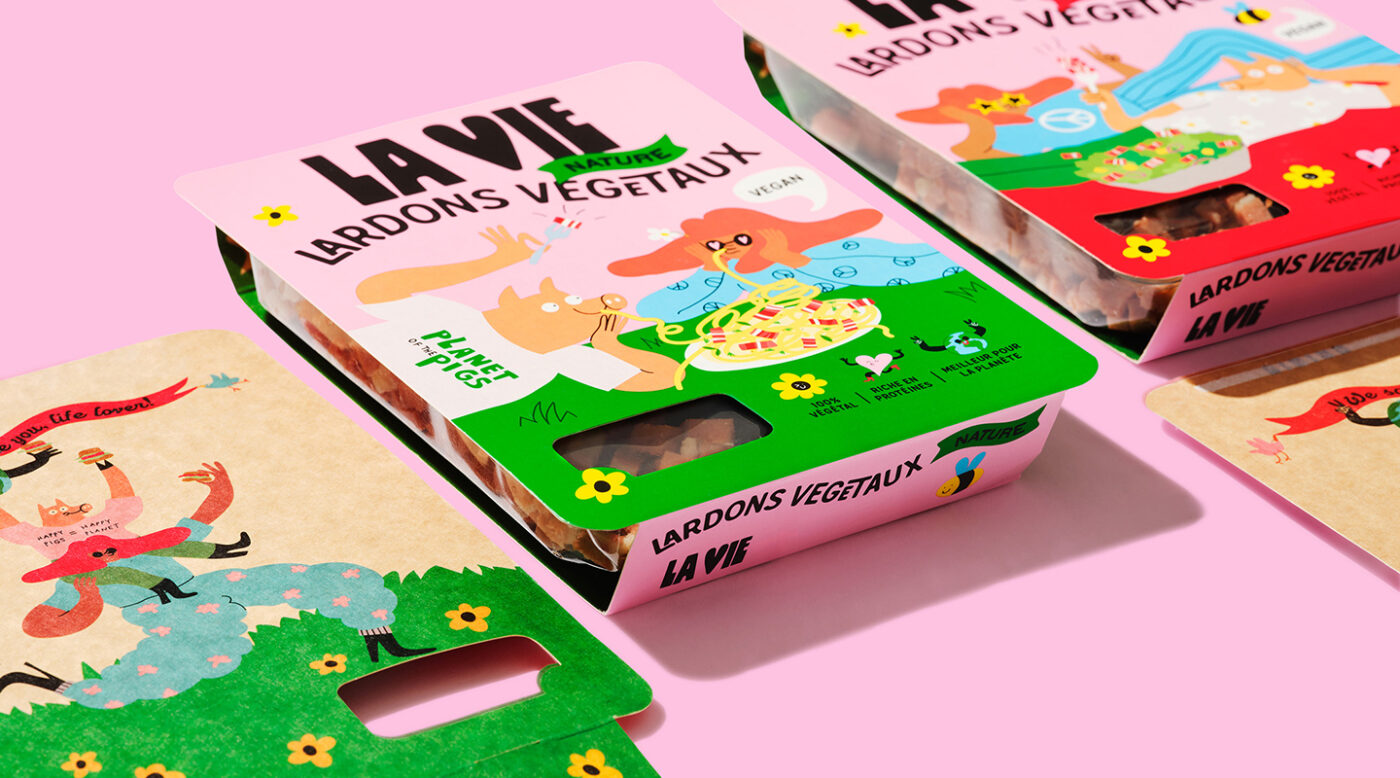
Take the example of La Vie, which aims to change mindsets about plant-based meat. To do this, the brand chose colorful, positive, and accessible packaging; a true celebration of life, as no animal was slaughtered to make this meal! Illustrated by artist Egle Zvirblyte, these packages appeal to both vegans and meat lovers alike!
This topic is gaining importance, now touching a wide range of players including schools, thanks to the expansion of foodtech. Rebellyous Foods, a company specializing in plant-based nuggets, is expanding its influence, with more and more educational establishments opting for its products. According to this Seattle-based company, this trend reflects a growing movement within US schools, aiming to offer a greater variety of plant-based options.
Design plays a crucial role in this evolution. By integrating a design approach into the development of new food products and services, Foodtech companies can create solutions that are not only functional but also aesthetically pleasing. For instance, the packaging design can make or break a product’s success in the market. By using environmentally friendly materials and attractive designs, brands can attract environmentally conscious consumers while standing out on the shelves.
Take the example of La Vie, which aims to change mindsets about plant-based meat. To do this, the brand chose colorful, positive, and accessible packaging; a true celebration of life, as no animal was slaughtered to make this meal! Illustrated by artist Egle Zvirblyte, these packages appeal to both vegans and meat lovers alike!
By placing consumer needs and preferences at the forefront of product development, Foodtech companies can create solutions that truly resonate with their target audience. This approach involves conducting in-depth research and gathering consumer testimonials until the final product genuinely meets customer needs.
Meal kit delivery services are an excellent example of consumer-centered design. These services eliminate the daily hassles of meal planning and grocery shopping by delivering proportioned ingredients and recipes right to our doorstep. Catering to busy professionals and families who want to eat healthy meals at home without spending hours in the kitchen, meal kit delivery services have become a popular choice for many consumers.
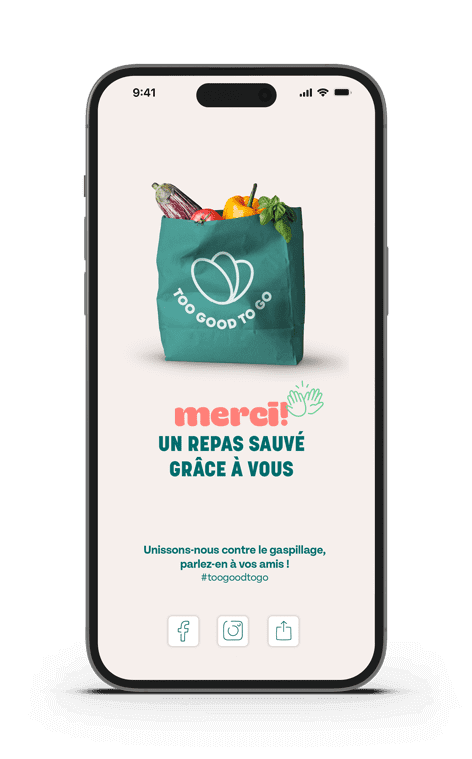
Moreover, Foodtech doesn’t just meet our food needs; it also tackles broader issues like food waste. This is the idea behind the Too Good To Go app. Its intuitive, user-centered design facilitates connections between businesses with unsold goods and consumers eager to contribute to reducing waste. Thus, Too Good To Go perfectly illustrates how design can serve an ecological cause while meeting user expectations.
Moreover, Foodtech doesn’t just meet our food needs; it also tackles broader issues like food waste. This is the idea behind the Too Good To Go app. Its intuitive, user-centered design facilitates connections between businesses with unsold goods and consumers eager to contribute to reducing waste. Thus, Too Good To Go perfectly illustrates how design can serve an ecological cause while meeting user expectations.
The future of Foodtech is promising, with endless possibilities for innovation and growth. One particularly interesting area is the use of technology to enhance the culinary experience. From augmented reality menus to smart kitchen appliances, technology is changing the way we interact with food. Moreover, as consumers become increasingly aware of the environmental impact of their diet, food technology companies are exploring new ways to reduce waste and promote sustainable practices. This ranges from using biodegradable packaging to developing plant-based alternatives to traditional meat products.
/ AND TOMORROW?
Credit : Midjourney
The future of Foodtech is promising, with endless possibilities for innovation and growth. One particularly interesting area is the use of technology to enhance the culinary experience. From augmented reality menus to smart kitchen appliances, technology is changing the way we interact with food. Moreover, as consumers become increasingly aware of the environmental impact of their diet, food technology companies are exploring new ways to reduce waste and promote sustainable practices. This ranges from using biodegradable packaging to developing plant-based alternatives to traditional meat products.
The horizon for Foodtech seems bright. This growth would primarily be driven by a steadily increasing demand for healthier, more sustainable, and convenient food products. However, Foodtech still has several hurdles to overcome, particularly regarding regulations and financing. It’s also crucial to ensure that these technological innovations do not create new disparities, such as favoring a wealthier clientele.
Are you a foodtech brand in search of innovation and differentiation in the market?
Foodtech has revolutionized the culinary industry, transforming not only our eating, cooking habits but also our mindset. The constantly evolving sector offers numerous opportunities for brands looking to stand out in the market. According to Emergen Research, it is estimated that the global Foodtech market could climb up to $342 billion by 2027. However, it’s important to understand that Foodtech is not just about food, but also about the overall consumer experience. And this is where design comes into play.
/ THE RISE OF FOODTECH
Foodtech has come a long way since its inception. From simple innovations like canned goods and refrigeration to more complex ones like molecular gastronomy and plant-based meat substitutes. Food technology has continually pushed the boundaries of what’s possible in the culinary world. Today, it involves creating sustainable, healthy, and convenient food options that cater to the needs of modern consumers.
This topic is gaining importance, now touching a wide range of players including schools, thanks to the expansion of foodtech. Rebellyous Foods, a company specializing in plant-based nuggets, is expanding its influence, with more and more educational establishments opting for its products. According to this Seattle-based company, this trend reflects a growing movement within US schools, aiming to offer a greater variety of plant-based options.
Design plays a crucial role in this evolution. By integrating a design approach into the development of new food products and services, Foodtech companies can create solutions that are not only functional but also aesthetically pleasing. For instance, the packaging design can make or break a product’s success in the market. By using environmentally friendly materials and attractive designs, brands can attract environmentally conscious consumers while standing out on the shelves.
Take the example of La Vie, which aims to change mindsets about plant-based meat. To do this, the brand chose colorful, positive, and accessible packaging; a true celebration of life, as no animal was slaughtered to make this meal! Illustrated by artist Egle Zvirblyte, these packages appeal to both vegans and meat lovers alike!
By placing consumer needs and preferences at the forefront of product development, Foodtech companies can create solutions that truly resonate with their target audience. This approach involves conducting in-depth research and gathering consumer testimonials until the final product genuinely meets customer needs.
Meal kit delivery services are an excellent example of consumer-centered design. These services eliminate the daily hassles of meal planning and grocery shopping by delivering proportioned ingredients and recipes right to our doorstep. Catering to busy professionals and families who want to eat healthy meals at home without spending hours in the kitchen, meal kit delivery services have become a popular choice for many consumers.
Moreover, Foodtech doesn’t just meet our food needs; it also tackles broader issues like food waste. This is the idea behind the Too Good To Go app. Its intuitive, user-centered design facilitates connections between businesses with unsold goods and consumers eager to contribute to reducing waste. Thus, Too Good To Go perfectly illustrates how design can serve an ecological cause while meeting user expectations.
The future of Foodtech is promising, with endless possibilities for innovation and growth. One particularly interesting area is the use of technology to enhance the culinary experience. From augmented reality menus to smart kitchen appliances, technology is changing the way we interact with food. Moreover, as consumers become increasingly aware of the environmental impact of their diet, food technology companies are exploring new ways to reduce waste and promote sustainable practices. This ranges from using biodegradable packaging to developing plant-based alternatives to traditional meat products.
The horizon for Foodtech seems bright. This growth would primarily be driven by a steadily increasing demand for healthier, more sustainable, and convenient food products. However, Foodtech still has several hurdles to overcome, particularly regarding regulations and financing. It’s also crucial to ensure that these technological innovations do not create new disparities, such as favoring a wealthier clientele.
Are you a foodtech brand in search of innovation and differentiation in the market?
In a world characterised by a frenetic pace, where changes are continuous and technological innovations are increasingly surprising, organisations face enormous challenges. The emergence of new generations of consumers, with different needs and behaviours, confronts companies with unprecedented scenarios, generating stress and the need for constant adaptation.
Faced with these challenges, organisations question themselves deeply about their future. There is a growing need to imagine a sustainable and profitable development that can guide companies through the uncertainties of an ever-changing market. Indeed, as the range of products and services expands, the more complex and complicated the brand becomes to manage.
/ THE IMPORTANCE OF BRAND ARCHITECTURE
In this context, a technical and strategic discipline such as Brand Architecture assumes a key role. The definition or evolution of a brand architecture is not only a marketing issue, but becomes a key element for the long-term corporate strategy. In our role as branding experts, we work daily with both emerging startups and large holding companies. Our goal is to build a clear and visionary future together, one that can interpret and anticipate market trends.
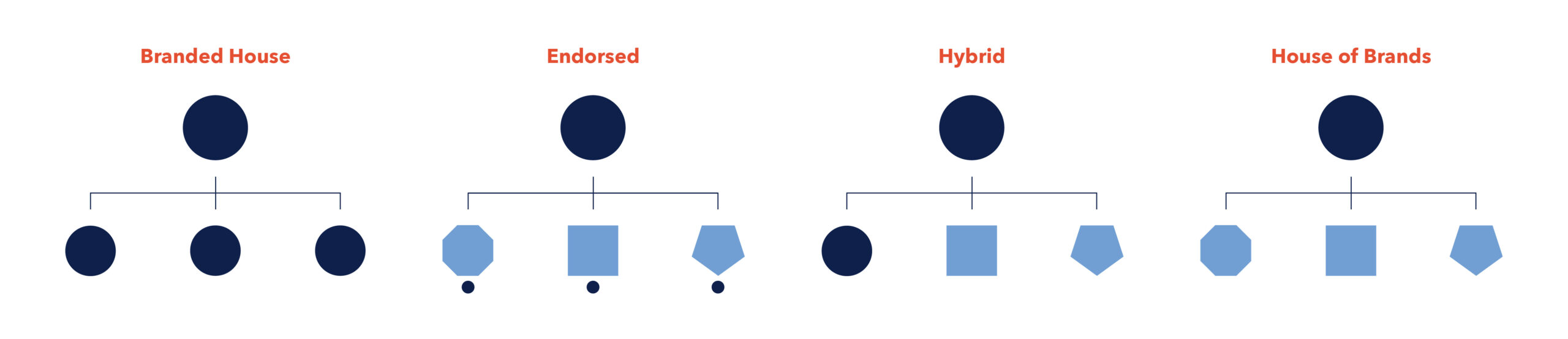
Before telling you about some of our case studies, it is useful to outline the main Brand Architecture models, in a quick but thorough way.
Branded House. Unity is strength
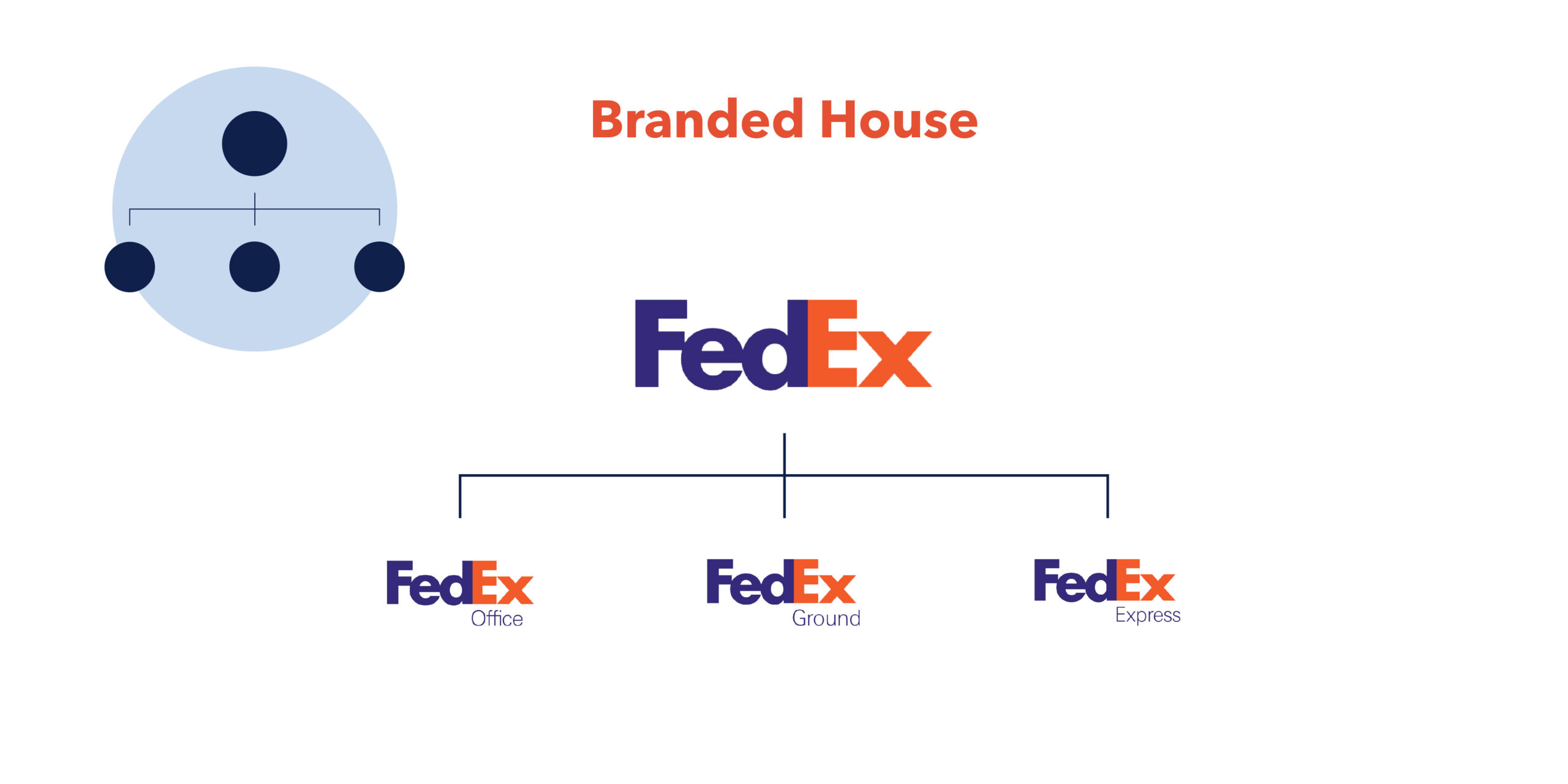
In the ‘Branded House’ model, the organisation uses a single brand, which is branched with different descriptors to identify all its products or services. This approach offers consistency and ease of brand management, reinforces core brand recognition and allows economies of scale in terms of marketing and communication.
Some PROs and CONs of this approach:
Communication PRO:the possibility to exploit the image and notoriety of the main brand; lower communication costs because they are shared CON:the risk of reputational damage to a sub-brand could extend to the main brand
Commercial PRO: it forms economies of scale, thanks to the economic efforts focused on a single brand CON:acquisition of new brands forces rebranding and the loss of equity
Internal Culture PRO: a strong sense of brand-belonging by employees; the existence of a strong brand facilitates talent attraction
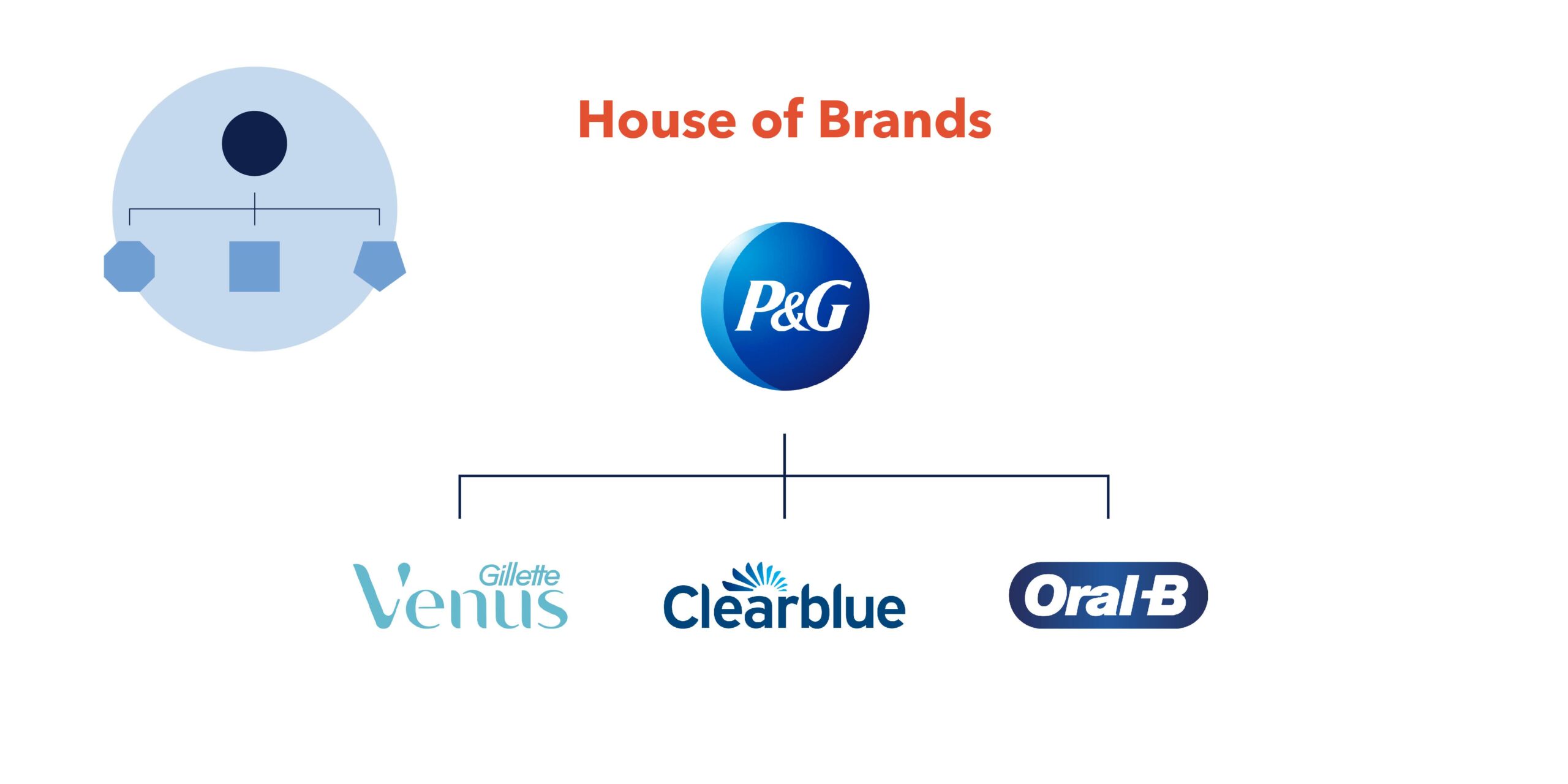
House of Brands. The strength of multiplicity
In contrast, in the ‘House of Brands’ model, the organisation operates a range of completely independent brands. This allows greater flexibility in the positioning of each individual brand, better market segmentation and the possibility to address different audiences without blurring the identity of each brand.
Some PROs and CONs of this approach:
Communication PRO:freedom and autonomy in adopting customised communication strategies CON:risk of losing coherence in the group’s narrative, whose messages vary for each sub-brand
Commercial PRO:greater diversification of business and investment opportunities CON:lack of recognition of the main group/ brand; greater organisational and economic efforts
Internal Culture PRO: each sub-brand can develop a distinctive internal culture CON: the sense of belonging to the group requires more effort; the sharing of values and best practices must find a lowest common denominator
Since each brand is characterised by unique structures and thus distinct reactions to change, the two models listed above do not always provide adequate solutions. There is therefore an area where brand architecture offers different models, such as the ‘Hybrid‘ model or the ‘Endorsed‘ model.
And this is where, in our experience, most of the doubts and reflections are concentrated.
But when does the strategic definition of a brand architecture become fundamental?
/ our case studies
MERGERS & ACQUISITIONS
THE CASE OF JOIVY
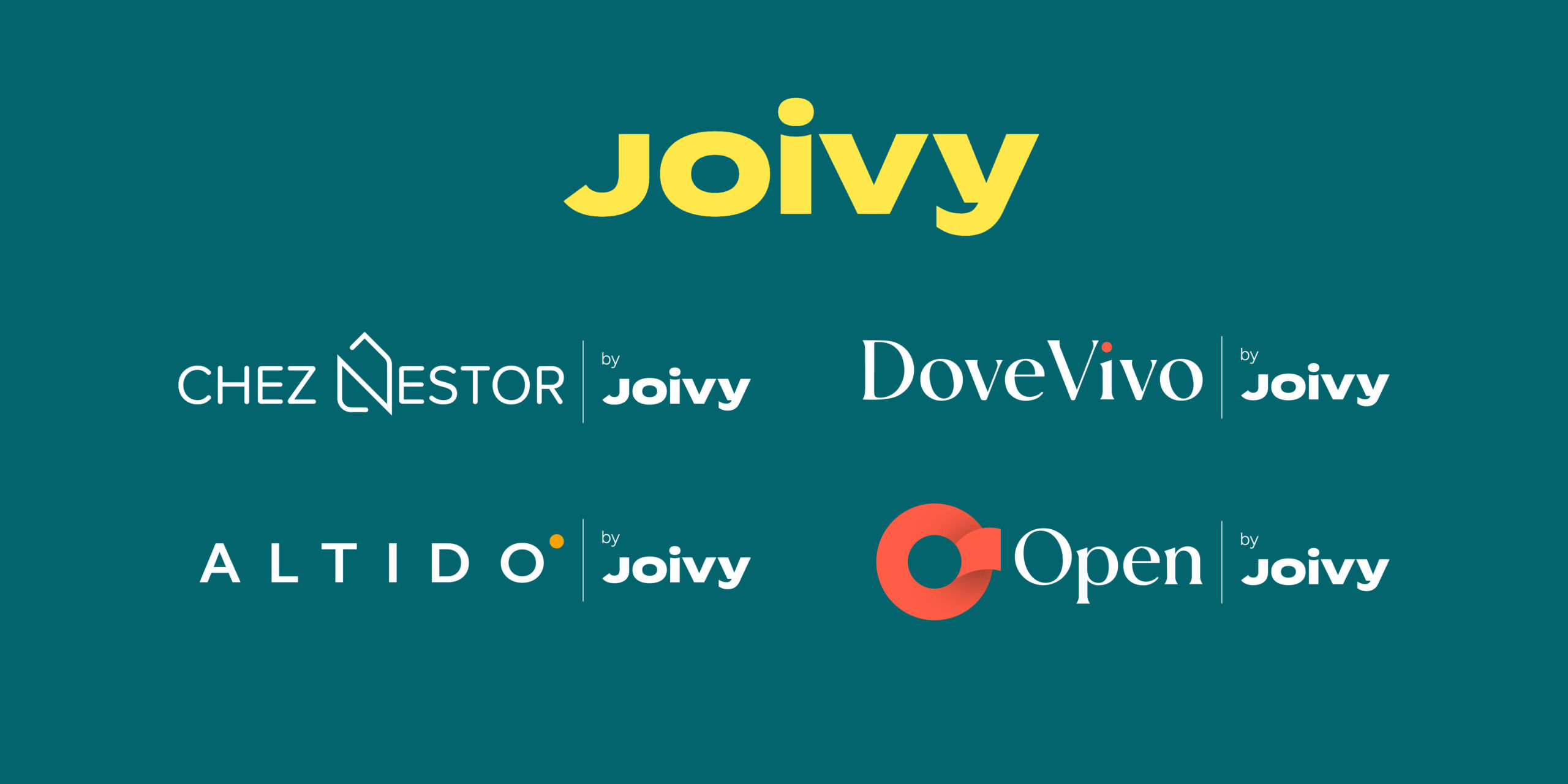
Following the acquisition of Altido, ChezNestor and Open, DoveVivo decided to unify thedifferent operators under the same brand: Joivy. This union, guided by our strategic consultancy, required a gradual transition: a first step saw the retention of the acquired brands through the juxtaposition of an endorsement “by Joivy” (‘Endorsed Brands‘), to then arrive at the complete fusion and the definitive abandonment of the previous realities, in favour of a single international brand of living solutions.
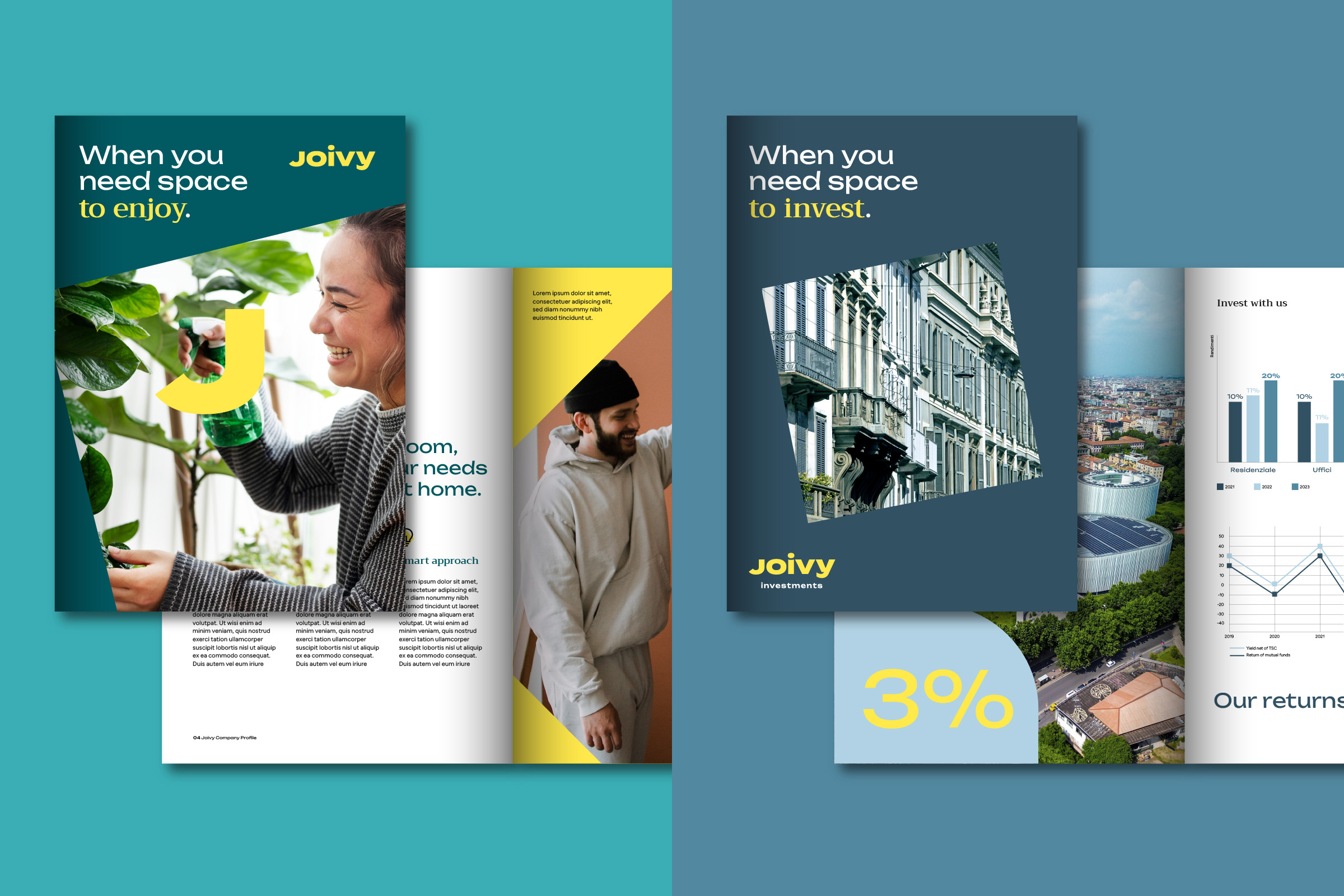
We subsequently had to undertake a second deep dive with the client, to create the in-house real estate brokerage division of Joivy.
The launch of the new brand and its Investments division were planned at the same time, so it was essential to maintain a strong visual link between the two realities. This led us to apply a ‘Branded House‘ model for Joivy, maintaining a strong visual consistency, to allow the corporate to create awareness effectively and solidify its equity.
OPENING UP TO NEW LINES OF BUSINESS
THE CASE OF FABRICK AND LYNFA
Openness, innovation, enterprise, growth: these are the value roots of the Sella Group, which have been translated and renewed in recent years through the birth of two new businesses: Lynfa, the Corporate Academy and Fabrick, the open banking platform.
We asked ourselves together with them which would be the right guidelines to direct the path of creation of these two new brands: to tend towards a ‘Branded House‘, thus maintaining the visual and verbal assets of the Group, or to break away towards a ‘House of Brands‘ model in order to enhance their DNA of values and their innovative “rupture” component?
In both cases, the most courageous choice, that of moving away from the mother brand, was also the most strategic, because it is the one that allowed the two brands to be attractive and open to new talent (Lynfa) and collaborations between different financial players (Fabrick).
EXPANSION & OVERLAPPING
THE CASE OF GI GROUP
For many years we have been partners with Gi Group, an Italian multinational operating in the labour market sector. We have seen this reality grow and expand, opening up to new markets, acquiring new players and incubating new realities. With this evolution, the Gi Group consumer brand was no longer able to hold all these players together.
It was necessary to think of a brand architecture with a higher level, capable of acting as guarantor of all the players, creating order and eliminating this overlap in the common imagination between consumer brand and parent company. We thus accompanied the client in defining the positioning and strategic platform of Gi Group Holding.
This is how the endorsement “Gi Group Holding” is realised within the different company’s logos.
/ Foundations do make a difference
In conclusion, it is crucial to emphasise the importance of a Brand Architecture that is in perfect harmony with the company’s evolution and ambitions.
This strategic decision, crucial for success, is based on careful listening and a deep understanding of the user’s needs, key elements in our work as a branding agency. A well-designed Brand Architecture not only defines external identity, but it is also an internal tool for alignment and cohesion.
This approach aligns internal forces towards a common goal and clarifies the company’s vision to all stakeholders, laying the foundation for sustainable growth and the success of each product or service. In a constantly changing world, a solid and market-conscious Brand Architecture is a beacon that guides companies towards a prosperous future.
Do you have a challenge, a project, something else, for which you need support?
Holiday seasons like Valentine’s Day stand as pivotal moments for brands to cultivate consumer engagement and drive sales, leveraging the emotional resonance inherent on such occasions. Once a simple celebration of affection, February 14th has evolved into a grand marketing spectacle, wielding immense economic influence across diverse industries.
In fact, in 2024, Valentine’s Day expenditures in the United States are projected to soar to a staggering $26 billion (Statista, 2024). These figures underscore the burgeoning opportunity that this day represents for brands.
Therefore, it is legitimate to ask, how brands can leverage design strategies to maximize consumer engagement and drive sales during Valentine’s Day, as an opportunity to forge deeper connection with their audience.
/ Modern love
Situationships.
In today’s dynamic landscape of relationships, the concept of “situationships” has emerged as a prominent phenomenon, especially among younger generations. According to a 2022 survey conducted by YPulse, 20% of Gen Z and 16% of Millennials report they have been in a situationship. And 35% of Gen z say they prefer to have an undefined relationship rather than one with a label, highlighting the evolving nature of modern love dynamics.
Several brands have innovatively tailored their offerings to resonate with this contemporary relationship dynamic.
US confectionery brand Sweethearts Candies is one of them capitalizing on this. Sweethearts Candies’ limited-edition “Situationships” box features heart-shaped candies with blurred messages, targeting individuals navigating the grey areas of relationships. Unlike traditional Valentine’s Day campaigns that focus on happy couples, Sweethearts Candies targets a different ‘unseen’ demographic: people in situationships.
The campaign quickly gained traction on social media platforms, garnering over 1.2 million views on TikTok and sparking engagement from users who resonated with how confusing situationships can be. The brand’s website further extends the campaign’s reach with downloadable e-cards bearing phrases like “Do you know how much you mean to me? Because I don’t.” adding a touch of humor and authenticity to their Valentine’s Day strategy. This approach exemplifies how brands can adapt to evolving consumer behaviors and cultural trends, infusing their offerings with relevance and resonance.
Dating apps.
Today’s romantic landscape is inseparable from dating apps. With 2.3 million daily unique visitors to these platforms in France in 2023, dating apps have become an essential aspect of modern romance. Consequently, they represent a significant business opportunity for brands aiming to expand their audience reach, enhance visibility, and engage users in meaningful ways by addressing real-life challenges.
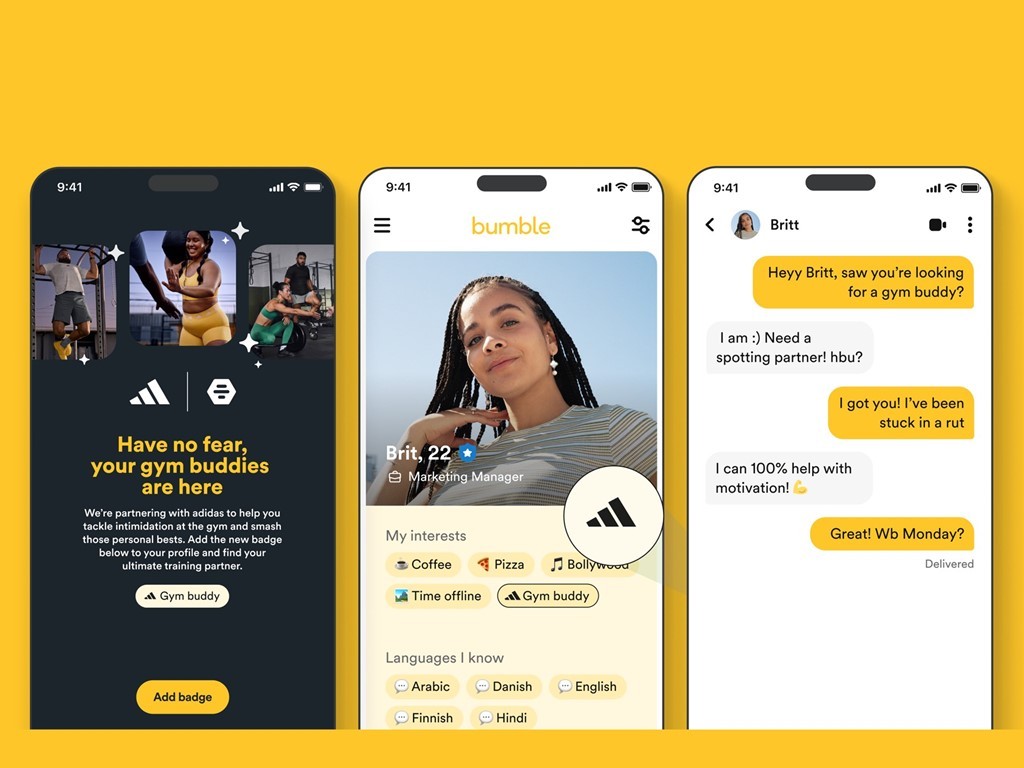
Source: Adidas
For example, Adidas and Bumble have collaborated to introduce a Gym Buddy Interest Badge on the dating app. This badge simplifies the process of finding potential gym partners who share a passion for staying active. The collaboration is in line with the launch of Adidas’s Spring/Summer 2024 Strength collection, showcasing the boundless potential of brand partnerships.
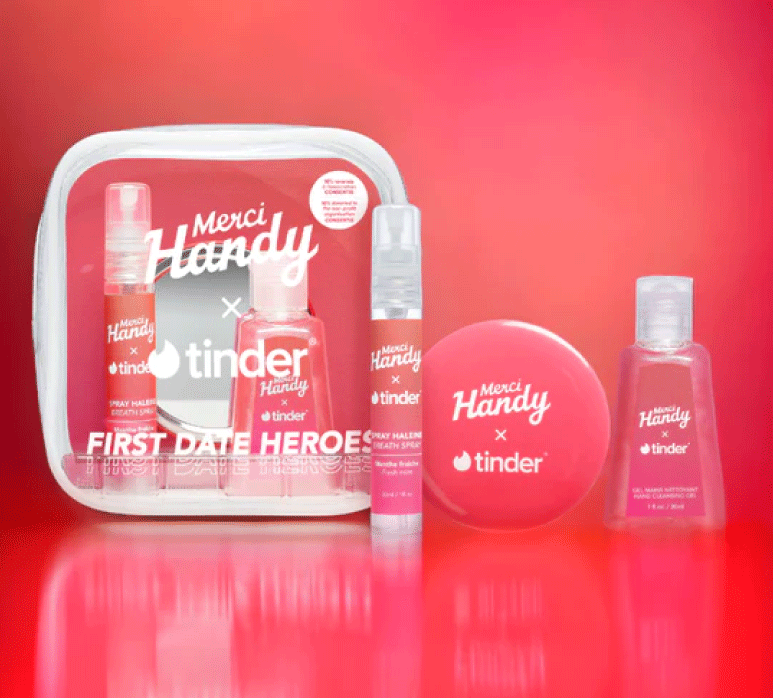
In another partnership, Tinder and Merci Handy have unveiled a capsule beauty collection named “First Date Heroes“. Inspired by an IFOP study for Tinder, which revealed that 74% of 18-25 year olds in France feel stressed before a date, this kit aims to ease the anxiety of first encounters. Additionally, 10% of proceeds from the collection are donated to Consentis, an association advocating for a culture of consent and combating sexual violence in social settings. This collaboration leverages Valentine’s Day as an opportunity to raise awareness of relevant issues and offer solutions that resonate with contemporary dating culture.
Source: Merci Handy
/ AI powered love
The increasing impact of AI is transforming how brands operate, presenting a new frontier in personalization and connection for both audiences and marketers. In the United States, 81% of consumers are open to AI providing personalized communications, underscoring the validity of its integration into communication and marketing strategies, especially evident during Valentine’s Day campaigns.
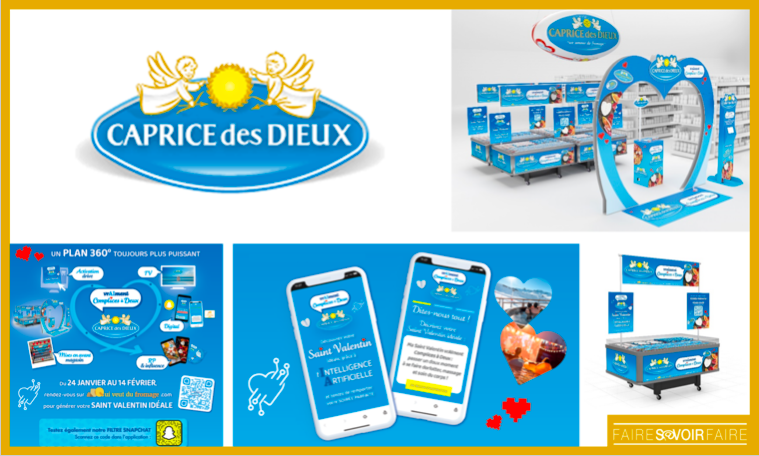
Source: Faire Savoir Faire
Regardless of the sector, brands are tapping into this sentiment, leveraging AI to support personal expression and deepen emotional connections with their audience.
For example, this year, Caprice des Dieux chose to assist its audience in organizing the perfect Valentine’s Day celebration. Through its website “Quiveutdufromage.com,” the brand used artificial intelligence to provide fully personalized evening ideas tailored to the desires of each couple.
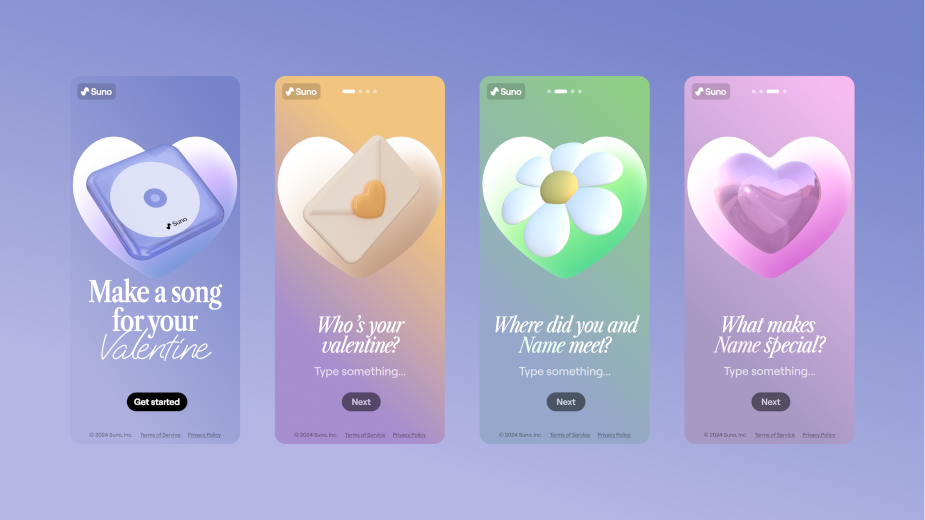
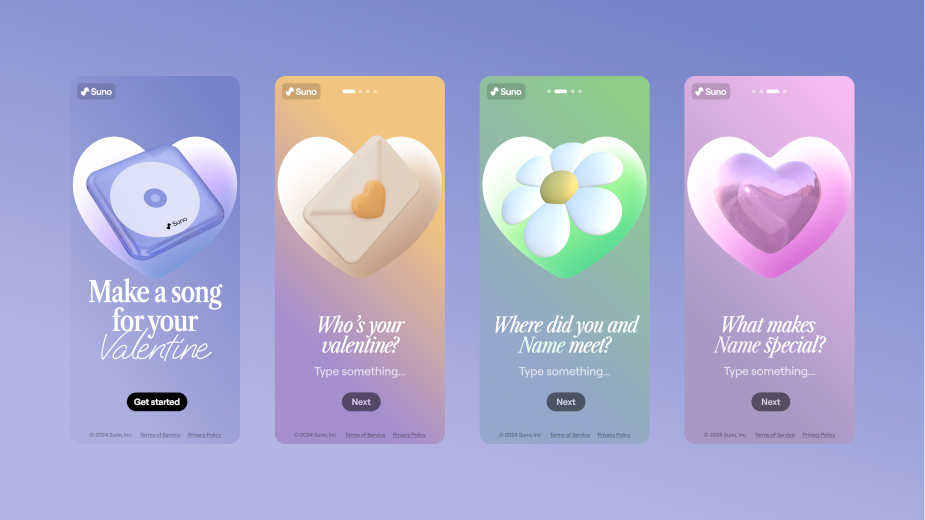
On the other hand, the US-based song generation platform Suno AI offered users a unique opportunity to create personalized tracks for their loved ones. Through the users’ answers to three questions: “Who is your Valentine?”, “Where did you meet?”, and “What makes [the person’s name] special?”, the platform generated three songs with personalized lyrics and enough scope to produce plenty of tracks.
Source: Little Black Book
/ Limited Edition Love
As for holiday season, Valentine’s Day is an opportunity for brands across all sectors to capitalize on the festive spirit by releasing limited edition products and redesigning their packaging. These special releases, ranging from beauty to food items, serve as simple but effective ways to engage consumers and drive sales.
Source: The grocer
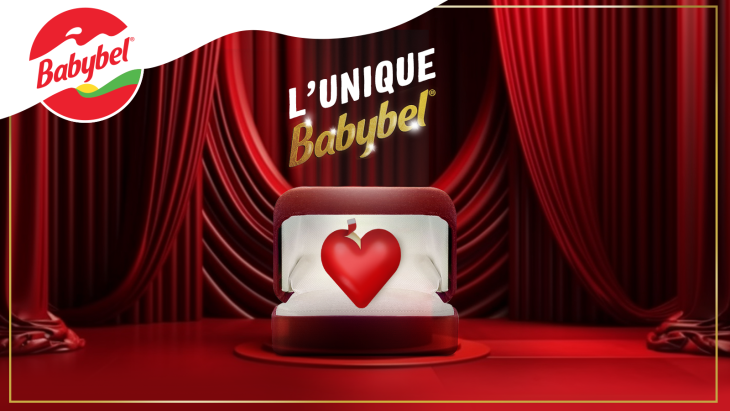
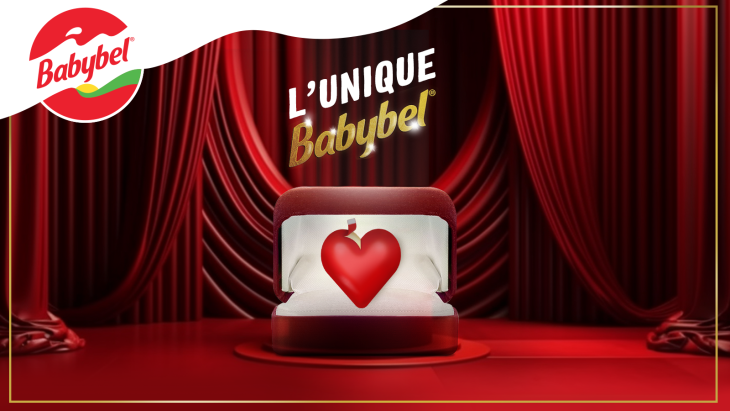
For instance, Babybel celebrates Valentine’s Day with a heart-shaped mini variant of its iconic cheese. However, this special edition isn’t available for purchase in stores; instead, consumers must participate in a sweepstake on Babybel’s Instagram page to win it. This approach not only generates excitement but also amplifies the visibility of the limited edition.
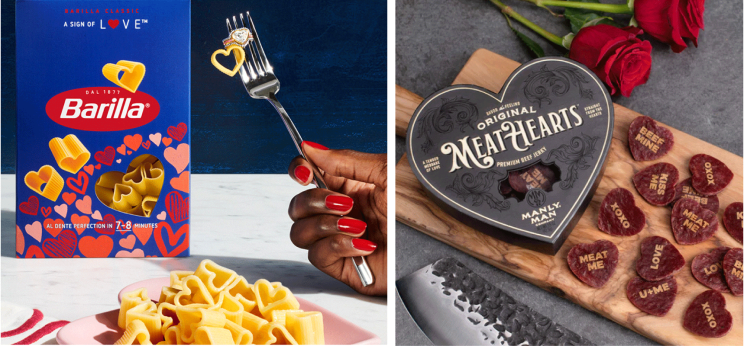
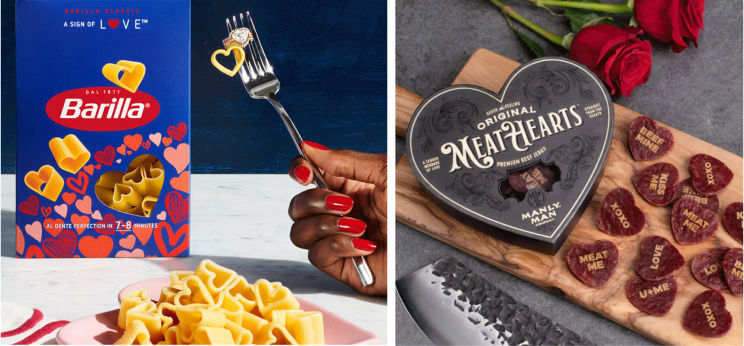
Barilla celebrates Valentine’s Day by introducing heart-shaped pasta, accompanied by special recipes for a romantic evening. Meanwhile, Manly Man Co.‘s Meathearts puts a savory twist on the sweet candy hearts with playful messages like “MEET ME”.
Source: Barilla, Manly Man Co
Source: Fauchon
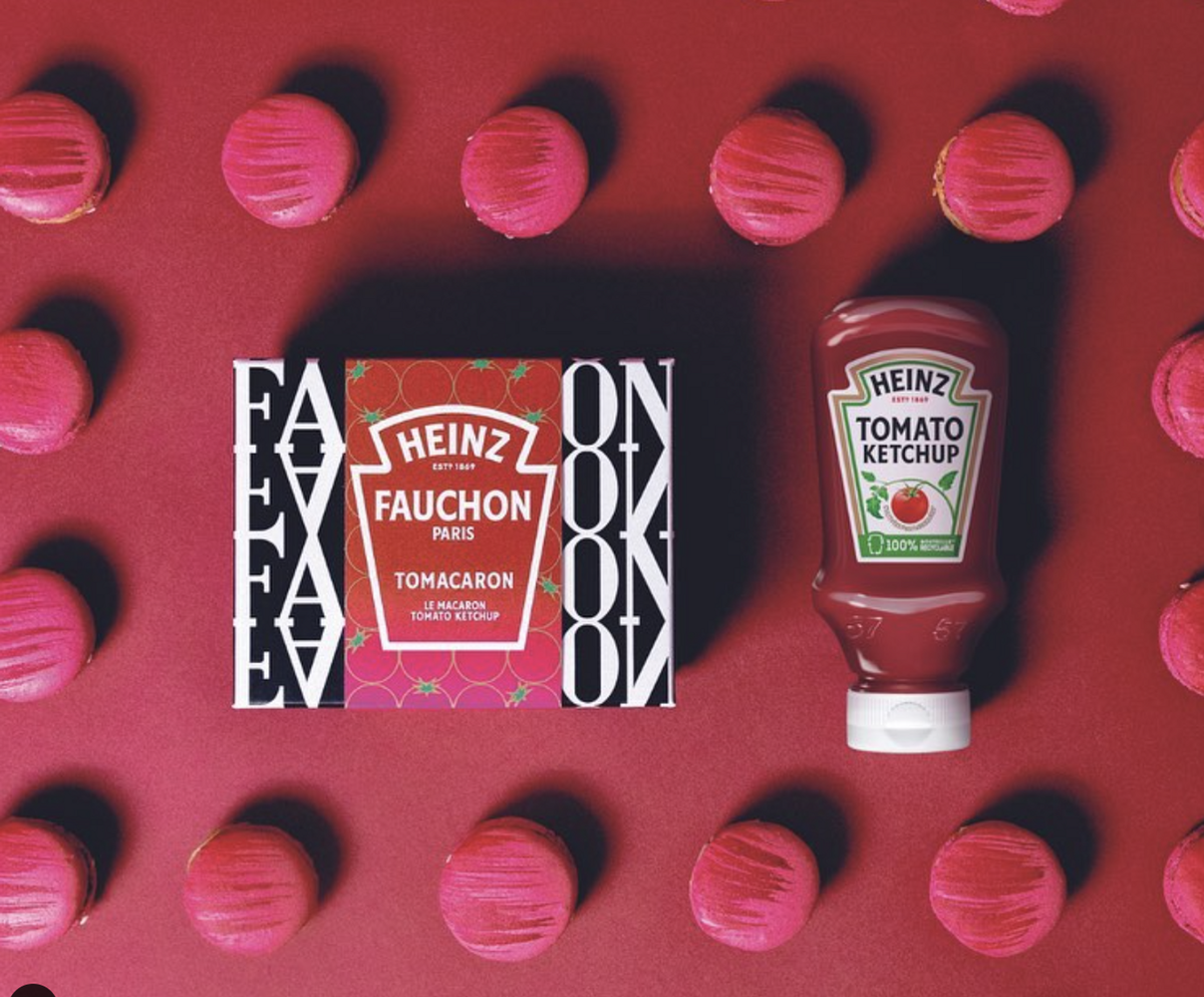
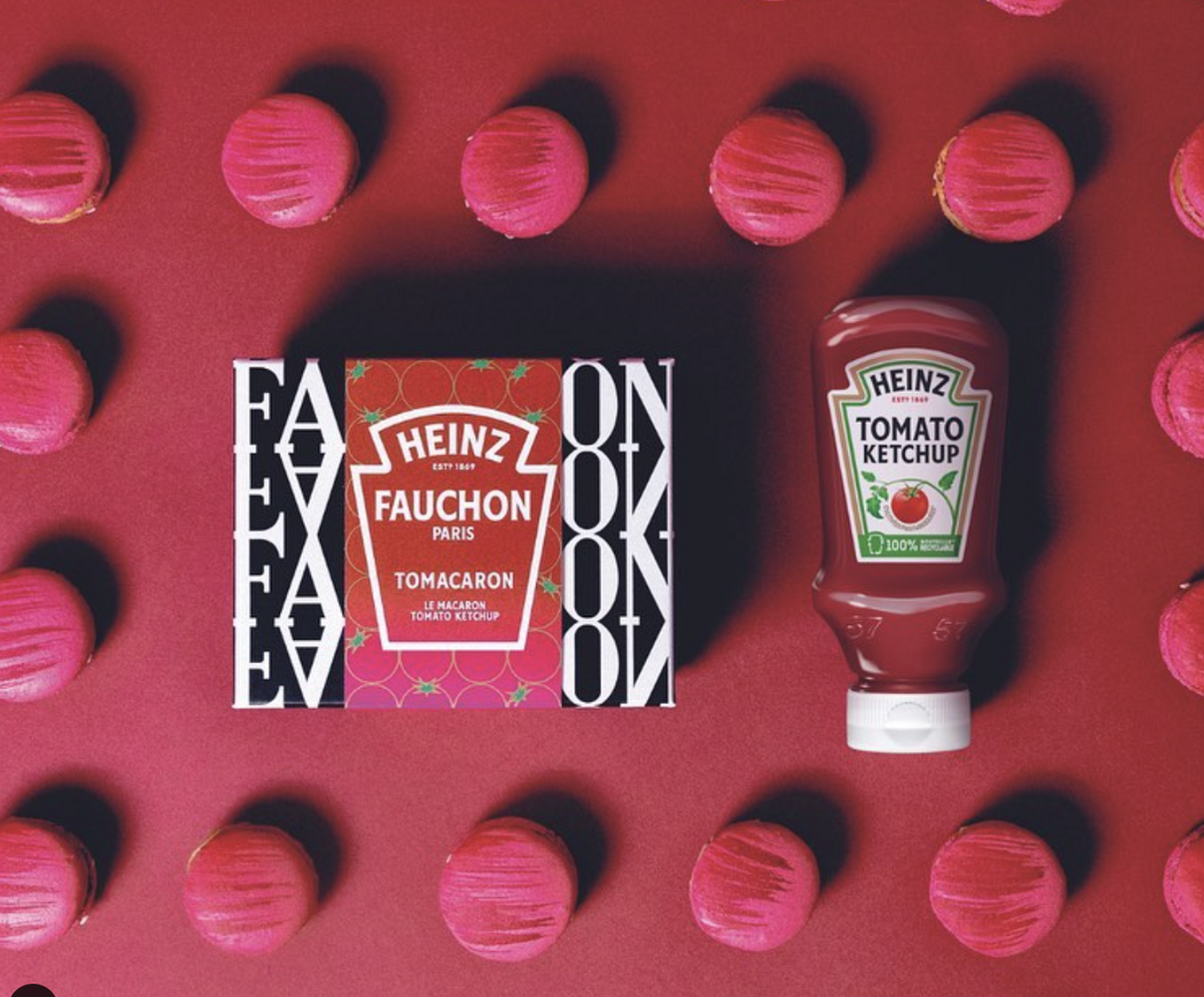
Heinz celebrated the attraction of opposites with FauchonParis through the introduction of the Tomacaron: a macaron with ketchup. This limited edition isn’t just a culinary collaboration; it’s a testament to the power of collaboration that unlocked new opportunities to showcase their respective strengths, broaden their audience reach, and unveil a product that captures the imagination of consumers.
Thus, with the constant evolution of trends, technology, and consumer behaviors, brands have a wide range of options to capitalize on Valentine’s Day. They can leverage the latest technological advancements and emerging trends such as “situationships” and artificial intelligence, or opt for more traditional strategies like limited editions. By integrating these approaches in innovative and thoughtful ways, brands can strengthen their position in the market and foster lasting relationships with their audience during Valentine’s Day and beyond.
Holiday seasons like Valentine’s Day stand as pivotal moments for brands to cultivate consumer engagement and drive sales, leveraging the emotional resonance inherent on such occasions. Once a simple celebration of affection, February 14th has evolved into a grand marketing spectacle, wielding immense economic influence across diverse industries.
In fact, in 2024, Valentine’s Day expenditures in the United States are projected to soar to a staggering $26 billion (Statista, 2024). These figures underscore the burgeoning opportunity that this day represents for brands.
Therefore, it is legitimate to ask, how brands can leverage design strategies to maximize consumer engagement and drive sales during Valentine’s Day, as an opportunity to forge deeper connection with their audience.
/ Modern love
Situationships.
In today’s dynamic landscape of relationships, the concept of “situationships” has emerged as a prominent phenomenon, especially among younger generations. According to a 2022 survey conducted by YPulse, 20% of Gen Z and 16% of Millennials report they have been in a situationship. And 35% of Gen z say they prefer to have an undefined relationship rather than one with a label, highlighting the evolving nature of modern love dynamics.
Several brands have innovatively tailored their offerings to resonate with this contemporary relationship dynamic.
US confectionery brand Sweethearts Candies is one of them capitalizing on this. Sweethearts Candies’ limited-edition “Situationships” box features heart-shaped candies with blurred messages, targeting individuals navigating the grey areas of relationships. Unlike traditional Valentine’s Day campaigns that focus on happy couples, Sweethearts Candies targets a different ‘unseen’ demographic: people in situationships.
The campaign quickly gained traction on social media platforms, garnering over 1.2 million views on TikTok and sparking engagement from users who resonated with how confusing situationships can be. The brand’s website further extends the campaign’s reach with downloadable e-cards bearing phrases like “Do you know how much you mean to me? Because I don’t.” adding a touch of humor and authenticity to their Valentine’s Day strategy. This approach exemplifies how brands can adapt to evolving consumer behaviors and cultural trends, infusing their offerings with relevance and resonance.
Dating apps.
Today’s romantic landscape is inseparable from dating apps. With 2.3 million daily unique visitors to these platforms in France in 2023, dating apps have become an essential aspect of modern romance. Consequently, they represent a significant business opportunity for brands aiming to expand their audience reach, enhance visibility, and engage users in meaningful ways by addressing real-life challenges.
Source: Adidas
For example, Adidas and Bumble have collaborated to introduce a Gym Buddy Interest Badge on the dating app. This badge simplifies the process of finding potential gym partners who share a passion for staying active. The collaboration is in line with the launch of Adidas’s Spring/Summer 2024 Strength collection, showcasing the boundless potential of brand partnerships.
In another partnership, Tinder and Merci Handy have unveiled a capsule beauty collection named “First Date Heroes“. Inspired by an IFOP study for Tinder, which revealed that 74% of 18-25 year olds in France feel stressed before a date, this kit aims to ease the anxiety of first encounters. Additionally, 10% of proceeds from the collection are donated to Consentis, an association advocating for a culture of consent and combating sexual violence in social settings. This collaboration leverages Valentine’s Day as an opportunity to raise awareness of relevant issues and offer solutions that resonate with contemporary dating culture.
Source: Merci Handy
/ AI powered love
The increasing impact of AI is transforming how brands operate, presenting a new frontier in personalization and connection for both audiences and marketers. In the United States, 81% of consumers are open to AI providing personalized communications, underscoring the validity of its integration into communication and marketing strategies, especially evident during Valentine’s Day campaigns.
Regardless of the sector, brands are tapping into this sentiment, leveraging AI to support personal expression and deepen emotional connections with their audience.
For example, this year, Caprice des Dieux chose to assist its audience in organizing the perfect Valentine’s Day celebration. Through its website “Quiveutdufromage.com,” the brand used artificial intelligence to provide fully personalized evening ideas tailored to the desires of each couple.
Source: Faire Savoir Faire
On the other hand, the US-based song generation platform Suno AI offered users a unique opportunity to create personalized tracks for their loved ones. Through the users’ answers to three questions: “Who is your Valentine?”, “Where did you meet?”, and “What makes [the person’s name] special?”, the platform generated three songs with personalized lyrics and enough scope to produce plenty of tracks.
Source: Little Black Book
/ Limited Edition Love
As for holiday season, Valentine’s Day is an opportunity for brands across all sectors to capitalize on the festive spirit by releasing limited edition products and redesigning their packaging. These special releases, ranging from beauty to food items, serve as simple but effective ways to engage consumers and drive sales.
Source: The grocer
For instance, Babybel celebrates Valentine’s Day with a heart-shaped mini variant of its iconic cheese. However, this special edition isn’t available for purchase in stores; instead, consumers must participate in a sweepstake on Babybel’s Instagram page to win it. This approach not only generates excitement but also amplifies the visibility of the limited edition.
Barilla celebrates Valentine’s Day by introducing heart-shaped pasta, accompanied by special recipes for a romantic evening. Meanwhile, Manly Man Co.‘s Meathearts puts a savory twist on the sweet candy hearts with playful messages like “MEET ME”.
Source: Barilla, Manly Man Co
Source: Fauchon
Heinz celebrated the attraction of opposites with FauchonParis through the introduction of the Tomacaron: a macaron with ketchup. This limited edition isn’t just a culinary collaboration; it’s a testament to the power of collaboration that unlocked new opportunities to showcase their respective strengths, broaden their audience reach, and unveil a product that captures the imagination of consumers.
Thus, with the constant evolution of trends, technology, and consumer behaviors, brands have a wide range of options to capitalize on Valentine’s Day. They can leverage the latest technological advancements and emerging trends such as “situationships” and artificial intelligence, or opt for more traditional strategies like limited editions. By integrating these approaches in innovative and thoughtful ways, brands can strengthen their position in the market and foster lasting relationships with their audience during Valentine’s Day and beyond.
Holiday seasons like Valentine’s Day stand as pivotal moments for brands to cultivate consumer engagement and drive sales, leveraging the emotional resonance inherent on such occasions. Once a simple celebration of affection, February 14th has evolved into a grand marketing spectacle, wielding immense economic influence across diverse industries.
In fact, in 2024, Valentine’s Day expenditures in the United States are projected to soar to a staggering $26 billion (Statista, 2024). These figures underscore the burgeoning opportunity that this day represents for brands.
Therefore, it is legitimate to ask, how brands can leverage design strategies to maximize consumer engagement and drive sales during Valentine’s Day, as an opportunity to forge deeper connection with their audience.
/ Modern love
Situationships.
In today’s dynamic landscape of relationships, the concept of “situationships” has emerged as a prominent phenomenon, especially among younger generations. According to a 2022 survey conducted by YPulse, 20% of Gen Z and 16% of Millennials report they have been in a situationship. And 35% of Gen z say they prefer to have an undefined relationship rather than one with a label, highlighting the evolving nature of modern love dynamics.
Several brands have innovatively tailored their offerings to resonate with this contemporary relationship dynamic.
US confectionery brand Sweethearts Candies is one of them capitalizing on this. Sweethearts Candies’ limited-edition “Situationships” box features heart-shaped candies with blurred messages, targeting individuals navigating the grey areas of relationships. Unlike traditional Valentine’s Day campaigns that focus on happy couples, Sweethearts Candies targets a different ‘unseen’ demographic: people in situationships.
The campaign quickly gained traction on social media platforms, garnering over 1.2 million views on TikTok and sparking engagement from users who resonated with how confusing situationships can be. The brand’s website further extends the campaign’s reach with downloadable e-cards bearing phrases like “Do you know how much you mean to me? Because I don’t.” adding a touch of humor and authenticity to their Valentine’s Day strategy. This approach exemplifies how brands can adapt to evolving consumer behaviors and cultural trends, infusing their offerings with relevance and resonance.
Dating apps.
Today’s romantic landscape is inseparable from dating apps. With 2.3 million daily unique visitors to these platforms in France in 2023, dating apps have become an essential aspect of modern romance. Consequently, they represent a significant business opportunity for brands aiming to expand their audience reach, enhance visibility, and engage users in meaningful ways by addressing real-life challenges.
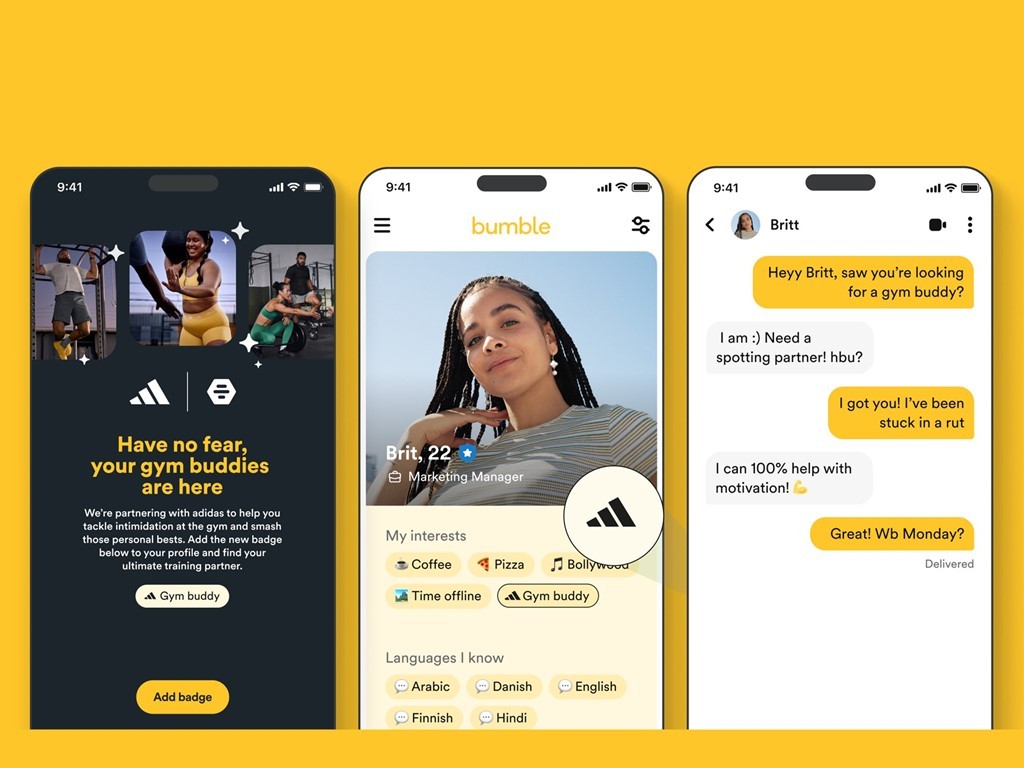
For example, Adidas and Bumble have collaborated to introduce a Gym Buddy Interest Badge on the dating app. This badge simplifies the process of finding potential gym partners who share a passion for staying active. The collaboration is in line with the launch of Adidas’s Spring/Summer 2024 Strength collection, showcasing the boundless potential of brand partnerships.
Source: Adidas
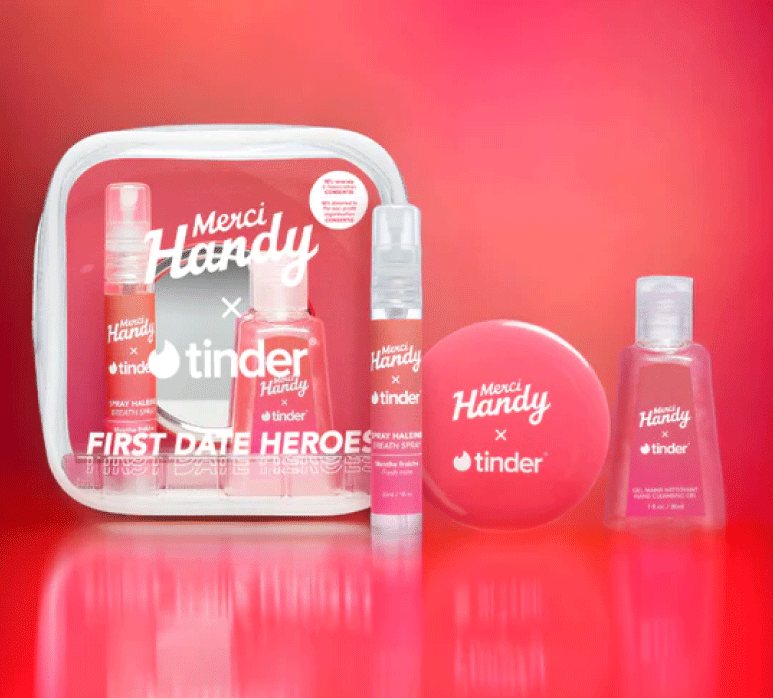
In another partnership, Tinder and Merci Handy have unveiled a capsule beauty collection named “First Date Heroes“. Inspired by an IFOP study for Tinder, which revealed that 74% of 18-25 year olds in France feel stressed before a date, this kit aims to ease the anxiety of first encounters. Additionally, 10% of proceeds from the collection are donated to Consentis, an association advocating for a culture of consent and combating sexual violence in social settings. This collaboration leverages Valentine’s Day as an opportunity to raise awareness of relevant issues and offer solutions that resonate with contemporary dating culture.
Source: Merci Handy
/ AI powered love
The increasing impact of AI is transforming how brands operate, presenting a new frontier in personalization and connection for both audiences and marketers. In the United States, 81% of consumers are open to AI providing personalized communications, underscoring the validity of its integration into communication and marketing strategies, especially evident during Valentine’s Day campaigns.
Regardless of the sector, brands are tapping into this sentiment, leveraging AI to support personal expression and deepen emotional connections with their audience.
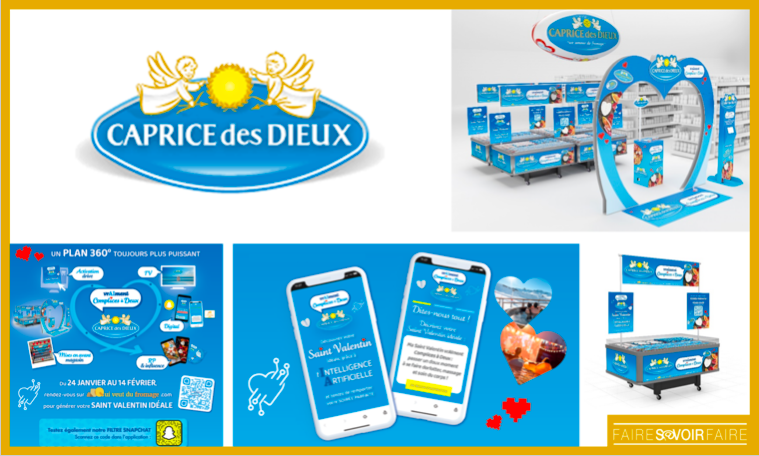
For example, this year, Caprice des Dieux chose to assist its audience in organizing the perfect Valentine’s Day celebration. Through its website “Quiveutdufromage.com,” the brand used artificial intelligence to provide fully personalized evening ideas tailored to the desires of each couple.
Source: Faire Savoir Faire
On the other hand, the US-based song generation platform Suno AI offered users a unique opportunity to create personalized tracks for their loved ones. Through the users’ answers to three questions: “Who is your Valentine?”, “Where did you meet?”, and “What makes [the person’s name] special?”, the platform generated three songs with personalized lyrics and enough scope to produce plenty of tracks.
Source: Little Black Book
/ Limited Edition Love
As for holiday season, Valentine’s Day is an opportunity for brands across all sectors to capitalize on the festive spirit by releasing limited edition products and redesigning their packaging. These special releases, ranging from beauty to food items, serve as simple but effective ways to engage consumers and drive sales.
For instance, Babybel celebrates Valentine’s Day with a heart-shaped mini variant of its iconic cheese. However, this special edition isn’t available for purchase in stores; instead, consumers must participate in a sweepstake on Babybel’s Instagram page to win it. This approach not only generates excitement but also amplifies the visibility of the limited edition.
Source: The grocer
Barilla celebrates Valentine’s Day by introducing heart-shaped pasta, accompanied by special recipes for a romantic evening. Meanwhile, Manly Man Co.‘s Meathearts puts a savory twist on the sweet candy hearts with playful messages like “MEET ME”.
Source: Barilla, Manly Man Co
Heinz celebrated the attraction of opposites with FauchonParis through the introduction of the Tomacaron: a macaron with ketchup. This limited edition isn’t just a culinary collaboration; it’s a testament to the power of collaboration that unlocked new opportunities to showcase their respective strengths, broaden their audience reach, and unveil a product that captures the imagination of consumers.
Source: Fauchon
Thus, with the constant evolution of trends, technology, and consumer behaviors, brands have a wide range of options to capitalize on Valentine’s Day. They can leverage the latest technological advancements and emerging trends such as “situationships” and artificial intelligence, or opt for more traditional strategies like limited editions. By integrating these approaches in innovative and thoughtful ways, brands can strengthen their position in the market and foster lasting relationships with their audience during Valentine’s Day and beyond.
In a world where change is the only constant, the ability to discern fleeting fads from enduring trends is more crucial than ever.
We have highlighted 15 trends that promise longevity and sustainability, transcending the ephemeral nature that characterizes the world of brands, with a focus on positive impact.
Our report, covering over 40 industries and 90 case studies, revolves around 5 pillars derived from our Critical Imprint utility map:
Reinventing raw materials and everyday consumer products is a necessity: we must consider material innovation and reorient product life cycles.
Ancient wisdom is increasingly acknowledged for modern environmental solutions.
Inclusivity and diversity
continue to gain ground. Brands are increasingly rejecting binary gender norms and traditional aesthetics.
Sexual positivity, a multi-age mindset, and the use of psychotropic substances
are increasingly adopted by brands for holistic well-being.
The rise of artificial intelligence is redefining creativity and strategic thinking
… while increasingly, brands integrate behavioral design into their strategies, thus promoting spaces of connection and shared experiences against digital isolation.
Web3 is redefining brand engagement through transparency, ethics, and decentralized control.
Brands are adapting to the rising cost of living by prioritizing cost-effective solutions, while cities worldwide adjust to environmentally friendly micromobility.
With the constant questioning of women’s rights around the world and still today, we are well aware that some of the rights are still sensitive and unstable. The group CBA means to fight against gender discrimination and sexism and do believe that design is an extraordinary tool to shape the world into a better place, both for women and men.
Thus, CBA launched a campaign in March highlighting the women and men who fight gender inequality on a daily basis and the role of design in the inclusion of women.
We have sought to analyse the theme of women’s rights from all angles, in order to enlighten and raise public awareness.
/ INTERVIEWING CBA'S PEOPLE!
CBA Paris launched an interview campaign highlighting employees and their experiences as women or men in the world of work and their perceptions of gender inequality. Here are a few questions they answered:
When did you feel held back by your status as a woman in your professional life?
Do you see a difference between the working wold of yesterday and today?
What is the most effective way to achieve equality?
A cultural reference that marked you regarding women?
Barbara Duavy, Managing Partners & Head of Culture CBA B+G, looks back on her experience as a woman in the professional world and especially as a board member. A touching, transparent and necessary testimony still today!
An interesting look at her childhood, her schooling and the objectives of CBA B+G in terms of people, culture, diversity and ESG, in the long run.
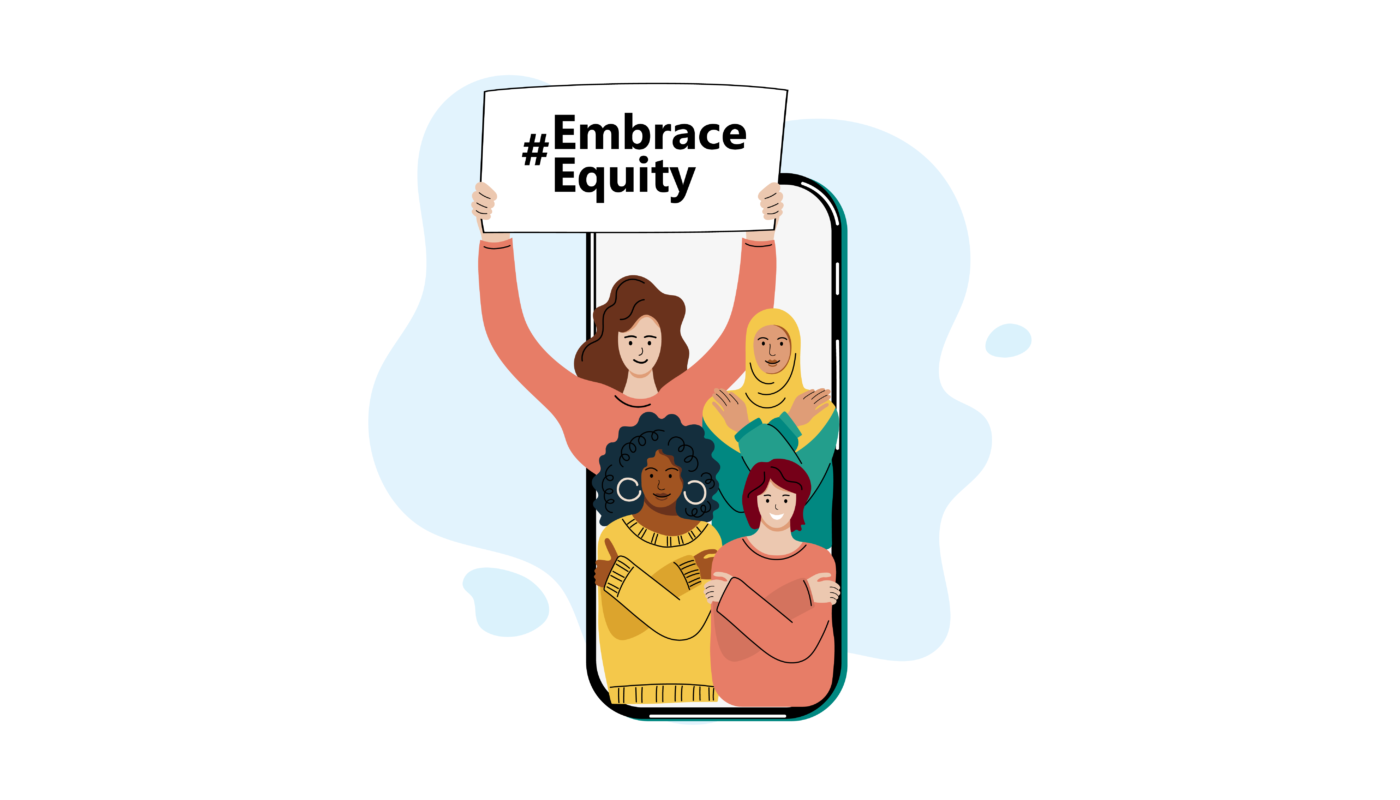
In this special month, we decided to focus on the theme of inclusive design. More and more brands adopt inclusive design to celebrate accessibility! In order to respond to issues that are still major today asfight against gender discrimination and sexism, celebrate a more intuitive and accessible design and adopt equity thanks to inclusives identities.
In this special month, we decided to focus on the theme of inclusive design. More and more brands adopt inclusive design to celebrate accessibility! In order to respond to issues that are still major today asfight against gender discrimination and sexism, celebrate a more intuitive and accessible design and adopt equity thanks to inclusives identities.
In this special month, we decided to focus on the theme of inclusive design. More and more brands adopt inclusive design to celebrate accessibility! In order to respond to issues that are still major today asfight against gender discrimination and sexism, celebrate a more intuitive and accessible design and adopt equity thanks to inclusives identities.
Carmen Beer, content manager at CBA B+G, highlights the ‘All Bodies are Normal’ trend from our recent Design Trends Report, which has everything to do with empowered women.
Embracing and celebrating the natural shapes and cycles of all bodies is the core of many new brands, designing products & services that speak directly to a target group previously forgotten.
Subjects as the well-being, mental health and acceptation are much more taking into account by brands. Authenticity and transparency is key!
/ IMPACT CREATIVITY LED BY WOMEN
Sandra Garcia, our Managing Director at CBA Spain, took part at the BCREATIVE session of the Barcelona Woman Acceleration Week with the key theme « Impact creativity led by women ».
A keynote about the power of design applied to business strategies to achieve responsible and sustainable growth.
Sandra Garcia, our Managing Director at CBA Spain, took part at the BCREATIVE session of the Barcelona Woman Acceleration Week with the key theme « Impact creativity led by women ».
A keynote about the power of design applied to business strategies to achieve responsible and sustainable growth.
Sandra Garcia, our Managing Director at CBA Spain, took part at the BCREATIVE session of the Barcelona Woman Acceleration Week with the key theme « Impact creativity led by women ».
A keynote about the power of design applied to business strategies to achieve responsible and sustainable growth.
CBA’s global team of designers, strategists and content experts have selected from out there what they considered top-notch in terms of design, branding and consumer trends, focusing on positive impact.
From this great curation we highlighted 15 trends that, in this year, will continue to encourage brands – large and small, from all categories – to innovate in order to become more useful to society.
Every new experience, product, packaging or service designed is
<p>In the previous article in the CBA Design Series, we explored the many facets – and iconic expressions – of the almighty triangle. Now, we examine a graphic tool that is, quite literally, an icon: the emoji. We hope this new bit of insight makes you, well, 😃. </p>
If...
“…a picture paints a thousand words, then why can’t I paint you?”
My Dad would often sing these classic lyrics to my Mom when I was a very young girl, prompting me to perfect my eye-rolling skills.
It’s doubtful that a set of emojis would have been of much use to the writer of these romantic words as he tried to capture the beauty of his true love. 😥
The song acts as a stark reminder that even pictures have their limits. A thousand words might be stretching it, but a simple heart can definitely replace eight little letters.
So, what do these playful pictograms tell us about the world we live in? Read on to find out.
Emoji, Sch-emoji!
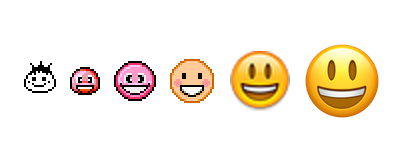
Emojis are a byproduct of the new technological opportunities available on phones and keyboards. Because we can, we do. Their creation was almost inevitable.
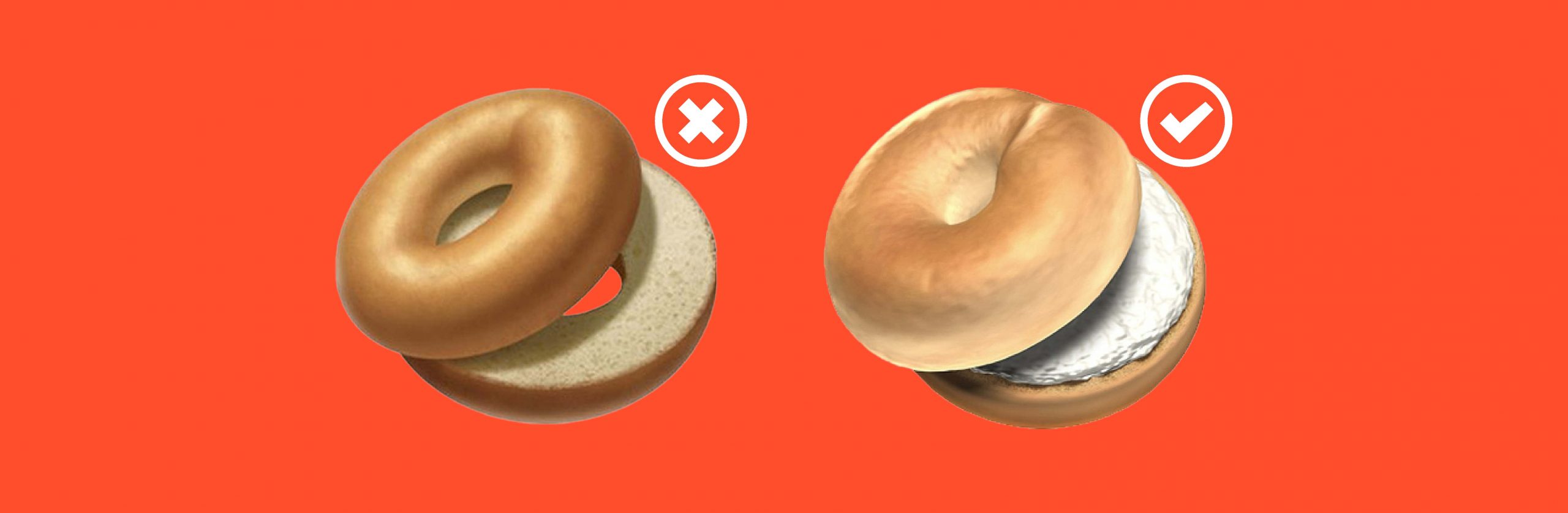
IMAGE SOURCE (left to right) : SoftBank 1997, 2001, 2004, 2008; Apple 2008, 2018.
To give their age a little perspective, emojis are a year younger than the first episode of Judge Judy’s TV show.
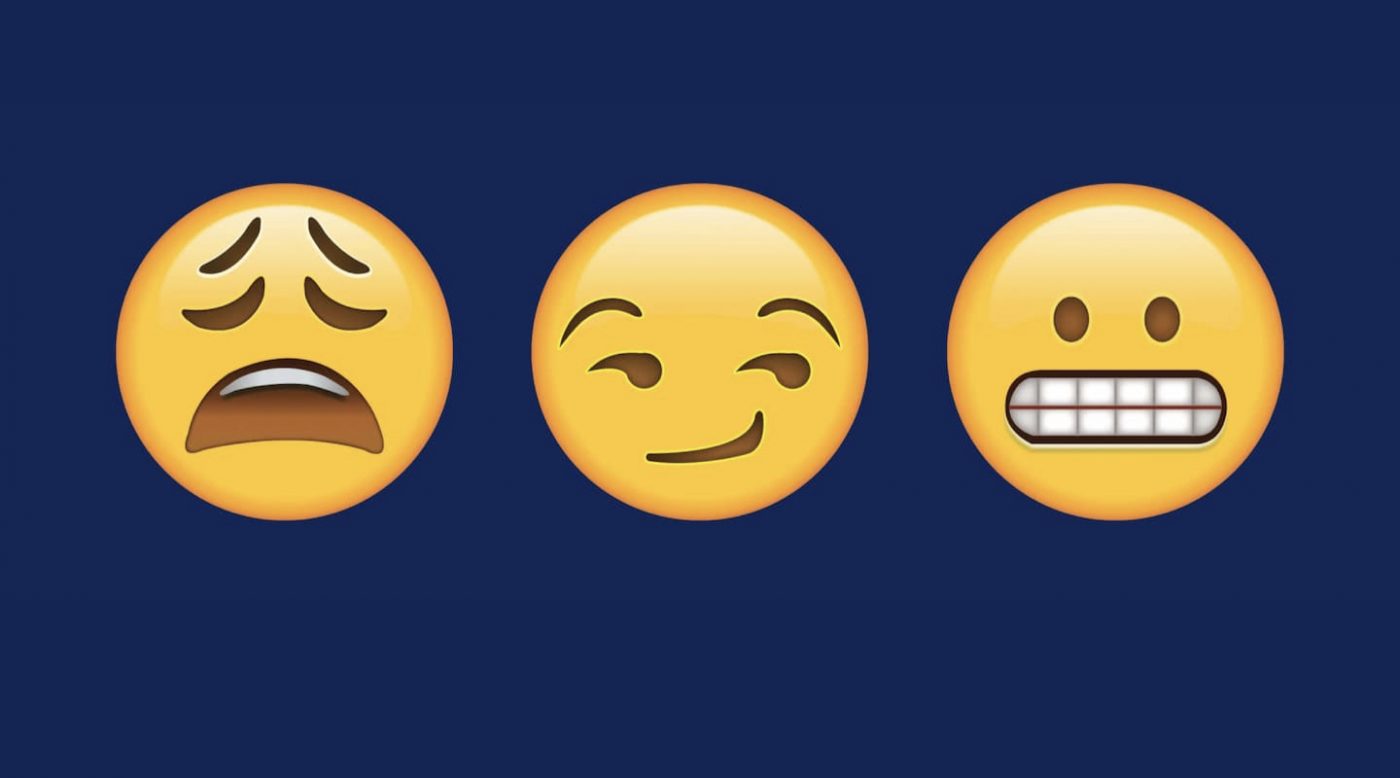
When it was announced last year that her courtroom drama was to end, her millions of grief-stricken fans were limited to exchanging crying face emojis– there being no hysterical, ululating varieties (yet). The sad face emoji world had never been so busy since the death of Joan Rivers.
Judy Sheindlen may be queen of quickfire one-liners but modern technology is not her strong point. Her loyal sidekick, Officer Byrd, was often called upon to fill her in on the niceties of the digital age which cropped up in the cases she heard. Emojis. Sch-emojis! “Do I have stupid written on my forehead? Case dismissed!”
In Judyland, things are always clear-cut. The kinds of emoji-type images brand Judy could conjure up would be few but definitely extreme.
Love ‘em or Hate ‘em?
Emojis, not to be confused with their cousins, GIFs and Memes, may well give us emotional clues when we communicate, but in fact, they come from the Japanese word meaning picture character.
“Emojis increase the precision and nuance of our often super-brief and open-to-misunderstanding communications,” Alizah K. Lowell, Psychology Today.
Suzanne Moore, Columnist, the Guardian, “Winky smiley face. Excuse me if I don’t respond to the puppy, umbrella and fake flowers you send me … I am not six. Send help. Send words.”🐶☂️💐
Suzanne Moore has a point, but the truth is that many of us don’t have the time or inclination to write exactly what we mean or feel. We’re so often glued to our phones that multitasking has become the norm and some jobs need to be quick.
Texting a pictogram of a thumbs-up, a bottle of bubbly or smiley face 👍🍾😊 is irresistible while concentrating on the latest offering from Netflix, for example. It’s instant, fast and says what we mean. Job done.
So sophisticated have we become at using emojis that we can be caring, confrontational, passive-aggressive or sarcastic, all at the touch of a single button or emoji. (And, sometimes we don’t even mean to be any of those things.)
Bagel and Burger Battles
Given their simplicity, lazy artwork appears to be behind the controversy some emojis have caused during their relatively short lives.
“Clotted cream or jam on your scone first, madam?” It depends where you are, of course.Our very British Design Director, Chris Martin 💂 informed me of the war waged between Cornwall and Devon about the right way to make a proper cream tea. It’s as old as the ‘milk in first or last’ conundrum when making a cup of English Breakfast tea. 🫖
In a similar way, some food emojis have almost created international incidents. Users could be forgiven for not being truly grateful for the original cheeseburger emoji Google served up. The company got its emoji chef to recreate it with the cheese on top rather than underneath the patty.
Apple’s first attempt at a bagel emoji was enough to evoke a string of Gordon Ramsey-style expletives. Anemic and plastic-looking, it was replaced with something more realistic, tempting and filled with cream cheese. I’d have added a little smoked salmon myself.
Harmless water pistols have pushed real guns down the emoji pecking order. Even innocent-looking vegetables have found themselves caught up in the controversial world of sexual, emoji innuendo.
Emojis by their very nature are caught in the crossfire of diversity. It’d take a very brave person to try and come up with a range of emojis which fully represented humanity in all its different colors and shades.
It Started and Ends with a Smiley
The founding father and mother of all emojis is arguably the smiley face. It began with a simple 🙂 in texts and emails long before colorful, designer emojis became de rigeur.
Some researchers claim our brains even process and recognize facial expressions made up of characters in the same way as real ones. Who knows? We might one day start responding to an emoji as we would to a real bottle of red wine or beer. It’d certainly be cheaper. I’ll take two of each, please.
As I was researching for this article, I learned that Fatboy Slim, the international DJ aka Norman Cook, is a smiley face aficionado who’s gathered what’s possibly the biggest collection of smiley fashion items in the world.
The smiley he’s such a fan of was born in Worcester, Massachusetts in 1963 when artist Harvey Ball was asked by the State Mutual Life Assurance Company to make badges that would improve staff morale.
“The first ever 12-inch single I bought was Psycho Killer by the Talking Heads in 1977,” Fatboy Slim explains. “That had a picture of a smiley T-shirt. That was the first semi-ironic use of it – it was everything that punk rock wasn’t.”
The smiley symbol has been rediscovered by generation after generation. Adopted as both a corporate logo and acid house icon, it’s inspired artists like Banksy and even featured in the noir superhero Watchmen movie.
It’s reassuring to know that during such challenging times modern versions of a happy face are still the most used and most popular emojis.
This article was written by Isabelle Narciso, Designer, New York.
I’m thrilled to announce that the next Design Series article will be written and illustrated by CBA Design Director Arturas Janusas on the topic of space!